REVIEW · MAUI
Haleakala Sunset and Astronomy Tour
Book on Viator →Operated by Amazing Maui Stars · Bookable on Viator
A sky this clear is hard to plan for. This Haleakalā Sunset and Astronomy Tour takes you up to around 10,000 feet for sunset above the clouds, then shifts into serious star viewing with a telescope. It’s led by Trish, and the whole night has a calm, small-group feel that makes the science and scenery click fast.
What I like most is the small group size (max 7), which keeps things unhurried and lets you actually ask questions. I also love that comfort is treated like part of the itinerary, with warm outer clothing, chairs, and hot drinks while you wait for the stars to pop.
The main consideration is simple: it’s cold, and you’re at altitude at night. If you have trouble clearing your ears (sinus issues) or you’ve recently scuba dived, the guide notes it may be painful or not recommended.
In This Review
- Key things to know before you go
- Haleakalā Sunset and Astronomy at 10,000 Feet: what this evening feels like
- Up the Volcano: the drive and your Haleakalā National Park stop
- Sunset above the clouds: where the viewing spot matters
- Amazing Maui Stars: telescope viewing, planets, and Milky Way time
- What’s included in the $235 price (and what that buys you)
- Dinner and snacks: plan like a summit picnic
- Altitude and weather reality check: cold, wind, and ear pressure
- Who should book this Haleakalā night tour?
- Should you book this tour? My honest call
- FAQ
- Where does the Haleakalā sunset and astronomy tour start?
- What time does the tour begin?
- How long is the tour?
- What’s included during the tour?
- Is dinner included?
- Is the tour affected by weather, and what if it gets canceled?
Key things to know before you go
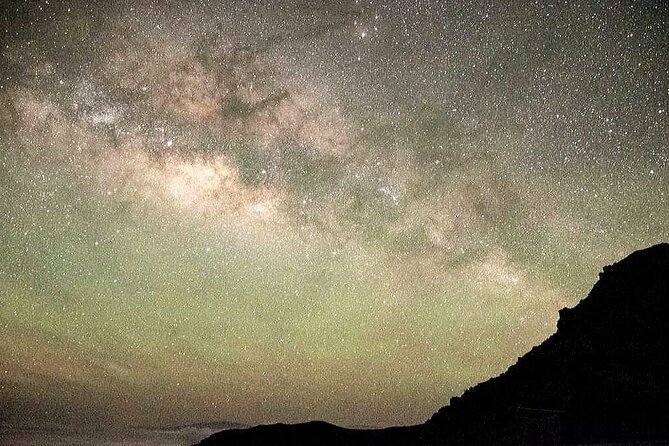
- Sunset above the clouds at Haleakalā National Park, with telescope time right after
- Small group (7 max) for a more personal, not-rushed feel
- Comfort-first gear like warm outer wear and chairs, plus hot tea/hot chocolate
- Real telescope stargazing with views of the Moon and planets like Jupiter and Mars
- Learn Maui’s geology and local life during the drive and at the crater area
- Weather-dependent timing, with wind often the deciding factor
Haleakalā Sunset and Astronomy at 10,000 Feet: what this evening feels like
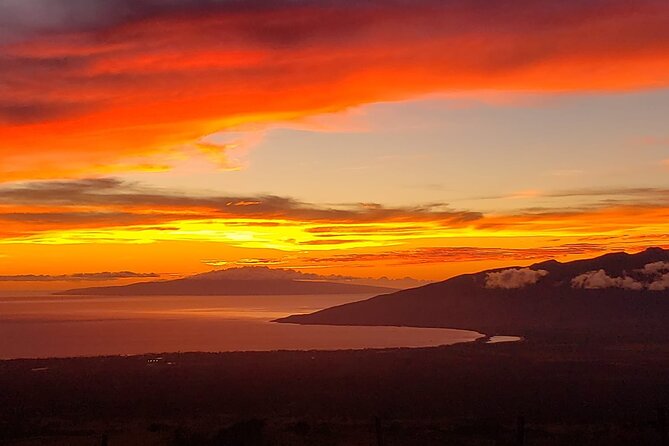
This tour is built around one goal: getting you up where the sky can actually perform. At Haleakalā, that means night falls quickly, and the summit air gets cold even if the coast feels warm. You start in the late afternoon, then you’re watching the sun drop while the clouds roll below you like a slow-moving ocean.
The best part is the pacing. You don’t just park and stare. You get a guided evening that moves from geology and crater views to constellations and planets, with the telescope timed for when the sky really darkens. And because it’s a maximum of 7 people, it feels less like a group bus stop and more like a private lesson under a big dark dome.
You’ll also appreciate how much the guide handles the practical stuff for you. The experience includes warm outer ware and a setup with chairs, so you’re not stuck juggling layers while trying to see the Milky Way.
You can also read our reviews of more evening experiences in Maui

Up the Volcano: the drive and your Haleakalā National Park stop
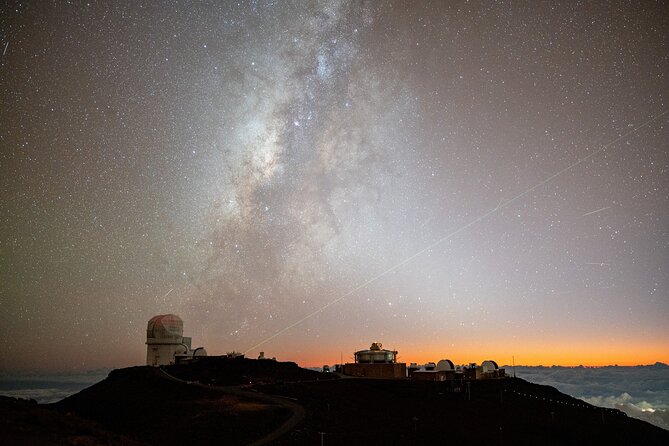
Your day starts back in Makawao at 81 Ahuwale Pl, with a 4:30 pm departure. From there, you head up into Haleakalā National Park. This isn’t just scenery driving. Along the way, the guide shares how Maui’s volcanic story created what you’re seeing, plus what makes Haleakalā’s plants and animals so unusual.
Once you’re at the park, the tour focuses on the crater area and the bigger picture—how the landscape forms, what survives at high elevation, and why the ecosystem is special there. You also get time to settle in and watch the volcanic views shift as the light fades. Admission is included as part of the park access for this stop, and the main park segment runs about 4 hours.
One practical note: you’ll want to be ready for the altitude even before you reach the summit viewpoint. The air is thin, the sky is sharp, and your body notices. That’s part of the magic, but it’s also why the tour has a clear set of “not for everyone” notes.
Sunset above the clouds: where the viewing spot matters
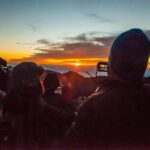
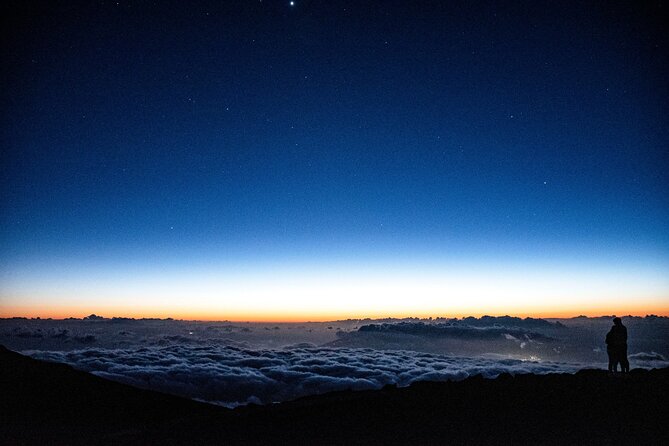
The sunset portion is the payoff moment. You’ll see the crater region from a viewpoint designed for watching the sun sink, and you’re positioned to enjoy that transition from bright orange to a darker, cooler world. Several stops on Maui try to sell a quick sunset photo. This one is set up for watching the whole change in light—slow enough for you to actually take it in.
Comfort matters here, and the tour takes that seriously. Warm outer wear is provided, and in practice the guide shows up with gear like parkas, mittens, and even ski pants so your attention stays on the sky, not on shivering. People have mentioned summit temperatures around the upper 40s Fahrenheit, and on a windy night, that cold sneaks in fast.
Another comfort detail: you’re not standing the whole time. You’ll be set in chairs, which sounds basic until you’re doing it at night in a cold, breezy setting. Then it’s the difference between enjoying the sunset and counting minutes until you can warm up.
Amazing Maui Stars: telescope viewing, planets, and Milky Way time
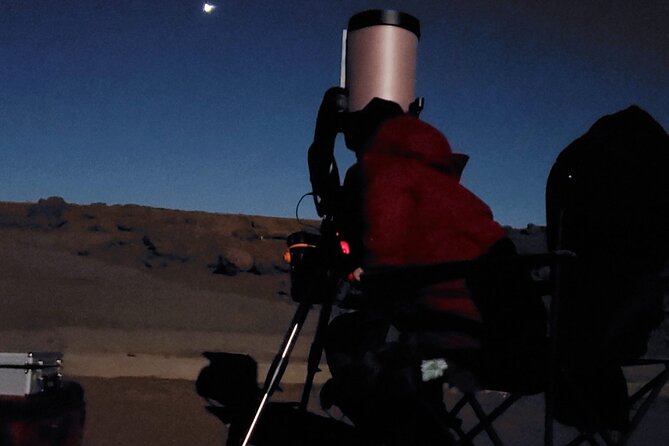
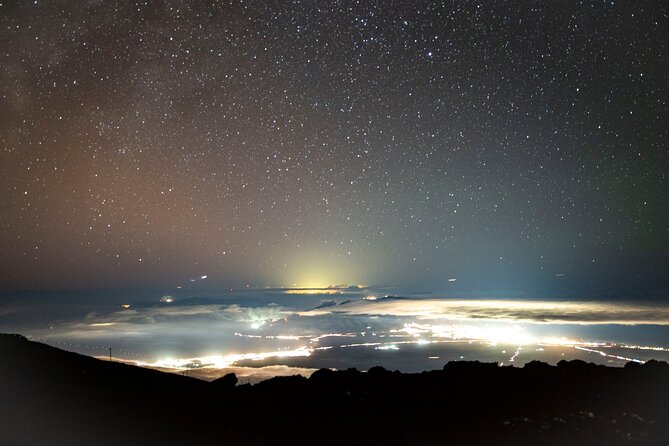
Once the sun is gone, the tour shifts gears. This is where the telescope earns its keep. You’ll set up for stargazing with provided viewing tools, including a telescope and binoculars. Then the guide talks you through what you’re looking at—constellations, planets, and the way the night sky changes as the angle improves.
The highlights tend to repeat in a good way:
- Seeing the Moon in a way your eyes alone can’t manage
- Spotting Jupiter and Mars through the telescope
- Enjoying the Milky Way and dense clusters of stars with the naked eye, not just through optics
The guide also gives practical phone-photo tips for capturing what you’re seeing. If you’ve ever tried to photograph stars on a vacation and ended up with a blurry dark rectangle, you’ll appreciate having guidance for keeping your shots usable on the summit.
Even if you’re a beginner, this part works because it’s explained in plain language. You get points of reference, then you look through the telescope, then you look back at the sky again to connect the pattern to the reality. That back-and-forth is what makes stargazing feel satisfying instead of random.
What’s included in the $235 price (and what that buys you)
At $235 per person for about 5.5 hours, this isn’t a cheap bus-and-bingo type tour. So you should look at what’s being paid for.
You’re paying for:
- A guided drive and crater/national park experience
- A small group (max 7), which reduces the time you spend waiting in lines or shouting over noise
- Telescope and binocular access, which you won’t typically have if you DIY the sunset
- Warm outer clothing, chairs, and hot drinks to keep the evening comfortable
- A driver/guide who handles timing, setup, and explanations
The included food details are modest on paper: hot tea and/or coffee, plus hot chocolate. But in practice, the guide’s approach often goes beyond that, with mentions of hot soup and simple snacks while people wait for the stars. Either way, you’re not expected to have a full sit-down dinner here, so plan your own food strategy.
This tour is a strong value if you want the telescope plus comfort plus guidance, without renting equipment or driving yourself up in the dark and trying to guess where to stand.


Dinner and snacks: plan like a summit picnic
The tour doesn’t include dinner. You’ll be told to bring your own snacks and a boxed dinner/sandwich (and the guide notes allergy/diet reality is a factor). Some people do mention the guide providing extra simple comfort food like soup, but you should still treat the “bring your own meal” part as your baseline plan.
This matters more than you might think. Haleakalā evenings run cold and slow, and it’s easier if you can eat before you get too chilly. If you rely on finding food afterward, you’ll likely be tired and it may be inconvenient.
My advice: bring a meal that doesn’t require reheating and that won’t crumble into your bag when you’re layering up and down. You’ll thank yourself when you’re settling into chairs for the final stretch of stargazing.
Altitude and weather reality check: cold, wind, and ear pressure
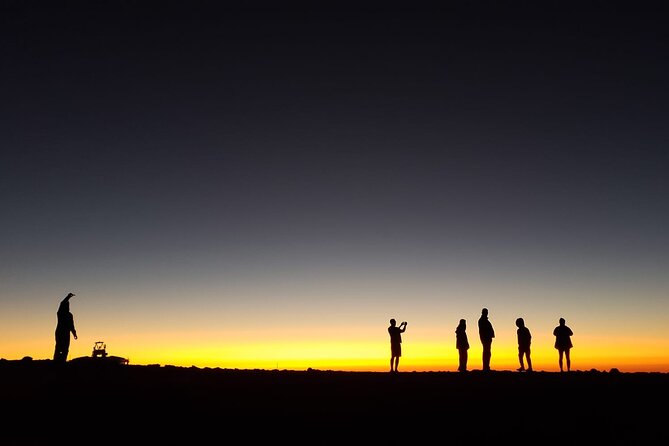
Haleakalā at night is not a casual stroll. The tour is at altitude, around 10,000 feet, and it’s partly after dark. That combo can hit you in two ways:
1) Cold and wind
Even with warm outer wear, the summit can feel sharp. Reviews mention windy conditions and the need for fully warm layers. Dress with the assumption that you’ll be out there longer than you expect.
2) Ear pressure and sinus concerns
The tour is not recommended if you’re sick or have sinus congestion, because descending from altitude without being able to clear your ears may be painful. The guide also notes it’s not recommended for scuba divers who have recently dived, due to altitude considerations.
Weather is the big wildcard. This experience requires good conditions, and it can be canceled due to factors like high winds. The upside is that if it’s canceled, you’re offered a different date or a full refund. Free cancellation is available up to 24 hours in advance, so you can book with less stress than you might expect for a summit activity.
If you’re flexible with dates, you’re in a better position to catch a clear sky.
Who should book this Haleakalā night tour?
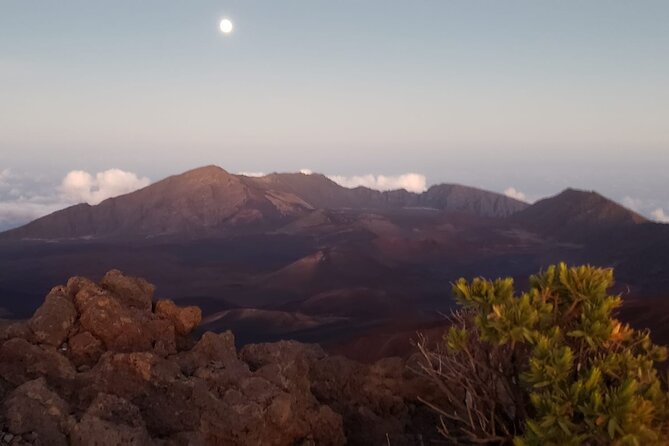
This tour fits best if you want:
- A guided sunset at a volcano viewpoint, not just a quick photo stop
- Telescope-assisted stargazing, including planets and Moon views
- A guide-led science story about Haleakalā’s geology and life at high elevation
- A comfortable setup with chairs, warm outer wear, and hot drinks
It may not fit if:
- You’re dealing with sinus congestion or feel ear pressure easily
- You’re a recent scuba diver
- You need dinner included as part of the price
- You hate cold and wind and don’t want to plan for both
Also, the guide experience seems to be a major reason people rate it highly. With Trish leading the evening, the tone in the stargazing portion tends to be calm, friendly, and very practical—so even first-time star watchers can follow along.
Should you book this tour? My honest call
If your goal for Maui is a real Haleakalā moment—sunset from above the clouds plus telescope stars—this tour is easy to recommend. The combination of small group size, comfort kit, and actual telescope time is hard to recreate on your own without planning and luck.
Book it if you can handle cold at altitude and you’re okay bringing your own meal. Skip it or talk to the provider first if you’re dealing with sinus issues or you recently scuba dived.
The best move is to treat this as a “sky window” plan. With weather-dependent timing and the option for a refund or alternate date, you’ve got a decent shot at hitting a clear, windy-free evening.
FAQ
Where does the Haleakalā sunset and astronomy tour start?
It starts at 81 Ahuwale Pl, Makawao, HI 96768 and ends back at the same meeting point.
What time does the tour begin?
The start time is 4:30 pm.
How long is the tour?
The duration is about 5 hours 30 minutes (approx.), with the Haleakalā National Park stop taking about 4 hours.
What’s included during the tour?
You get hot drinks (hot tea/coffee and hot chocolate), a telescope plus binoculars, warm outer clothing, and chairs, along with a driver/guide.
Is dinner included?
No. Dinner isn’t included. You’ll want to bring snacks and a boxed dinner/sandwich.
Is the tour affected by weather, and what if it gets canceled?
Yes. The tour requires good weather. If it’s canceled due to poor weather, you’ll be offered a different date or a full refund.