REVIEW · MAUI
Maui: Ka’anapali 8 Line Zipline Adventure
Book on GetYourGuide →Operated by Skyline Hawaii · Bookable on GetYourGuide
A ride over the trees changes your whole perspective.
This 8-line zipline adventure above Ka’anapali mixes serious zip thrills with big ocean views, plus history and conservation talk from guides like Jacob and Caleb. I also like how the course ramps up step-by-step, so you get braver line by line instead of being thrown onto the fastest one first.
You’ll hike a bit through uneven terrain before you fly, then spend about 210 minutes getting clipped in, zipping, and walking between platforms. One consideration: you must be able to hike 2 to 3 miles at elevation and you should skip the tour if you’re pregnant, have heart issues, or recently had surgery (especially ankles, knees, or back).
In This Review
- Key points to know before you commit
- Why this Ka’anapali zipline feels like more than a thrill ride
- The views: ocean, Molokai and Lanai, and the West Maui backdrop
- Your day flow: hike, clipping in, eight progressive lines, and walking between
- The guides: safety focus plus jokes that keep you calm
- What you learn while you’re flying: environment, preservation, and Maui ranching
- Gear and comfort: shoes, sunscreen, locked storage, and the red-dirt reality
- Price and value: what $198 buys in time, safety, and views
- Who this tour suits, and who should skip it
- Logistics that actually matter: meeting point, timing, and the ride up
- Quick FAQ answers before you go
- FAQ
- Where is the meeting point for the Ka’anapali 8 Line Zipline Adventure?
- How long is the zipline adventure?
- What are the minimum age and weight requirements?
- Is this tour safe if I’m pregnant or if I’ve had recent surgery?
- How much hiking will I need to do?
- What should I bring with me?
- What shoes are not allowed?
- Can I rent a GoPro camera on site?
- Is there free cancellation?
- Should you book this Ka’anapali zipline tour?
Key points to know before you commit
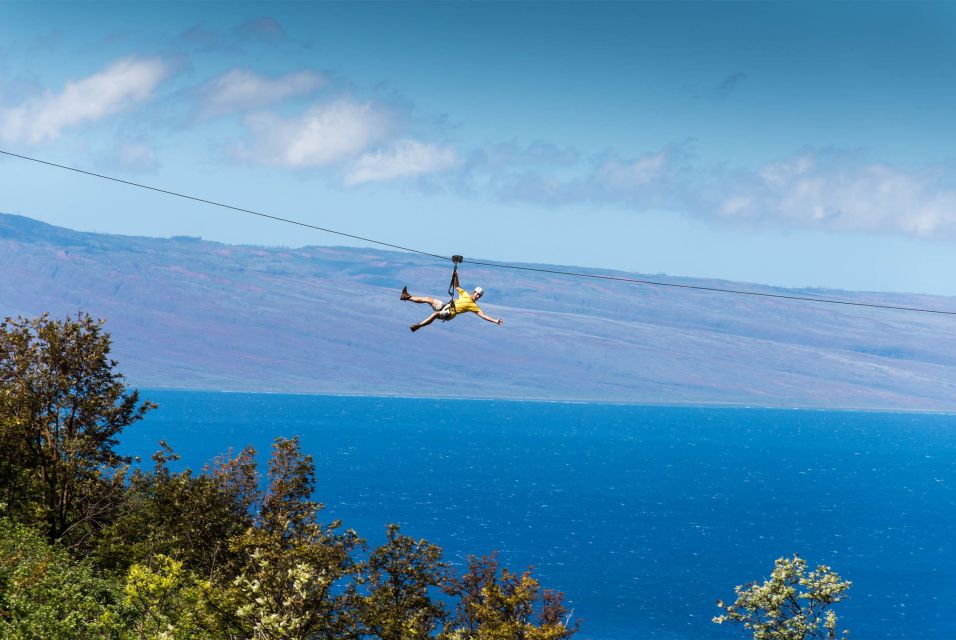
- Progressive lines: crossings get longer and more exciting as you move through the course.
- Big views on purpose: you’ll pause on a viewing platform aimed toward the valley and the West Maui Mountains.
- Guides drive the vibe: many guides mix safety checks with humor (you may hear it from Bailey and Bryan style energy, or the calming focus of Manny and Ray).
- Conservation is part of the story: your day ties into local preservation and the 1% for the Planet giving model.
- Red dirt is real: expect dusty conditions up top, and plan shoes you don’t mind getting dirty.
- Timing matters in Maui: if afternoons get hot for you, the morning sessions tend to feel easier.
Why this Ka’anapali zipline feels like more than a thrill ride
The best zipline tours don’t just throw you off a platform. They shape the day so you learn where you are, see what you’re flying over, and build confidence as the course goes on. This one starts with a short hike through Hawaiian countryside, then moves into an airborne sequence of eight lines that steadily increase in speed and length. By the final line, even people who start cautious often end up laughing and whooping together.
I also like that the experience is layered. You’re not only watching the ocean and offshore islands as you fly—you’re also hearing why this place matters. The guides talk about Maui’s ranching past and Hawaii’s environmental focus as you move through the trees and stop at viewpoints. That combination is why this tour lands well for both adrenaline seekers and people who want meaning with their photos.
One practical reality: you’re trading time on a “light, casual walk” for time on a real outdoor activity. The hiking requirement is clear, and you should respect it. If your body doesn’t handle elevation and uneven ground, no amount of enthusiasm from the guides will change that.
You can also read our reviews of more tours and experiences in Maui.

The views: ocean, Molokai and Lanai, and the West Maui backdrop
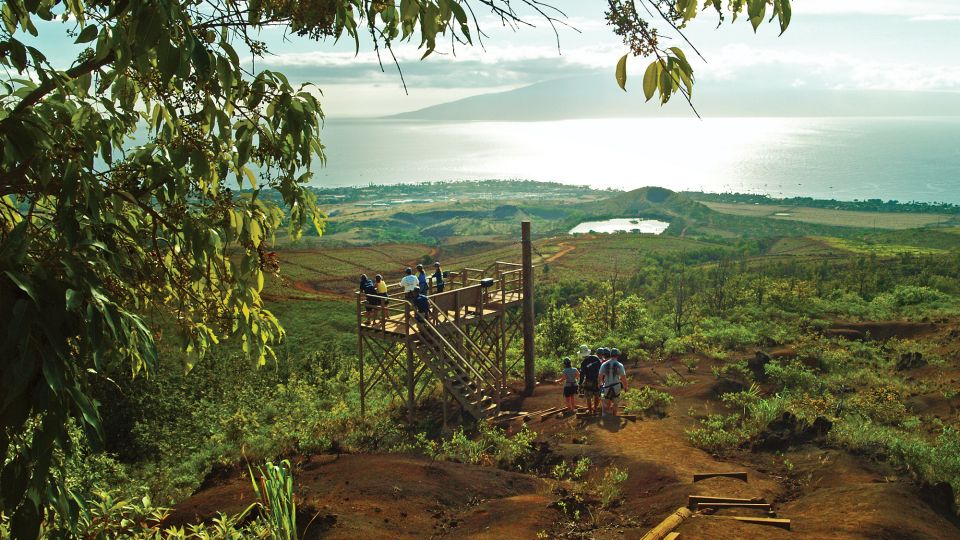
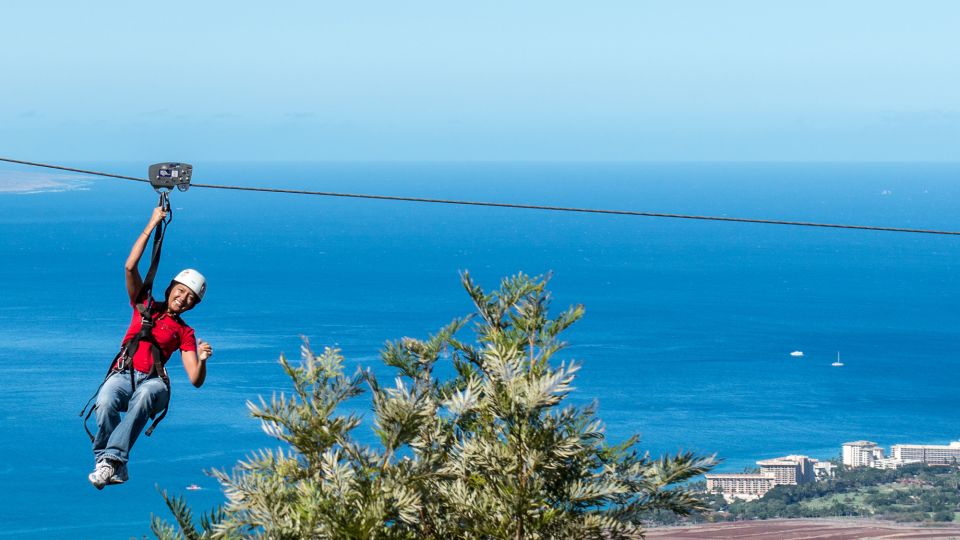
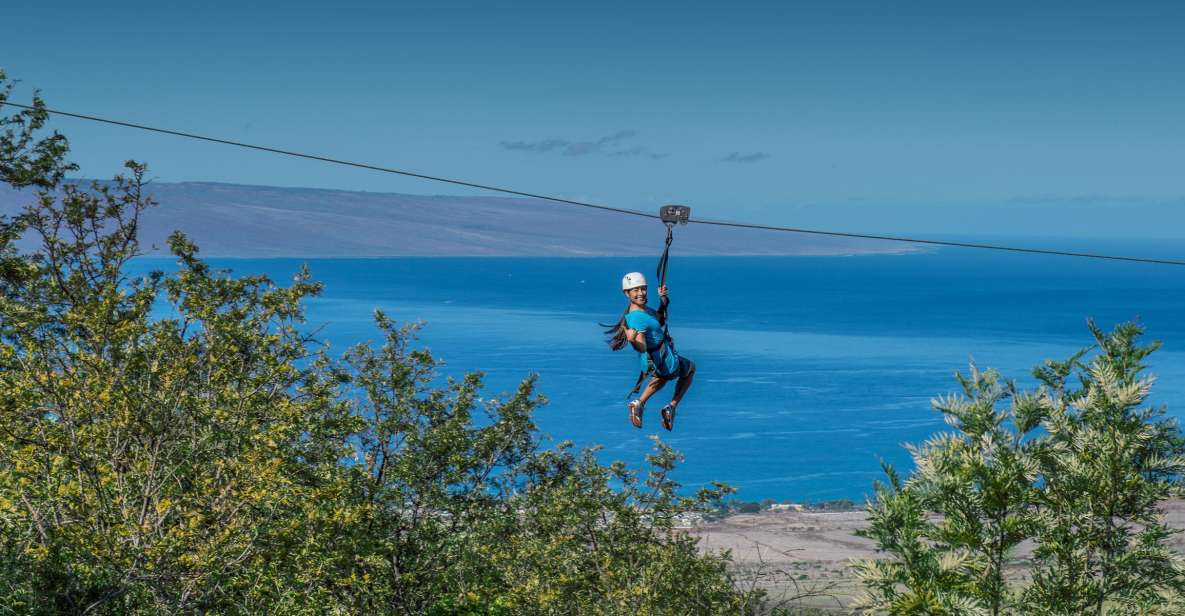
The scenery is the headline, and it’s not subtle. From the air, you’ll get Pacific Ocean views and look out toward offshore islands. From the way the course is described, you can catch sights of Molokai and Lanai during the flight sequence.
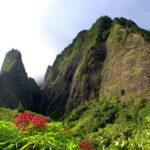
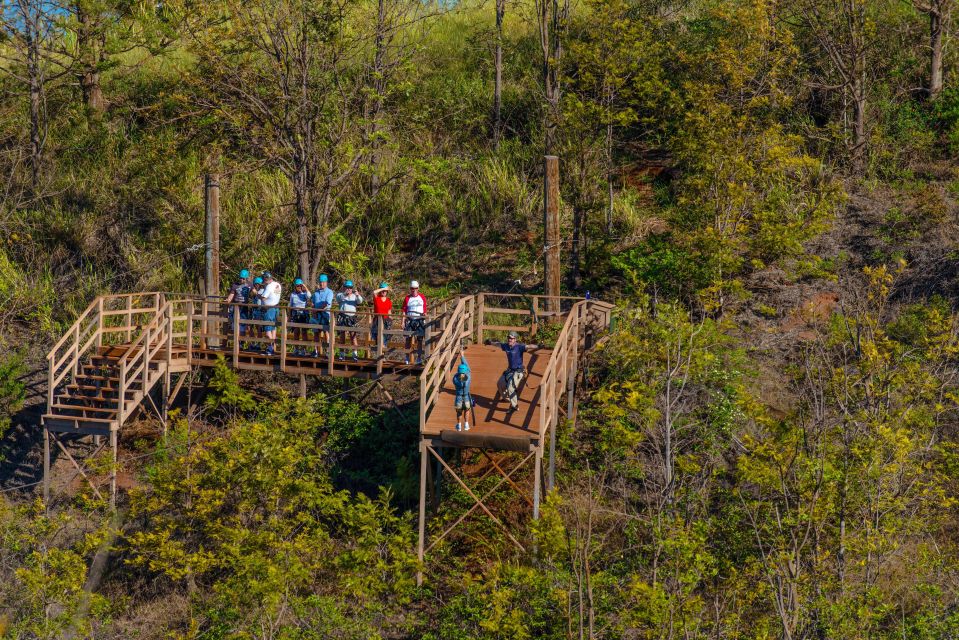
Midway through the fun, you’ll stand on a viewing platform aimed at a valley with the West Maui Mountains beyond it. This is the part that helps you “reset” between zips. You get a wider look at where you are in Maui, not just a narrow view from a platform edge.
There is one thing to be aware of: the vantage point across lines can feel repetitive for some people, because the course is designed around the same general area and sightline. If you’re the type who wants brand-new photo angles on every zip, set your expectations accordingly.
Your day flow: hike, clipping in, eight progressive lines, and walking between
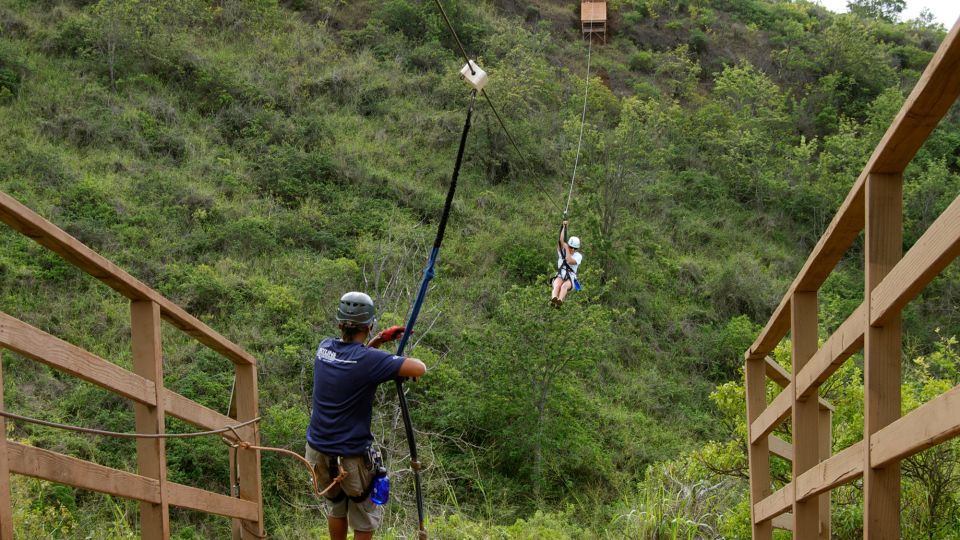
Here’s the basic rhythm you should expect, and why it matters.
First comes a short hike. Even if it’s not long, it’s still part of the test. You’ll be moving over uneven surfaces at elevation, which means you should wear gear that feels secure and doesn’t shift. It also sets the tone: you’re not arriving, strapping in, and immediately flying. You’re warming up your legs and your confidence.
Then you start the zipline sequence over the coastal terrain. Each crossing is longer than the last, which helps first-timers manage fear of heights. You’ll clip in with a safety setup provided by the tour, and you’ll rely on the guide’s checks before each launch. The experience is built around that “ready-check” rhythm.
Between lines, you’ll do some walking. That part is often described as a manageable stretch, and for many people it feels like movement downhill rather than a grind uphill. Still, it’s not a sit-down waiting game. If you have limited mobility or knee trouble, think twice and honestly judge whether you can handle repeated short segments over dusty surfaces.
By the end, the final line is the one that tends to create the biggest smiles. The course design intentionally finishes with your highest-energy moment, so the day ends with a win instead of tapering off too soon.
The guides: safety focus plus jokes that keep you calm
In an activity like this, the guide isn’t just there to keep you safe. They’re there to keep your brain from spiraling. A good guide teaches you what you need to do, then keeps the mood steady while you do it.
Across the experience, guides like Zach and Jared are described as attentive and playful with twists and surprises. Others, like Manny and Ray or Manny and Hoku, are praised for professional zip know-how while also putting kids (and nervous adults) at ease. You’ll likely feel that combination in the pacing: safety checks stay strict, but the atmosphere doesn’t feel stiff.
There’s also a practical advantage to this style. When you know what to expect at each platform—where to stand, how to stay clipped properly, and when the next line is happening—you waste less energy panicking and more energy enjoying the view. That’s a big deal if you’re coming to Maui for only a short window.
What you learn while you’re flying: environment, preservation, and Maui ranching
One of the smartest ways to experience Hawaii is to connect what you’re seeing with why it exists. This tour builds that connection right into your flight time.
You’ll hear about Hawaii’s environmental riches as you move through the trees, and you’ll also learn about Maui’s long ranching history. That ranching context helps explain how the land was used and shaped over time, which makes the terrain you’re zipping over feel less like scenery and more like a living working landscape.
Preservation and giving are part of the message too. Part of the proceeds from your booking goes to the 1% for the Planet campaign, where 1% of annual company revenue returns to local environmental and charitable nonprofits. Even if you don’t care about business models, this is still worth noting because it signals what the operator values: keeping conservation tied to the experience instead of treating it as an afterthought.



Gear and comfort: shoes, sunscreen, locked storage, and the red-dirt reality
This is where you can make or break your day. The activity has clear do’s and don’ts, and the reviews point to a few comfort issues you’ll want to plan for.
What to bring:
- Camera
- Biodegradable sunscreen
What not to wear:
- No open-toed shoes
- Avoid oversize luggage
Shoes are the biggest “silent” factor. The course sits in dusty conditions, including red dirt. People often end up with dirty shoes and legs from that surface dust, so wear footwear you can live with. Darker shoes can help you avoid visible staining.
Storage matters, too. There are indications that you’ll have a locked box for belongings. That means you can focus on the zips instead of carrying stuff around between platforms.
If you want to film, there’s also an option to rent a GoPro camera on site. For a lot of people, that turns the “I’m going to be scared” moment into something they can rewatch later.
Price and value: what $198 buys in time, safety, and views
$198 per person isn’t a bargain, but it’s not random pricing either. You’re paying for a full 210-minute guided experience, safety equipment, and an 8-line structure that actually changes as the day goes on. You’re also getting a live guide who narrates the area and connects your flight to environmental and cultural themes.
Think about value in three chunks:
- Time + effort: You’re getting a real outdoor activity with hiking, platforms, and multiple zips.
- Equipment + supervision: You’re not just buying a ticket; you’re buying safety systems and guide checks.
- Experience design: The progressive lines and the viewing platform mean the tour isn’t only one fast moment repeated eight times.
If your priorities are ocean views, a guided story, and a course that scales up gradually, the price starts to look fair. If you only want the cheapest thrill and don’t care about the walking or the guide narration, you may find better deals elsewhere—but you’ll likely sacrifice the “structured day” feeling that people seem to love here.
Who this tour suits, and who should skip it
This tour is built for active people who can handle short-to-moderate hiking in uneven terrain and elevation.
It suits:
- Adults and teens who want progressively longer ziplines instead of starting at full speed
- People who enjoy both thrills and context—environmental preservation and Maui ranching history
- Families with kids old enough to participate with weight and age requirements
It’s not suitable for:
- Pregnant women
- People with chronic heart problems
- People over 260 lbs (118 kg)
- People with recent surgery, especially on ankles, knees, or back
- Anyone who can’t hike 2 to 3 miles at elevation and over uneven surfaces
There’s also a clear participation rule for youth: you must be at least 10 years old, and children 15 and younger need an adult participant on tour with them, plus an adult waiver signed for each child.
Logistics that actually matter: meeting point, timing, and the ride up
You’ll meet at 2580 Keka’a Drive, Ka’anapali, HI 96761. It helps to arrive with a little buffer so you can check in calmly and get your gear sorted before you head out.
Timing is worth planning. One practical tip is to consider the 9am option if you’re heat-sensitive. Afternoons can feel much hotter, and you’ll be hiking on top of it before zipping.
As for getting to the starting area, the road up can be bumpy. Some groups are transported in a larger, air-conditioned SUV, which can make the ride feel easier than a rougher vehicle. You might find that detail helps you judge how much you’ll want to brace for motion right before the hike.
Quick FAQ answers before you go
FAQ
Where is the meeting point for the Ka’anapali 8 Line Zipline Adventure?
The meeting point is at 2580 Keka’a Drive, Ka’anapali, HI 96761.
How long is the zipline adventure?
The tour duration is listed as 210 minutes. Starting times depend on availability.
What are the minimum age and weight requirements?
You must be at least 10 years old and weigh between 80 and 260 lbs (36 to 118 kg).
Is this tour safe if I’m pregnant or if I’ve had recent surgery?
No. It is not safe to zipline while you are pregnant, or if you’ve had recent surgery—especially on ankles, knees, or back.
How much hiking will I need to do?
You must be able to hike 2 to 3 miles at elevation and over uneven surfaces.
What should I bring with me?
Bring a camera and biodegradable sunscreen.
What shoes are not allowed?
Open-toed shoes are not allowed.
Can I rent a GoPro camera on site?
Yes. You can rent a GoPro camera on site.
Is there free cancellation?
Yes. You can cancel up to 24 hours in advance for a full refund.
Should you book this Ka’anapali zipline tour?
If you want a zipline day that’s structured, not chaotic, and you care about more than just flying, I think you’ll enjoy it. The progressive 8-line format helps you build confidence, and the combination of ocean/island views with a viewing platform toward the West Maui Mountains makes the scenery feel intentional.
I’d only tell you to skip if you know you can’t handle elevation and uneven ground, or if you fall into the health situations listed (pregnancy, chronic heart problems, recent surgery). If you’re within the age/weight range and you’re comfortable hiking a few miles at elevation, this is a solid pick for a Maui half-day that balances thrills with place-based storytelling and conservation.
If you want, tell me your group ages and whether you’re considering the morning or afternoon slot—I’ll help you choose the most comfortable plan.