REVIEW · MAUI
Night-Time Snorkel at TurtleTown with Stars, Lights, and Photos
Book on Viator →Operated by Zephyr Adventures Maui · Bookable on Viator
Night snorkeling on Maui sounds scary, then gets awesome fast. This TurtleTown trip turns the ocean into a glowing classroom at dusk, with a guide who helps you feel steady before the sky goes truly dark. Two things I really like here are the small group size (max 8) and the included night-safe lighting setup that makes it easier to see what’s under you while keeping the experience guided and calm.
The other big win is the way the tour is built around comfort and control: high-end snorkel gear, a wetsuit jacket, and a life vest with an attached light plus a personal flashlight. The main consideration is that it’s not always totally pitch-black the whole time, and conditions like swells or chop can affect comfort and visibility.
In This Review
- Key Highlights Worth Knowing Before You Go
- TurtleTown at Night: Why This Feels So Different
- Meeting Point and Timing: 6:30 pm and the Dusk-to-Dark Rhythm
- Gear and Safety: What You Get (and Why It Works)
- Getting Out There: The Swim, the Pace, and the “Stay Together” Part
- What You’ll See Under the Lights (Turtles, Octopus, and Friends)
- The Cave Area: Why It’s Not Just a Photo Stop
- Photos and Extra Costs: Budget for the Memories
- Value Check for $119.20: Why It Adds Up
- Who This Night Snorkel Is Best For
- My Bottom Line: Should You Book This TurtleTown Night Snorkel?
- FAQ
- What time does the TurtleTown night snorkel start?
- Where is the meeting point?
- How long is the tour?
- Is snorkel gear and safety equipment included?
- How big is the group?
- Do I need to be able to swim?
- What marine life can you expect to see?
- What happens if weather is poor?
Key Highlights Worth Knowing Before You Go
- Max 8 people means you’re not lost in a crowd; you get more hands-on coaching.
- You swim before full darkness, so you get used to the water with more light at first.
- Lights do the heavy lifting: the tour uses a strong colored light on the water below you.
- Caves and coral are part of the plan, not just a quick loop around the bay.
- Your guide is also your “what’s that?” translator, pointing out turtles and other sea life.
- Photo add-ons may cost extra, so ask before you assume it’s bundled.
TurtleTown at Night: Why This Feels So Different
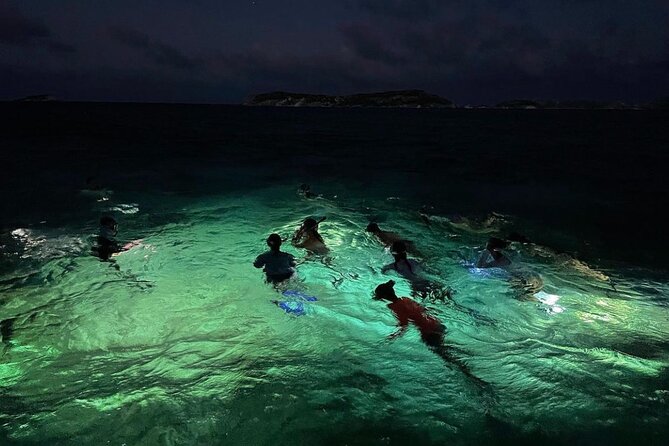
TurtleTown is already special in daylight. At night, it becomes a different kind of place. You’re looking at the same reef, but the behavior changes when light changes. That’s when you can get night-active creatures showing up, including the kinds of critters that people only talk about in passing.
On this trip, the ocean is lit from above and below in a practical way. The tour uses a custom 4000-lumen colored light aimed to illuminate the water surface and the area you’re snorkeling over. Add to that a life vest light and your own flashlight, and you’ll stop feeling like you’re guessing what you’re swimming past. One more bonus: your guide isn’t just there to count down your time. They help you understand where to look and what you’re seeing.
You can also read our reviews of more evening experiences in Maui

Meeting Point and Timing: 6:30 pm and the Dusk-to-Dark Rhythm
The meet-up is at Makena Landing Park, 5083 Makena Rd, Kihei, HI 96753, with the tour starting at 6:30 pm. This timing matters because the experience is designed around a smooth transition from sunset brightness to true night.
Here’s what you should expect in real life: you’ll generally enter the water while it’s still fairly bright, then gradually shift into darker conditions as the evening moves forward. That’s a big deal for nervous swimmers. It gives you time to get your mask sorted, get used to the fins, and settle your breathing before it gets harder to see.
One practical tip: if you’re sensitive to motion or you hate the idea of being on the water when it’s bouncy, choose this time with weather in mind. Night trips can be gorgeous, but if the ocean is choppy, you’ll feel it.
Gear and Safety: What You Get (and Why It Works)
This tour includes the gear you actually need to snorkel at night without turning it into a DIY project. You’ll get:
- Snorkel mask and fins
- Wetsuit jacket (helpful for comfort as it cools down)
- Life vest with attached colored light
- A personal flashlight
- Safety support items (including a personal safety beaker)
Most day snorkeling is mostly about sun and surface scanning. Night snorkeling is about visibility and staying oriented. That’s why the flashlight system is a core part of the value here. Your attached light helps you see nearby shapes and keep your position, while your personal flashlight helps you look at the sandy bottom and reef edges without blinding the group.
One caution from real experience: if you rely on your flashlight for confidence, keep an eye on it and let your guide know right away if anything seems off. The tour does teach you how to manage lighting, but equipment issues can happen anywhere, and it’s better to raise it immediately.
Getting Out There: The Swim, the Pace, and the “Stay Together” Part
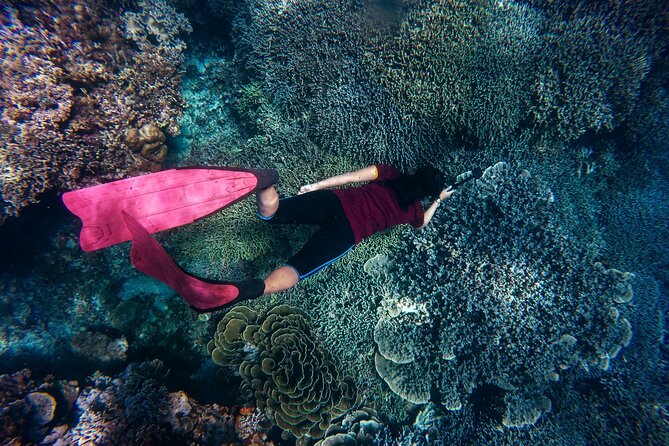
You’ll do a real swim, not a “stand in knee-deep water and look left” situation. The snorkeling route is typically close to shore at first, across coral-laden areas, and then toward the destinations where the turtles and other wildlife show up.
A good estimate from past experiences: plan on an easy pace but enough distance that you’ll want to be comfortable swimming. One account described a simple 1/4-mile one-way swim to the cave area, while another noted you should be prepared for a swim out to the location. Even with life vests, this is not a stroll.
Timing-wise, remember that the total tour is about 1 hour 30 minutes, and that includes gearing up. Water time is often around 60 to 75 minutes, depending on how quickly everyone gets ready and how conditions shape the route. The guide keeps you moving, checks your comfort, and helps you adjust if you’re newer to snorkeling.
Also: the tour is guided, but you’re not locked to the guide’s shoulder the whole time. You’ll explore within the group’s plan. Expect you’ll have moments where you’re working it out on your own, then regrouping when the guide signals.
What You’ll See Under the Lights (Turtles, Octopus, and Friends)
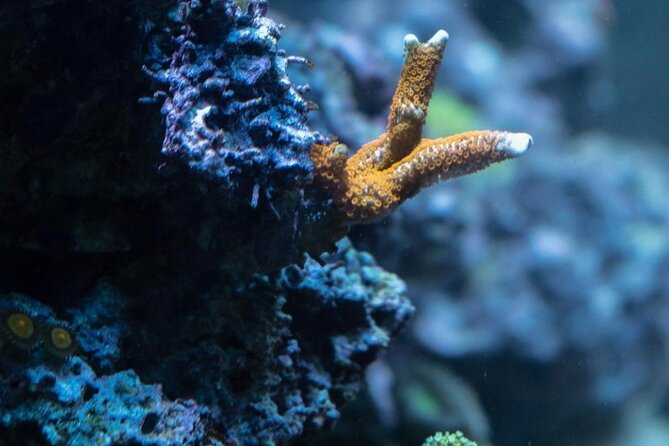
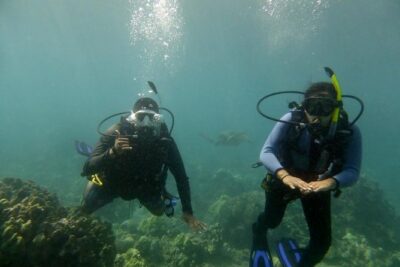
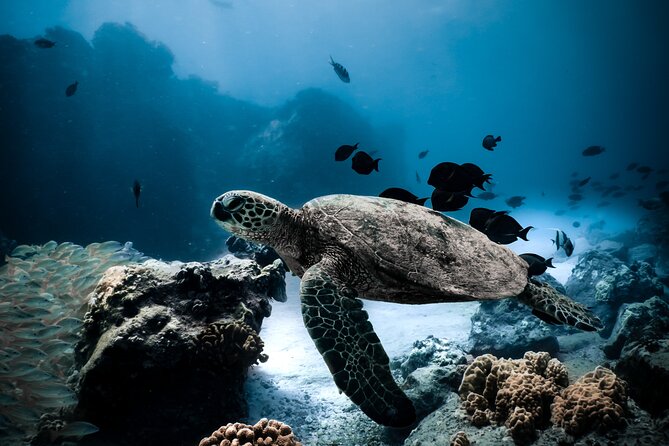
The star of the show is sea turtles. This is the whole reason many people book. And at night, the experience of seeing them feels extra close because you’re hovering in the water where they swim naturally, not just catching a quick glimpse at the surface.
What’s especially fun is how often you can spot turtles from more than one angle. Some nights deliver a turtle parade. Other nights are more mixed. Either way, your guide’s job is to help you find and enjoy the wildlife you’re there for.
Beyond turtles, the night can bring variety:
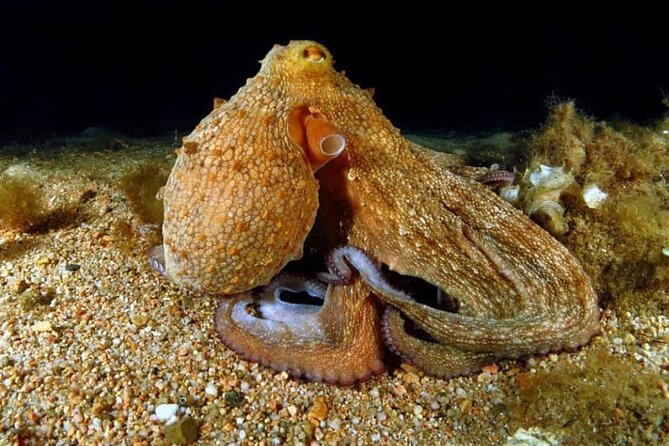
- Night octopus (if luck is on your side and the guide finds one)
- Squid and eels
- Fish and reef life that feel more active under light
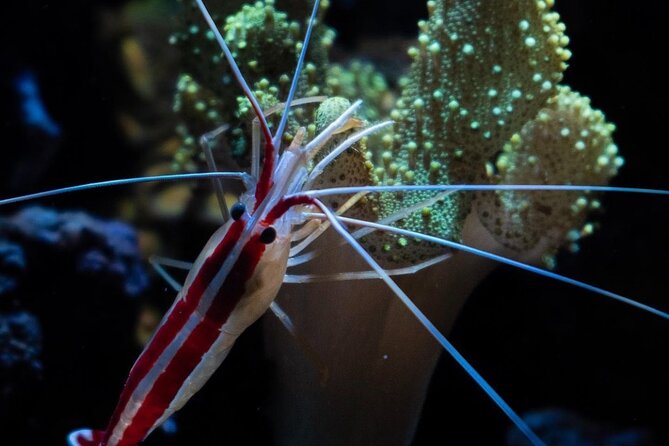
- Sometimes larger visitors like a reef shark (including a reported white-tipped reef shark) or eagle rays
You might also be able to hold certain sea creatures your guide retrieves from the seabed, including things like sea urchins and starfish. That’s a big difference from standard “look only” snorkeling. It also means you’ll want to listen closely when the guide explains how to handle them safely.
One more thought: at night, you’ll get more “small moments” than big spectacle. A turtle cruising a few feet away. A hand pause while you look at how a creature’s moving. That’s the charm here.
You can also read our reviews of more photography tours in Maui




The Cave Area: Why It’s Not Just a Photo Stop
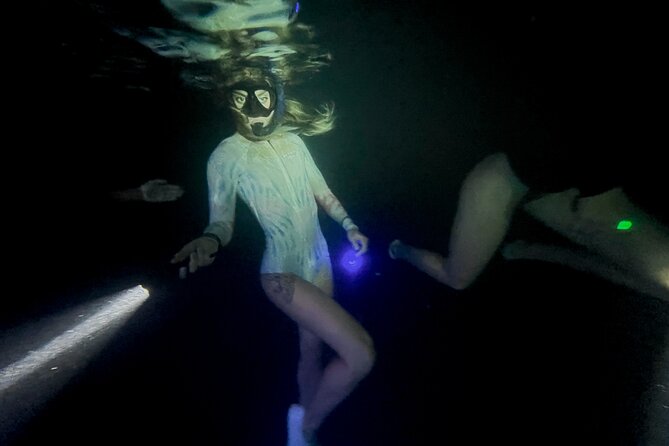
The cave is where the trip turns from pretty to memorable. The group swims to a cave destination, and then you don’t treat it like an adventure movie sprint into darkness. You experience it in a controlled way so you can actually enjoy what you’re seeing.
A key detail: you typically don’t go inside the cave. You hang around the cave area and observe what’s swimming in and out. That reduces risk and keeps the experience beginner-friendly, even though the setting feels wild and “wait, are we in a movie?”
If you’re prone to feeling anxious at night, the cave approach is also where your guide’s reassurance matters most. Strong guidance, clear instructions, and visible lighting help you keep your bearings.
For some people, one challenge is that the cave entrance can be hard to see depending on conditions and where you’re positioned. If you need more visual confidence, stick close to the guide’s recommended viewing spot and rely on your flashlight the way they show you, rather than trying to beam it everywhere.
Photos and Extra Costs: Budget for the Memories
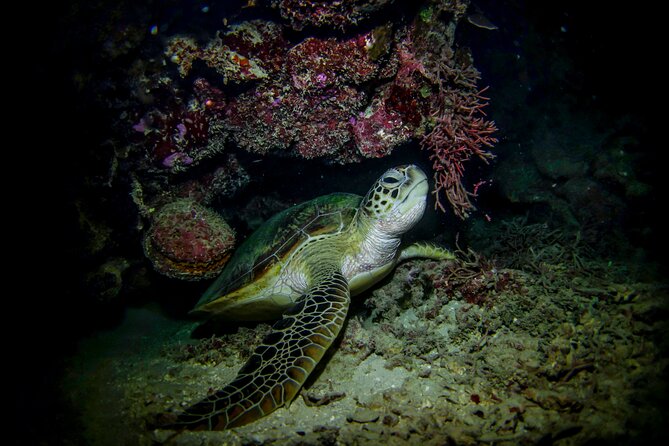
The guide will take photos and videos during the tour. Some groups love this because it turns the hardest part (keeping track of your hands and mask in the dark water) into a task handled by someone else.
Here’s what you should watch out for: photo packages can cost extra. One unhappy moment in an account came from a guest who felt the photo charge wasn’t clearly expected, with a $30 per person figure mentioned. That doesn’t mean all photo pricing is the same every time, but it does mean you should ask what’s included before you assume.
My practical advice: decide in advance if you want photos. If yes, ask how much, how the purchase works, and whether the charge is per person or per set. If no, you can relax and focus on the snorkeling instead of thinking about your wallet during the glow show.
Value Check for $119.20: Why It Adds Up
At $119.20 per person, this isn’t a cheap “rent snorkel and go” activity. But it can be good value for what you get.
You’re paying for:
- A small-group experience (max 8)
- Night-focused gear, including lights and wetsuit jacket comfort
- Guided wildlife searching so you’re not just hoping turtles wander by
- Real handling moments when guides retrieve creatures for viewing (when appropriate and offered)
- Photos taken by the guide
If you’re comparing it to bigger, mass-crowd snorkels, the difference is attention. In a small group, you’re more likely to get help fast if you’re nervous, struggling with buoyancy, or unsure what you’re seeing. And at night, fast help matters.
What can reduce value: if conditions are choppy, you might feel the swim more than you’d like, and the nighttime “wow” can be quieter than expected. If you’re worried about that, check the weather and don’t book a “just in case” mindset. This tour needs decent conditions to shine.
Who This Night Snorkel Is Best For
This is a good match if you:
- Can swim and feel comfortable with a guided ocean swim
- Want a more personal guide-to-you experience
- Like learning what you’re seeing, not just floating around
- Enjoy wildlife viewing and don’t mind water conditions being unpredictable
Beginner-friendly? Yes. One of the strengths is how guides can coach newer snorkelers step-by-step. In multiple experiences, guides named Robbie, Joe, Alec, Jon, and Payson were singled out for being patient, reassurance-focused, and photo-capable.
If you have motion sickness issues, plan smart. One guest specifically recommended using a motion sickness wristband like a ReliefBand because swells can trigger nausea. You’ll be in open water, and even with life vests, night snorkeling can move your body more than you expect.
Also, bring some physical readiness. You don’t need to be an athlete, but you should have moderate comfort with swimming.
My Bottom Line: Should You Book This TurtleTown Night Snorkel?
If you want Maui snorkeling that feels like an actual event—not a quick stop—this is a strong choice. The combo of small group size, strong night lighting, and a guide who can help you feel safe makes it worth serious consideration.
I’d book it if:
- You’re excited to see sea turtles close up
- You’re comfortable swimming at dusk into night
- You like guided wildlife experiences with hands-on moments when offered
- You’re okay paying for a guided, night-specific setup rather than a barebones rental
I’d think twice if:
- You’re highly sensitive to motion or rough water
- You expect it to be pitch-black the entire time (it often starts brighter)
- You don’t want any possibility of photo add-on costs (ask upfront)
Go in with the right mindset: night snorkeling is part science class, part ocean show, part slow-breathing practice. And when it clicks, it’s the kind of memory that sticks longer than most beach snapshots.
FAQ
What time does the TurtleTown night snorkel start?
It starts at 6:30 pm and meets at Makena Landing Park in Kihei.
Where is the meeting point?
The meeting point is Makena Landing Park, 5083 Makena Rd, Kihei, HI 96753, USA.
How long is the tour?
It’s listed at about 1 hour 30 minutes, and that total includes gearing up.
Is snorkel gear and safety equipment included?
Yes. Safety and snorkel gear are included, including wetsuits, snorkel gear, a personal flashlight, and a life vest with attached colored light.
How big is the group?
The maximum group size is 8 travelers.
Do I need to be able to swim?
Yes. The experience requires that you can swim, and it’s suggested you have at least a moderate physical fitness level.
What marine life can you expect to see?
You may see sea turtles and a range of night ocean life such as night octopus, squid, and eels, plus fish and other wildlife depending on conditions.
What happens if weather is poor?
This experience requires good weather. If it’s canceled due to poor weather, you’ll be offered a different date or a full refund.