REVIEW · MAUI
Famous Road to Hana Waterfalls, Black Sand Beach & Lunch
Book on Viator →Operated by Segway of Maui · Bookable on Viator
Waterfalls plus black sand. That’s the whole point.
This Road to Hana outing strings together Hana Highway stops, off-the-main-road waterfalls, and a real taste of Maui’s coastline, all with live commentary and a schedule built around views.
I love the convenience: hotel pickup keeps you out of the rental-car stress. I also love the food setup—picnic-style lunch with sandwich choices plus snacks and drinks—so you’re not hunting for lunch with wet shoes and a deadline.
The main drawback to plan for is the very full day: you’ll be on the road about 8 to 9 hours, and time at each stop is limited, with the biggest beach stop coming at a set point in the day.
In This Review
- Key highlights I’d circle on your Maui map
- The Road to Hana feels shorter when you’re not driving it
- Paia, Ho’okipa Beach Park, and the first taste of Hana waterfalls
- Ke’anae Peninsula: lava coastline, taro patches, and the banana bread break
- Upper Waikani’s power, Hana Bay’s calm, and the lava tube element
- Wai’anapanapa State Park: black sand time you shouldn’t rush
- Pua’a Ka’a, Wailua Valley views, and the shorter bay stops
- The lunch and snacks: what you actually get, and how to plan around it
- Price and value: is $245.99 per person worth it?
- Who this tour suits best, and what to watch out for
- Should you book this Road to Hana waterfalls and black sand tour?
- FAQ
- What time does the tour start?
- How long is the experience?
- Is lunch included?
- Do they offer special diets or food alternatives for allergies?
- Are there hotel pickups everywhere on Maui?
- Is Wai’anapanapa State Park admission included?
Key highlights I’d circle on your Maui map
- Wai’anapanapa State Park includes admission and gives you about 1 hour at Pailoa black sand beach
- Two waterfall styles: big photo stops plus a quieter, often-muddy option near Haipua’ena Falls
- Ke’anae Peninsula includes dramatic lava coastline views and a taro-and-ocean overlook
- Aunty Sandy’s Banana Bread stops for roadside sweetness (you’ll see why it gets famous)
- Small-group feel with a maximum of 14 travelers, plus a dedicated chauffeur/guide
- Lunch plus drinks included, and the day stays efficient thanks to guided timing and routing
The Road to Hana feels shorter when you’re not driving it
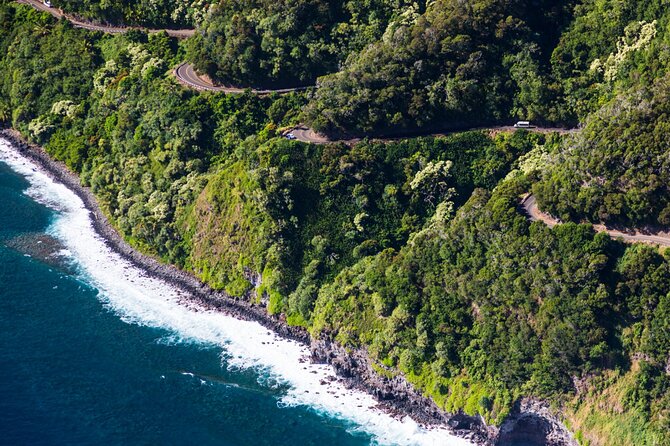
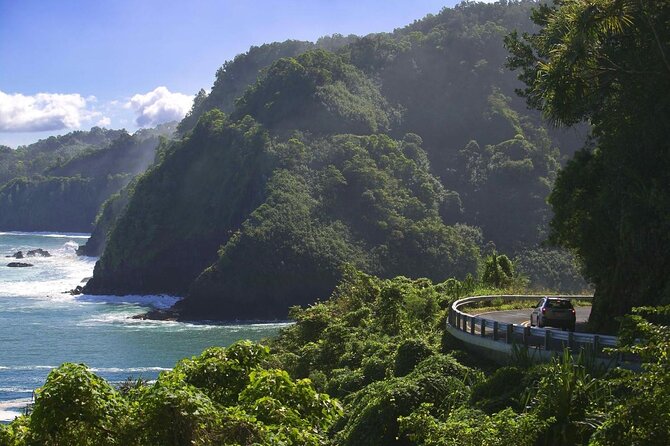
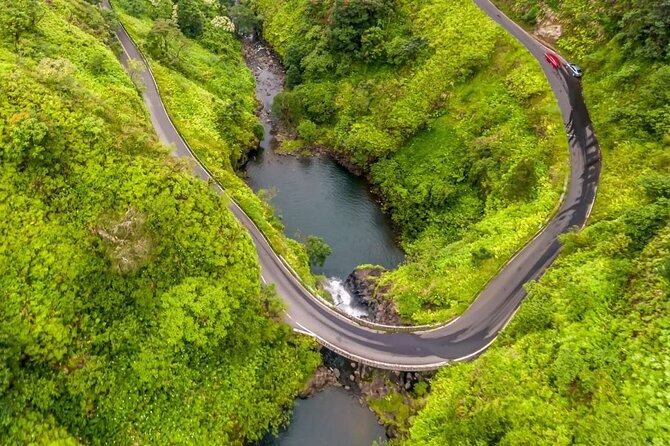
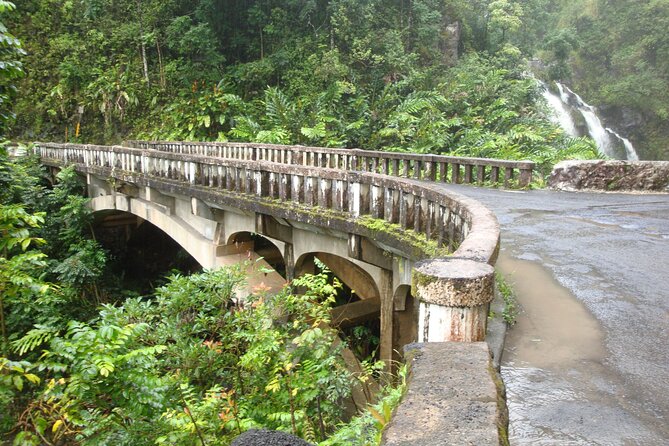
The Hana Highway runs about 64 miles (103.6 km) and it’s famous for good reason: you’re cruising a long coastal scenic route where the turns never really stop. If you’ve ever tried to drive Hana while also reading a map, watching traffic, and timing bathroom breaks, you already know why people love a tour van.
What makes this format work is the pacing. You still get multiple stops along the way, but you don’t have to do the planning puzzle. A guide also fills the gaps while you ride—history, folklore, and practical context—so you’re not just staring at waterfalls wondering what you’re looking at.
And yes, you’ll be early. The start time is 5:45 am, so you’ll want to treat that like part of the experience. Early departures help you spend daylight actually walking and photographing instead of sitting in lines.
You can also read our reviews of more tours and experiences in Maui


Paia, Ho’okipa Beach Park, and the first taste of Hana waterfalls
Right after you leave, you pass through some key north-coast context. Near the start of your drive, you’ll hit Paia on Maui’s north coast, about four miles into the Hana direction. Paia is a historic town you’ll see from the road—brief, but it helps the rest of the day feel connected rather than random scenic pull-offs.
Next is Ho’okipa Beach Park, a stop built for ocean energy. It’s known as a windsurfing hub, so you can watch windsurfers, kite boarders, and surfers working the waves. This is also a well-known spot for threatened Hawaiian green sea turtles that sometimes bask right along the shoreline.
Then comes your waterfall build-up. On the Road to Hana route, Twin Falls is described as the first easily accessible group of waterfalls and pools—an ideal “okay, we’re really here” moment. After that, you’ll move toward the quieter side of Hana with Haipua’ena Falls.
Haipua’ena Falls is small, with a pool you can reach via an unsigned trail and a short hike over an often muddy path. This matters because it changes the feel. You’re not just getting one brochure waterfall shot; you’re getting a lower-traffic experience that rewards people willing to step carefully and accept that nature doesn’t care about shoes.
Ke’anae Peninsula: lava coastline, taro patches, and the banana bread break
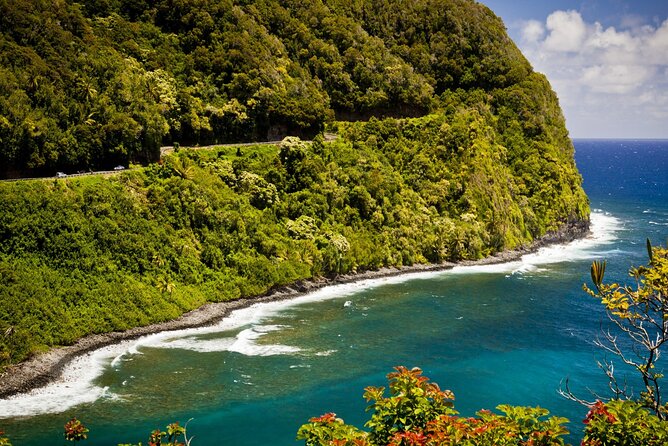
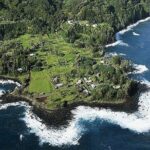
One of the best parts of the day is Ke‘anae Point and the Ke‘anae Peninsula. This is a dramatic section where newer lava juts out from the Hana Highway cliff line. The peninsula stop is short, but the visuals are big: it’s the kind of coastline where you can feel the geology under your feet just by looking at it.
Right around this area, you also get a classic Maui roadside moment: Aunty Sandy’s Banana Bread. This stop is about more than dessert. It’s a pause that makes the day human—something you can eat while everyone else is still figuring out where they’ll go next, and you’re basically just riding into the best of Hana’s road culture.
From there, you’ll get photo and view opportunities near the Keanae Overlook around Mile Marker 17. The point here is the mix: you’re seeing taro patches up close along with the ocean beyond. That view combo helps you understand Hana isn’t only waterfalls; it’s also farming, cliffs, and the way inland plants meet the sea.
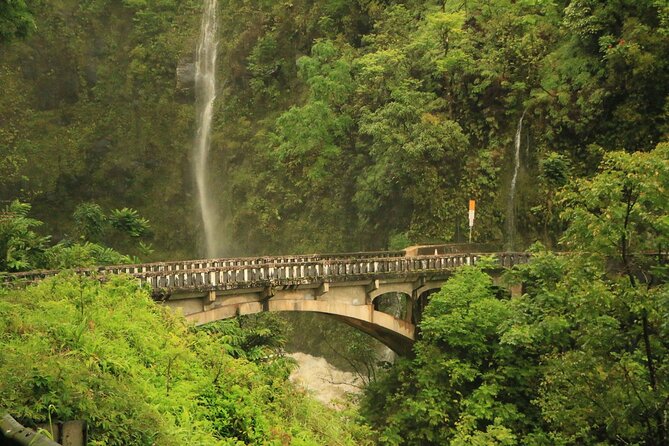
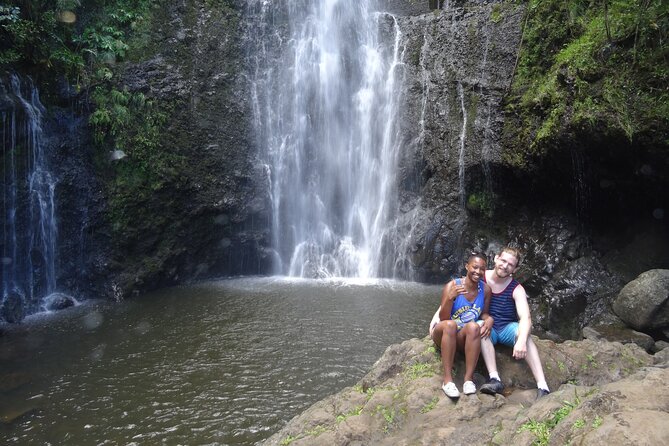
Time also includes Upper Waikani Falls, sometimes nicknamed Three Bears. It’s often referred to as the top-tier waterfall photo spot on Maui marketing materials, which tells you what you’re walking into: a waterfall that shows up on postcards because it really does look like that in person.
Upper Waikani’s power, Hana Bay’s calm, and the lava tube element
After you’ve seen multiple waterfall moments, Upper Waikani Falls is the one that turns heads. You’re going to want to pace yourself here: it’s popular, and you’ll likely be sharing the view with plenty of cameras.
The itinerary then includes another geology-heavy feature: a lava tube. This cave system is described as the 18th largest lava tube in the world and the largest by far on Maui, with winding passage reaching heights up to 40 feet. If you enjoy the why behind the scenery, this part adds depth fast. You’re not just looking at water; you’re seeing how volcanic forces shaped the island.
Finally, there’s Hana Bay Park, a centrally located county park and beach that serves as a kind of town center for Hana. This stop helps reset your momentum. After several active points—waterfalls, overlooks, and cave terrain—this is a calmer shoreline break where you can sit for a moment and just take in the bay.
Wai’anapanapa State Park: black sand time you shouldn’t rush
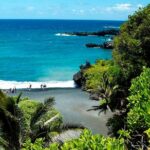
If you only do one “stick around” stop on Hana, make it Wai’anapanapa State Park. Admission is included here, and you get about 1 hour to explore. The name means glistening waters, and that’s the right mood for this place: the ocean light hits the coastline in a way that can look different every minute.
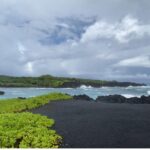
The key feature is Pailoa black sand beach along with those dramatic coastal views. Black sand changes how photos look, and it also makes the whole scene feel more intense than the typical tan-sand beach you’re used to. It’s a great contrast to the freshwater waterfall stops you’ve already had.
Your practical move: plan your time inside that hour. You’ll likely want a quick route that gets you to the sand and viewpoint first, then you can slow down if you still have energy. With limited time, rushing everything can turn into stress. Better to do a few essential moments well than to try to cover every angle.



Pua’a Ka’a, Wailua Valley views, and the shorter bay stops
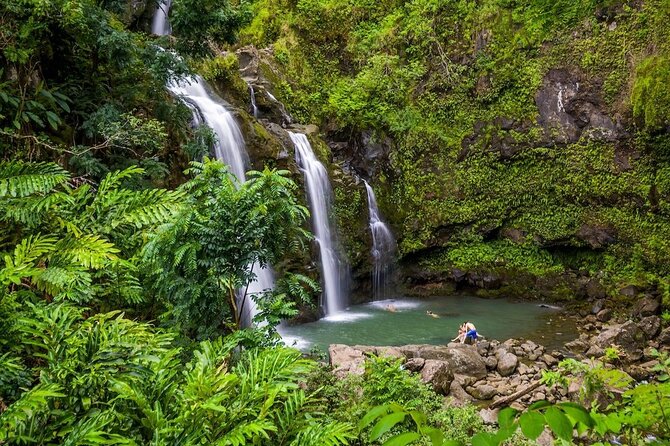
After Wai’anapanapa, the day keeps shifting between water, views, and brief nature stops. Next is Pua’a Ka’a State Park, a must-see for a typically Hawaiian swimming hole. It’s known for a waterfall and a place where you can swim under, and the water is from a natural spring described as unbelievably clean—but very cold.
That cold detail is important. You don’t need a wetsuit to appreciate it, but you should expect your whole body to notice the temperature. If you’re not into cold-water swims, you can still treat this as a photo and viewing stop and keep the day comfortable.
Then comes Wailua Valley State Wayside Park near Mile Marker 19. You’ll find stairs leading to a vantage point with wide views of Wailua Valley, Keanae Peninsula, distant waterfalls, and the Koolau Gap when you’re facing inland. It’s a short stop, but it’s one of the best places to connect the day’s earlier views into one bigger picture.
A few more quick hits follow. Honomanu Bay is a favorite for fishermen, surfers, and local families, and the description emphasizes seclusion. Eucalyptus Rainbow Trees is an even shorter stop, but a memorable one if you like plant details—its bark sheds patches of color across green, blue, purple, orange, and maroon.
These quick stops matter because they keep the day from becoming only waterfalls and only walking. They also help you feel the island as a system: water sources, forest plants, and volcanic valleys all sharing space.
The lunch and snacks: what you actually get, and how to plan around it
This tour includes a picnic-style lunch with homemade sandwiches from a local deli. You’ll choose ham, turkey, or veggie sandwiches on whole wheat bread (WW bread). It also includes snacks like granola bars and chips, plus bottled water and Hawaiian cane juice.
Value-wise, this is one of the strongest parts of the deal. It keeps you from adding extra meal time into an already long schedule. And it’s not just water and a cookie—you’re getting real food designed for a day where you’ll be moving and stopping frequently.
One caution: there’s no special diet option. If you need raw, vegan, or food alternatives for allergies, you’ll have to bring your own food. The tour does not offer substitutes, so if that’s you, pack earlier than you think you need to.
Also, since the day starts so early, it helps to consider how much caffeine and breakfast you want before pickup. The included drink options help later, but you’ll still want to start the day fueled.
Price and value: is $245.99 per person worth it?
At $245.99 per person, this tour isn’t a budget throw-in. But you do get several things that normally cost money and time when you self-plan: transportation in an air-conditioned vehicle, live commentary, hotel or resort pickup for many areas, and admission included at Wai’anapanapa State Park.
Then there’s the “hidden value” part: stress reduction. Road to Hana is famous for being scenic, but it’s also famous for being tricky if you’re driving while managing stops, parking, and timing. A guided schedule means you spend your energy on enjoying the day instead of negotiating the day.
The small-group limit of 14 travelers also adds to the feel. You’re not packed in like a cattle car, and that makes a big difference on long road trips.
If you’re the type who wants to linger for hours at one spot, this may feel too structured. But if you want the main highlights plus the quieter waterfall experience, the price starts to look more like a fair trade for convenience.
Who this tour suits best, and what to watch out for
This is a great match if you want a lot of Road to Hana highlights without the driving stress, and you like the idea of guided storytelling as you go. It also fits well for families and mixed-age groups because the itinerary is built around frequent stops with short breaks rather than long hikes at every point.
A couple of considerations to keep in mind:
- You’ll be on a tight schedule through many scenic points, so don’t expect endless time everywhere.
- If you were hoping to visit the Seven Sacred Pools at the end of the Road to Hana, that stop isn’t part of this itinerary. (Those pools have been closed to the public for several years.)
- Drop-offs follow a logical routing plan, so some return driving can feel longer depending on where you’re staying.
If you go in with those expectations, the day stays fun instead of frustrating.
Should you book this Road to Hana waterfalls and black sand tour?
Book it if you want a focused Road to Hana day with Wai’anapanapa’s black sand beach, multiple waterfall moments, and the comfort of pickup and a guide driving the route. I especially think it’s worth it if you’re not excited about tackling Hana’s roads yourself at an early hour.
Skip it or reconsider if your priority is long, unhurried time at a single location, or if your plans depend on visiting places that aren’t included on this route. If you have dietary restrictions beyond ham/turkey/veggie, plan on bringing your own food so lunch doesn’t become a last-minute problem.
Bottom line: for most first-timers to Maui, this is the kind of tour that helps you see what Hana is about without turning your day into logistics.
FAQ
What time does the tour start?
The start time is 5:45 am.
How long is the experience?
It runs about 8 to 9 hours.
Is lunch included?
Yes. You get picnic-style homemade sandwiches (ham, turkey, or veggie) plus snacks and drinks like bottled water and Hawaiian cane juice.
Do they offer special diets or food alternatives for allergies?
No special diet is available. If you need raw, vegan, or allergy-friendly options, you must bring your own food.
Are there hotel pickups everywhere on Maui?
Pickup is offered for the majority of resorts/hotels, but there are exceptions. No pickups are provided in Napili-Honokowai, Kapalua, or Kahana, and in those cases you meet at Lahaina Cannery Mall. No pickups are provided at Makawao, Kula, or Paia, and in those cases you meet at Kahului Park n’ride.
Is Wai’anapanapa State Park admission included?
Yes. Admission is included for Wai’anapanapa State Park, and you get about 1 hour there.