REVIEW · MAUI
Maui: Famous Road to Hana Waterfalls and Lunch by Mercedes Van
Book on Viator →Operated by Stardust Hawaii, LLC · Bookable on Viator
617 turns, zero white-knuckle stress. This Road to Hāna day tour is interesting because you’re getting the famous waterfalls and coastal stops without driving the maze of narrow lanes and one-lane bridges yourself, and you’ll hear the meaning behind what you’re seeing from guides including Rodger, Marty, Quinn, and Dom. I really like the included snacks and picnic lunch plus the early pickup that gets you rolling before the day heats up. One drawback: it’s a long day, and the pace can feel tight if you’re hoping to linger for hours at every viewpoint or if curvy-road motion makes you queasy.
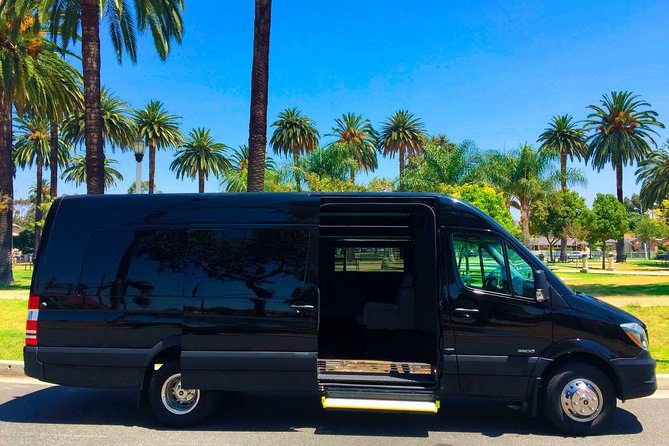
You’ll ride in a comfortable, air-conditioned Sprinter van with a driver who knows the route and the timing. The promise is simple: sit back, grab photos, and plan on short walks and possible dips when conditions allow. Also note the tour is capped at 14 travelers, so it stays small, but every seat still matters on a full day out.
In This Review
- Key things that make this Road to Hāna tour worth your time
- The early morning pickup that turns Road to Hāna into a plan
- Mercedes Van comfort: it’s the drive that makes this tour pay off
- What’s actually included: lunch, snacks, and the little things that keep you sane
- Stop-by-stop: from Pāʻia and Ho’okipa to the first waterfall pools
- Pāʻia: the north-coast warm-up
- Ho’okipa Beach Park: turtles and wind sports
- Twin Falls and the quieter pool options
- Ke‘anae and Aunty Sandy: snacks with the right kind of local flavor
- Ke‘anae Point: village life and taro country
- Aunty Sandy’s Banana Bread: warm, simple, famous
- Wai’anapanapa’s black sand: the star stop that can change your whole day
- Waterfalls and swim-able pools: Pua’a Ka’a and the Three Bears moments
- Pua’a Ka’a State Park: easy access, chilly water
- Upper Waikani Falls: the Three Bears
- Hana Bay area: long black-sand beach and a protected swim option
- Wailua Valley, Kaumahina, and rainbow eucalyptus: small stops with real meaning
- Wailua Valley State Wayside Park: ahupua‘a and kalo patches
- Kaumahina State Wayside Park: forest plants and a nature break
- Eucalyptus rainbow trees: color in the bark
- Keeping your body happy on a curvy day: what to pack and how to plan for swimming
- Pickup realities: where the tour starts, and who should plan to meet elsewhere
- Should you book this Maui Road to Hāna van tour?
- FAQ
- How long is the Road to Hāna tour?
- What time does the tour start?
- What’s included in the price?
- Do I get lunch, and what choices do I have?
- What if my hotel is not on the pickup list?
- Does the tour run in poor weather?
Key things that make this Road to Hāna tour worth your time
- Early departure (5:45 am start): You’ll begin with pickup before most independent drivers are even thinking about leaving.
- Guide-led storytelling: Hawaiian culture and local mythology are built into the ride, not tacked on at the end.
- Lunch + road snacks included: You get water, cane juice, pastries, and a picnic-style sandwich lunch.
- Built for the hard drive: 617 curves and 56 one-lane bridges are handled by your driver, not by you.
- Major Road to Hāna icons: Wai’anapanapa’s black sand beach and waterfall pools are central to the day.
- Weather-aware reality: You can swim at some stops, but clouds and rain can change what’s possible.
The early morning pickup that turns Road to Hāna into a plan
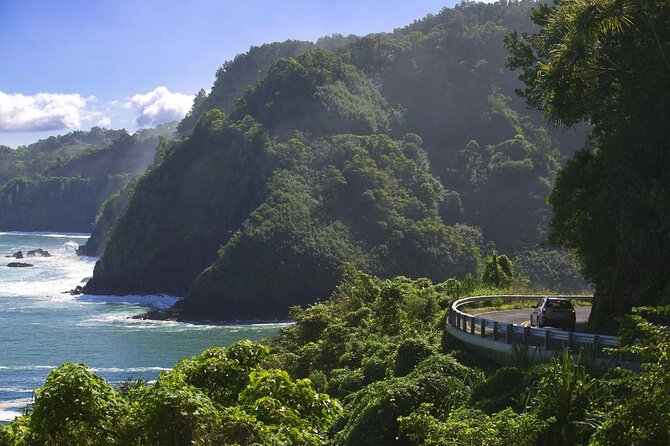
Road to Hāna is famous for a reason: it’s the kind of drive where the scenery feels nonstop. The catch is that the road also demands attention. You can’t just casually cruise and look around when you’re dealing with narrow lanes, frequent turns, and bridges where you’re sharing space in a hurry.
That’s why the early start matters. Pickup begins around 5:45 am, and many guests will be on the road even earlier depending on where you’re staying. If you’re staying in places like Wailea/Kīhei, you’ll be aiming for that morning window so you’re not stuck later with slower traffic and busier pullouts.
This timing also helps you experience the day as a sequence of stops instead of a stressful game of catch-up. Even on a rainy or overcast day, the structure still works: you get the signature viewpoints, you get time at the key parks, and you’re not spending the entire day trying to figure out where to park.
You can also read our reviews of more tours and experiences in Maui


Mercedes Van comfort: it’s the drive that makes this tour pay off
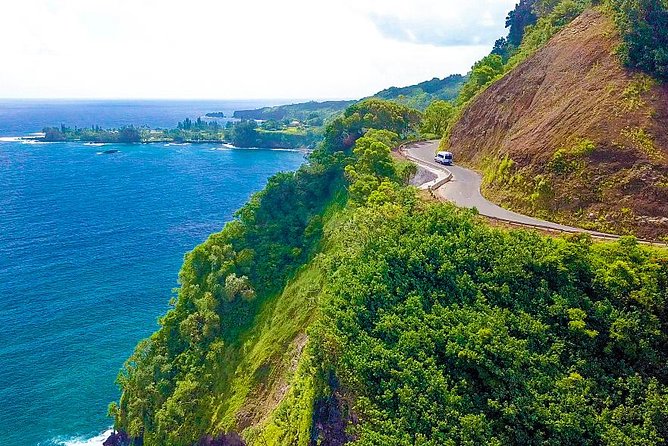
The Road to Hāna highway is 64.4 miles of coastal road in one direction, but the full day experience extends beyond that. On this tour, you’ll rack up an eye-watering number of turns and bridges as the route threads along Maui’s northeast coast—617 curves and 56 one-lane bridges is the headline number.
Here’s what I’d focus on as value: you’re paying to remove the hardest part of the day from your workload. If you’ve ever tried to drive unfamiliar mountain-and-coast roads while also trying to photograph waterfalls, this tour structure is the antidote. Your driver handles the route, the pacing, and the pull-offs, so you can actually enjoy the scenery without white-knuckle concentration.
You also ride in an air-conditioned Sprinter van, which sounds basic until you’re doing a full-day road trip in humid conditions. Plus, the group size stays small (maximum 14), so you’re not stuck with a huge bus crowding every stop.
Guides are a big part of the experience too. The day is packed with “why this place matters” commentary. Names I saw repeatedly in the guide lineup include Rodger, Marty, Quinn, Brian, and Dom. If you get one of those guides, you’re likely to hear extra context about plants, history, and the stories tied to the land.
What’s actually included: lunch, snacks, and the little things that keep you sane
This is a road trip with real food needs. You’re out for about 9 to 10 hours, and you’re bouncing between viewpoints, waterfalls, and state parks. That’s why I love the basics that are included.
Included in the tour price:
- Hotel pickup and drop-off from select locations
- A driver/guide with live commentary
- Road snacks and drinks: water, Hawaiian cane juice, and pastries
- Lunch: a picnic-style homemade sandwich lunch from a local deli (ham, turkey, or veggie)
- Mobile ticket
Two practical notes:
1) If you want a specific sandwich, you’ll choose ham, turkey, or veggie. There’s no special diet accommodation for raw/vegan or allergies. If you have a food allergy or need a special diet, plan to bring your own food.
2) Motion sickness can be a real thing on these roads. One guest recommendation was to take Dramamine before leaving. Another mentioned ginger chews. If you’re sensitive, start early—don’t wait until you’re already feeling it.
Stop-by-stop: from Pāʻia and Ho’okipa to the first waterfall pools
The day starts with pickup, then you roll toward Hana along the northeast side of Maui. Even if your main goal is waterfalls, I like that the tour doesn’t treat the trip like a straight line to one destination. It builds in context and variety.
Pāʻia: the north-coast warm-up
About four miles into the drive from Kahului, you’ll pass by Pāʻia, a historic plantation town split into Lower Pāʻia and Pāʻia. Today it’s known for local storefronts, art galleries, and small boutiques. It’s a good early “set the scene” stop because it helps you understand that Hana isn’t just a scenic endpoint—it’s part of a broader Maui story.





Ho’okipa Beach Park: turtles and wind sports
Next is Ho’okipa Beach Park, often called the windsurfing capital of the world. You can watch windsurfers, kiteboarders, and surfers fighting the shoreline winds. It’s also the threatened Hawaiian green sea turtle area, where large turtles can be seen feeding and basking along the coast. This stop is short (about 15 minutes), but it’s a nice break from the pure waterfall focus.
Twin Falls and the quieter pool options
Then you start landing on the waterfall-and-pool section of the drive.
Twin Falls is described as the first easily accessible string of waterfalls and pools on the Road to Hāna. That matters because it gives you a confident early taste of what the route is famous for.
You’ll also hear about Haipua’ena Falls. What I find useful about this stop is the way it’s positioned: it’s smaller and gets far less traffic because the trail is unsigned and often muddy. That can be a win if you want fewer crowds, but it’s also a reminder to wear shoes that can handle wet conditions.
Ke‘anae and Aunty Sandy: snacks with the right kind of local flavor
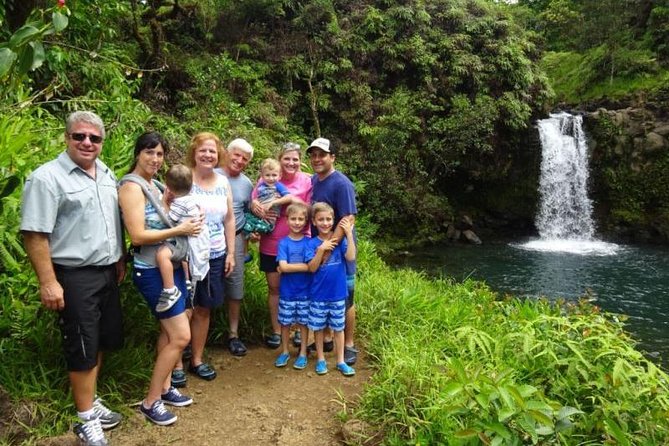
As you move deeper into the Hana side of things, the stops start to feel more “real Hawaii,” not just scenic pulling points.
Ke‘anae Point: village life and taro country
Ke‘anae Point is a small Hawaiian community where everyday life historically centered on farming and hunting. You’ll also come across the Half Way to Hana Snack stand, known for shaved ice, fresh coconut, cold drinks, and Original Fresh Baked Banana Bread. If you’re the kind of person who thinks you’ll just eat later, this is a great moment to taste things while you’re still fresh-energy mode.
Aunty Sandy’s Banana Bread: warm, simple, famous
Aunty Sandy’s banana bread has a specific origin story: in 1983, Aunty Sandy Hueu began baking in Keʻanae, and later her daughter Tammy joined the family operation. It’s a quick stop (about 15 minutes), but it’s memorable because it’s built around warm, fresh bread—exactly what you want on a long day where you’ve been outside most of the morning.
These two stops are also good for your photos. The views are scenic, but the more interesting part is seeing how the route connects to actual local food culture.
Wai’anapanapa’s black sand: the star stop that can change your whole day
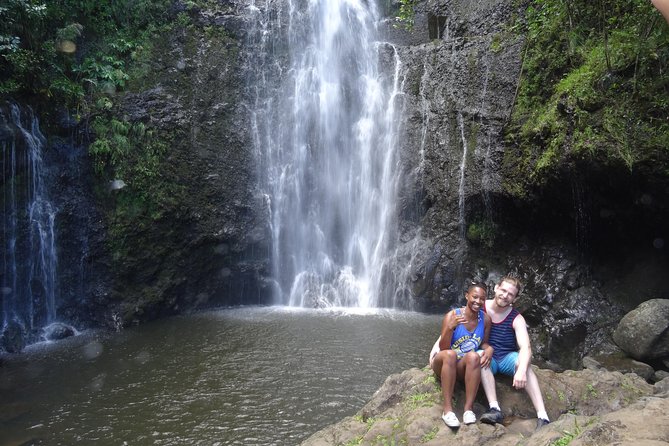
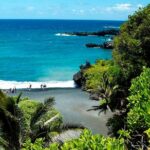
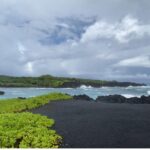
Wai’anapanapa State Park is the headline attraction. This is Maui’s famous black sand beach, with cobalt blue water and black lava rocks described as coming from a lava flow around 10,000 years ago.
What makes this stop special is the combination of visuals and space:
- you can walk along the edge of the bay
- you can sit under a shade tree and just watch the ocean
- you get panoramic views, described as nearly 360 degrees, with dramatic basalt coastline and spray against cliffs
The tour gives about 1 hour here, which I think is the right length. You’re not trapped in a long bus stop. You can do a short walk, take a bunch of photos, and still have time to enjoy it without feeling frantic.
Practical advice: black sand can get warm, and paths can be uneven. Wear shoes you trust. If you’re planning to swim, note that sea conditions vary. This is Hawaii, not a controlled pool.
Waterfalls and swim-able pools: Pua’a Ka’a and the Three Bears moments
After Wai’anapanapa, the day leans even more into waterfalls and pool dips.
Pua’a Ka’a State Park: easy access, chilly water
Pua’a Ka’a State Park offers fairly easy access to a waterfall. Some people like to take a dip in the chilly waters. If that’s your plan, bring the basics: wear a swimsuit under layers, and bring a change of clothes. The tour timing here is about 40 minutes, which is enough for a quick dip if you’re prepared.
Upper Waikani Falls: the Three Bears
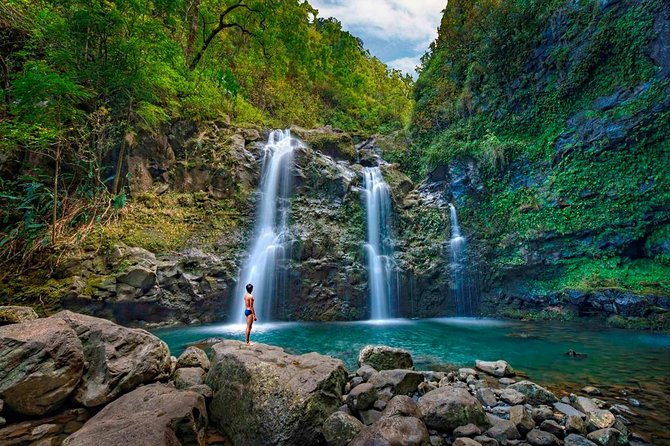
Upper Waikani Falls is often referred to as Three Bears because you’ll see three separate but parallel falls of different lengths. The smallest “baby bear” falls are noted as being on the right. The stop is described around Mile Marker 19, on the mountain side of the highway.
This is one of those moments where photos can mislead you. Waterfalls can run smaller or larger depending on rainfall. If you’re visiting in a drier stretch, expect the pools and cascades to look different than peak-flow photos online.
Hana Bay area: long black-sand beach and a protected swim option
Hana Bay is where you’ll find Hana Beach Park, described as having a long black-sand beach and being the safest swimming beach along the East Maui coast. The bay is protected by a coral reef and sheltered by its curved shape. If swimming is a priority for you, this is the kind of stop you’ll appreciate because it’s framed as the more reliable option on the east side.
Wailua Valley, Kaumahina, and rainbow eucalyptus: small stops with real meaning
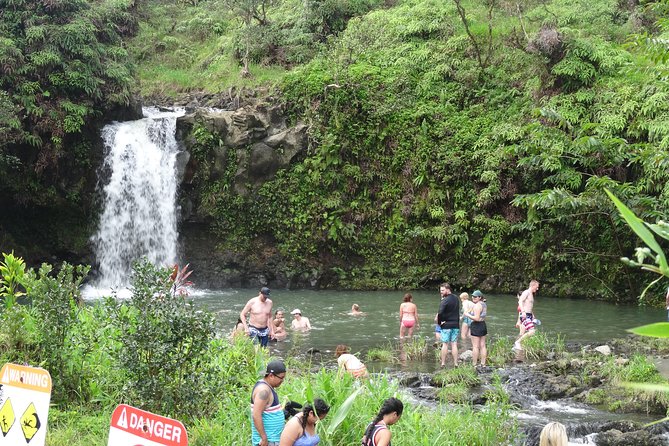
Not every stop is about a single dramatic waterfall. Some are about the land itself and the way Hawaiians have lived with it.
Wailua Valley State Wayside Park: ahupua‘a and kalo patches
Wailua Valley is described as an ahupua‘a—an area that historically supported community life through farming and fishing. It’s rich in Hawaiian culture and includes rare culturally significant fish and plant life, plus ancient taro patches (kalo), some still in operation. There’s even a legend angle: taro is described as the older brother of all Hawaiians, and “mahi‘āina” (cultivation of the land) is an enduring principle.
This stop is brief (about 10 minutes), but it’s the kind of stop that gives you a better lens for the rest of the day. You’ll start looking at the hillsides and water availability differently.
Kaumahina State Wayside Park: forest plants and a nature break
Kaumahina State Wayside Park (also described as Kaumahina State Park) is about 28 miles east of Kahului and 22 miles west of Hana along the highway. It includes a 7.8-acre area of forest and exotic plants. The time is short—about 5 minutes—but it works as a pause where you can stretch your legs and notice what the guide points out.
Eucalyptus rainbow trees: color in the bark
One of the sweetest quick stops is the Eucalyptus rainbow trees. The bark is described as showing bright shades—green, blue, purple, orange, and maroon—as it sheds through the year. You’ll also hear that these can grow quite tall. The stop is only about 5 minutes, but it’s a memorable “pause and look up” moment in a day full of looking forward at ocean and falls.
Keeping your body happy on a curvy day: what to pack and how to plan for swimming
The tour includes chances to swim, but you shouldn’t plan your whole day around it. Rain and swell can change conditions.
Here’s what I’d do to keep things easy:
- Shoes: You’ll likely deal with wet ground, muddy trails (especially around the less-signed waterfall areas), and uneven terrain.
- Swimsuit strategy: For stops that offer dips, layer your swimsuit under clothes and bring a change of clothes plus towels if you want to rinse off.
- Motion sickness: If you’re prone to it, consider taking Dramamine ahead of time, and keep ginger chews handy.
- Layering: Early mornings can feel cooler, and later stops can be hot and humid.
Also, if you get anxious on narrow, curvy roads, know that this tour is still physically the same drive. You’re not driving, but you are riding through it. The advantage is that your driver is handling it, not you. Still, if the sensation itself bothers you, plan for it.
Pickup realities: where the tour starts, and who should plan to meet elsewhere
This part affects value more than people think. You’re paying for transportation. If pickup doesn’t work for your hotel, you’ll need to adjust.
Pickup is offered from select Maui locations, with specific meeting points for areas not included. For example:
- If you’re staying in Napili-Honokowai, Kahana, or Kapalua, you meet at Lahaina Cannery Mall main entrance by Starbucks at 6:00 am.
- If you’re staying in Wailuku, meeting is at Maalaea Park n’ride at 6:30 am.
- If you’re staying in Paia, Makawao, or Kula, meeting is at Kahului Park n’ride at 6:40 am.
If your lodging isn’t listed, you’ll be directed to contact the office for faster pickup arrangements. My advice: confirm your pickup details well before departure and keep your contact info ready so you’re not scrambling at 5:30 am.
Should you book this Maui Road to Hāna van tour?
Book this tour if you want the Road to Hāna highlights without turning your vacation into a driving stress test. It’s a good value when you factor in that you get transportation all day, live guide narration, snacks and drinks, and a picnic lunch. It’s also a strong choice for first-timers because the route includes key stops like Ke‘anae, Wai’anapanapa, and multiple waterfall areas—without you having to worry about where to park or how to time the day.
Don’t book this (or at least think twice) if you:
- really dislike long days and fixed pacing
- have motion sickness that you haven’t figured out how to manage
- need special dietary accommodations beyond ham/turkey/veggie sandwiches (you’d have to bring your own food)
If you’re excited about waterfalls, black sand coastlines, and getting cultural context while someone else handles the hairpins, this is the kind of day that can become your favorite Maui memory.
FAQ
How long is the Road to Hāna tour?
It runs about 9 to 10 hours.
What time does the tour start?
Start time is listed as 5:45 am, and pickup is early in the morning depending on your location.
What’s included in the price?
The price includes the Road to Hāna tour, hotel pickup/drop-off from select locations, a driver/guide with live commentary, road snacks and drinks (including water, Hawaiian cane juice, and pastries), and a picnic-style lunch with ham, turkey, or veggie options.
Do I get lunch, and what choices do I have?
Yes. Lunch is picnic-style and includes homemade sandwiches from a local deli: ham, turkey, or veggie. There are no other alternatives listed for raw/vegan or allergies.
What if my hotel is not on the pickup list?
You’ll meet at a designated location depending on where you’re staying, such as Lahaina Cannery Mall (for Napili-Honokowai, Kahana, Kapalua), Maalaea Park n’ride (for Wailuku), or Kahului Park n’ride (for Paia/Makawao/Kula).
Does the tour run in poor weather?
This experience requires good weather. If it’s canceled due to poor weather, you’ll be offered a different date or a full refund.