REVIEW · MAUI
Lahaina: Day or Sunset Whale Watching Tour with Naturalist
Book on GetYourGuide →Operated by Dive Maui/Hawaiian Rafting Adventures · Bookable on GetYourGuide
Whales sing right off Lahaina. I like this tour for the custom-built inflatable ocean raft that gets you close, and for the onboard naturalist who explains what you’re seeing—people have praised guides like Rene and Joe for keeping the trip clear and fun. You’re headed into the Maui Nui whale sanctuary, where winter humpbacks come to mate and raise calves.
One thing to consider: this is a small, open-water experience and it depends on the weather. If it’s windy or the ocean is choppy, you’ll feel it more than you would on a bigger boat, so plan for motion and dress for spray.
In This Review
- Key points to know before you go
- Where you start: Dive Maui at 1223 Front St
- The Maui Nui whale sanctuary plan: how the crew finds whales
- Up close on a custom inflatable raft (and what that means for you)
- Hydrophone whale songs: the part many people forget to plan for
- The naturalist on board: turning whale time into understanding
- Weather, waves, and the best way to avoid a rough day
- How long you’re out there (and how to pace your day)
- Price and value: what $80 really buys you
- Who should book this tour (and who should skip it)
- What to bring for a comfortable whale watch
- Should you book this Lahaina whale watching tour?
- FAQ
- How long is the Lahaina day or sunset whale watching tour?
- Where do I meet for the tour?
- Is hotel pickup included?
- What’s included in the ticket price?
- Are whale sightings guaranteed?
- Can I bring glass items on board?
- What happens if the weather is poor?
- Is the tour suitable for young children or people with certain health conditions?
Key points to know before you go
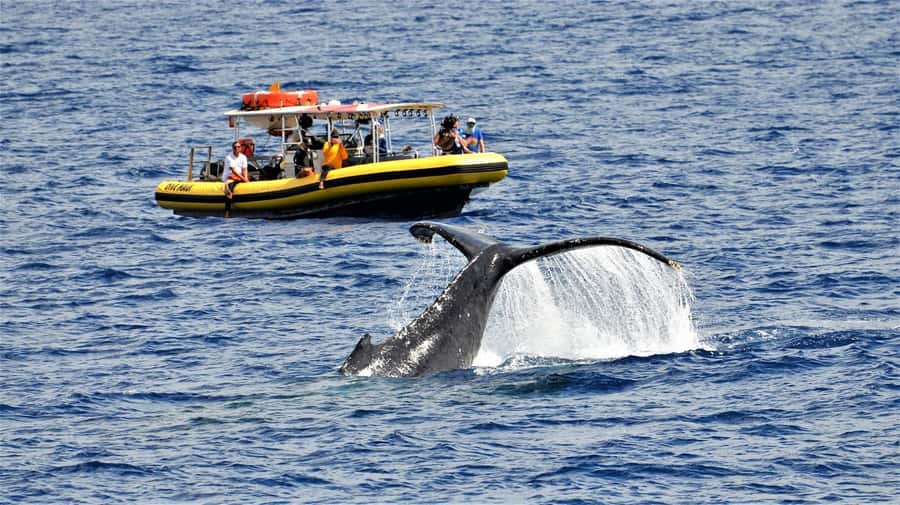
- Custom-built ocean raft for close-up viewing: A smaller setup can mean more time when whales linger near the boat.
- Hydrophone and speakers for whale songs: You’re not just watching—you can hear the calls.
- Maui Nui whale sanctuary route: Your captain works the local area for whale activity in season.
- Guaranteed sightings or a free return trip: If you don’t get the whale time, the company backs it with another try.
- Live English naturalist narration: Expect real-time talk, not a recorded script.
Where you start: Dive Maui at 1223 Front St
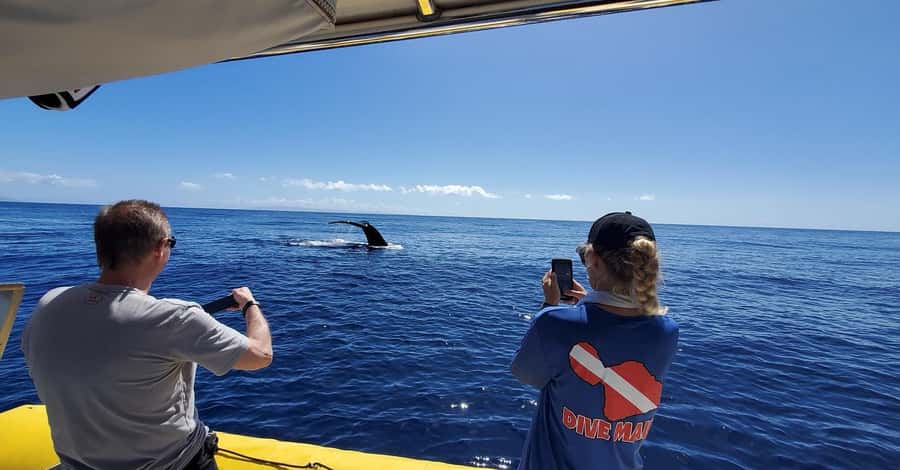
This trip runs from a straightforward Lahaina meeting spot: Dive Maui at 1223 Front St. Plan to arrive early. The tour leaves on time, and the day goes from land to water fast.
The day’s structure is simple. You check in at the meeting point, then there’s a short walk down to the boat area (about 5 minutes). After your whale time, you walk back to the same location. No hotel pickup is included, so if you’re staying a ways away, you’ll want to arrange a rental car, rideshare, or parking on Front St or at the Lahaina Cannery Mall.
Practical tip: if you’re juggling family schedules, give yourself extra buffer. You don’t want to be rushing while you’re trying to get settled in cool, windy marine air.
You can also read our reviews of more evening experiences in Maui


The Maui Nui whale sanctuary plan: how the crew finds whales
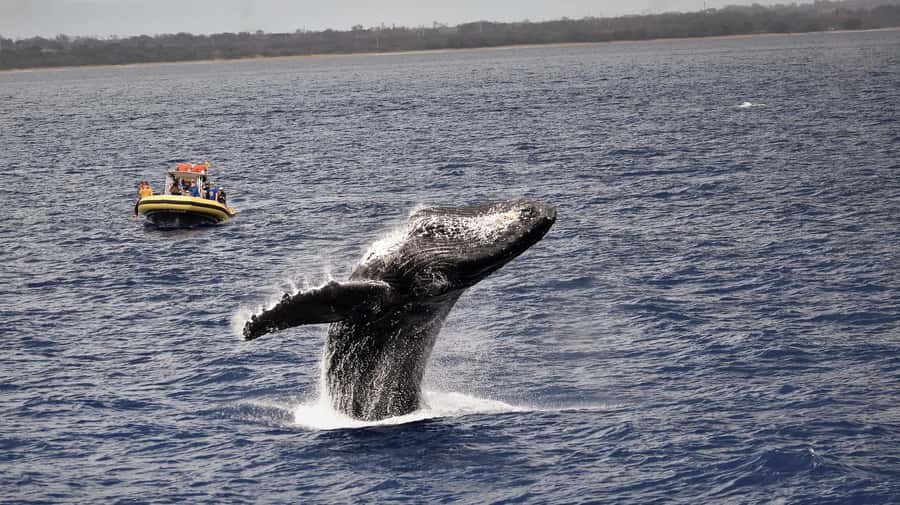
The big idea is hunting humpbacks in their seasonal hangout. Each winter, humpback whales migrate to Maui waters to mate and give birth. That’s why this tour is built around that time window and why it feels like more than just a scenic ride.
On the water, you’re watching in the Auau Channel area with a captain who’s focused on positioning. Several riders note that the crew gets you to whale groups quickly and places the boat so you can see clearly from where everyone is seated.
In terms of what you might see, humpbacks are most famous for:
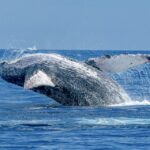
- Breaching and active surface behavior
- Mothers and calves staying close together
- Long underwater moments, where timing matters more than speed
And if your day has less action than you hoped, remember you’re still in the right place during the humpback season—and the operator’s sighting policy is part of the value.
Up close on a custom inflatable raft (and what that means for you)
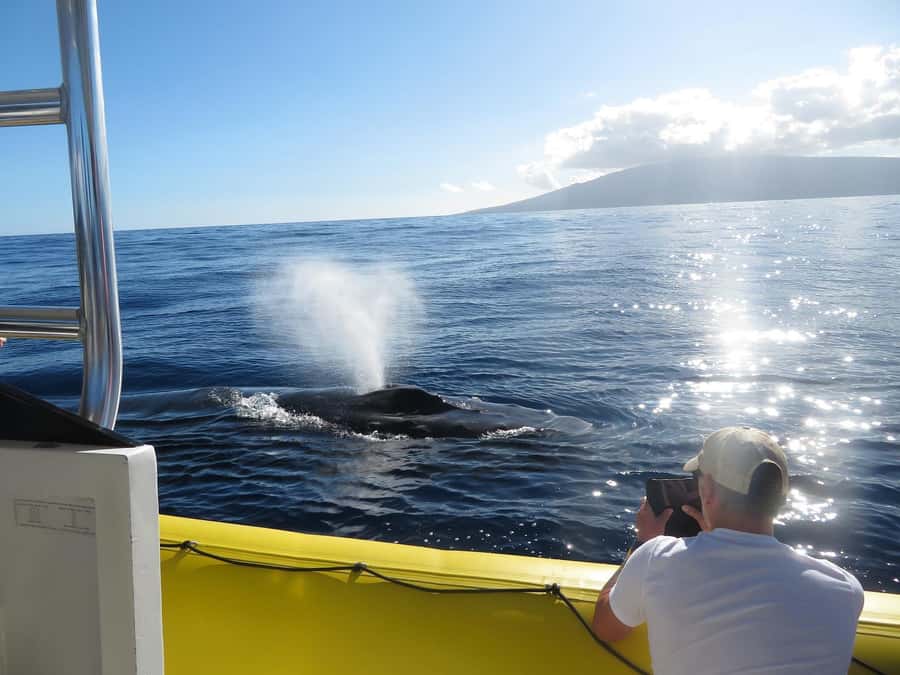
This is not a huge sightseeing vessel. You’ll ride on a custom-made inflatable ocean raft, designed for an intimate feel on the water. That matters, because whale watching is mostly about position and patience. A smaller boat setup can help you get closer when the whales are interested in hanging around.
What you can look forward to:
- Intimate “front row” sightlines when whales come near the surface
- More chance for memorable, close encounters if the captain finds an active group
- A lower, more ocean-level perspective compared with higher boats
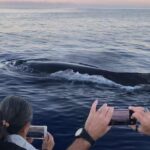
Some encounters described by riders include whales moving around the boat for several minutes, even going under it. That’s not something you can schedule, but the tour is clearly engineered to make those moments possible.
The tradeoff is comfort. Inflatable raft + open water + wind can equal a bumpier ride. If you’re sensitive to motion, treat this like an ocean activity, not a calm lake cruise.
Hydrophone whale songs: the part many people forget to plan for
Seeing humpbacks is amazing. Hearing them is different.
This tour includes a hydrophone and speakers onboard, so you can listen to whale songs as you watch. That turns the experience into more than visuals. You start to notice behavior in a new way—songs are often tied to social activity, and the audio gives you a stronger sense of what’s happening underwater.
For first-timers, it’s also a great “learning booster.” When your naturalist explains what humpbacks do during migration—breeding behavior, calf care, and typical group dynamics—the sounds you hear make those explanations feel real.
If you’re a tech-and-nature person, you’ll probably love this part. It’s one of the few whale watches where the underwater world comes through clearly enough to feel hands-on.
The naturalist on board: turning whale time into understanding
The tour includes whale watching with a naturalist—a live guide who talks during the ride. This is the difference between drifting past wildlife and actually learning how to read it.
Riders repeatedly highlight the education side: guides like Rene, Joe, Brian, Renee, Marina, and others have been praised for being passionate and for teaching in a way that makes the science feel approachable. That education tends to focus on:
- What humpbacks are doing in Maui waters during winter
- How to interpret whale behavior (surface time vs. underwater time)
- What whale songs mean in context—why they’re part of mating and communication
I also think this is where the tour justifies itself. You’re paying not only for time on the water, but for a guide who helps you get value out of that time.
You can also read our reviews of more whale watching tours in Maui




Weather, waves, and the best way to avoid a rough day
The operator is clear: this experience requires good weather. If poor weather cancels your trip, you’ll be offered a different date or a full refund. That’s important in Maui, because conditions can change fast.
Also, the raft ride means conditions affect comfort more than on big ships. Some riders describe it as “rocky” when it’s windy, with things smoothing later. So here’s the no-drama approach:
- Dress in layers. Wind chill is real.
- Bring a light rain layer, because spray happens even on decent days.
- If you’re prone to seasickness, consider medication beforehand. One rider specifically recommended Dramamine.
If you’re planning this at the end of your trip, it’s worth keeping flexibility. When weather is good, whale watching can be a hit. When it’s not, you’ll be glad you can shift plans.
How long you’re out there (and how to pace your day)
You’re scheduled for about 90 minutes to 2 hours on the water. That’s a sweet spot: long enough to find a group and let it do its thing, but short enough that families aren’t stuck for half a day on a moving vessel.
The pacing is also simple. You meet at the start, walk down, then spend the main block doing whale watching from the boat area. After the water time, you walk back to 1223 Front St.
Plan your day around it:
- Eat beforehand or be ready to grab something after. Food and drinks aren’t included, so bring your own snacks if you need them.
- If you’re trying to stack activities, don’t schedule something tight immediately before pickup/check-in.
- Leave time for parking or rideshare drop-off.
Price and value: what $80 really buys you
At $80 per person, this is not the cheapest whale watch in Maui—but it’s also not trying to be a bargain ticket. The value comes from three clear areas.
First, the experience is built around close viewing with a custom inflatable raft instead of a distant, high-angle cruise. Second, you get the naturalist plus the hydrophone. That turns the tour into an education experience, not just a wildlife sighting.
Third, the sighting promise matters: the highlight notes guaranteed sightings or a free trip for another day. That’s not common on all tours, and it can reduce the risk for you—especially if whales are less active that day.
So for me, this price makes sense if you care about:
- getting close enough for real whale-time
- hearing whale songs, not just seeing splashes
- learning what you’re watching
If you’re only after a casual “maybe we’ll see something” outing, you might find lower-cost options. But if you want the full Maui humpback experience, this one’s aiming at that goal.
Who should book this tour (and who should skip it)
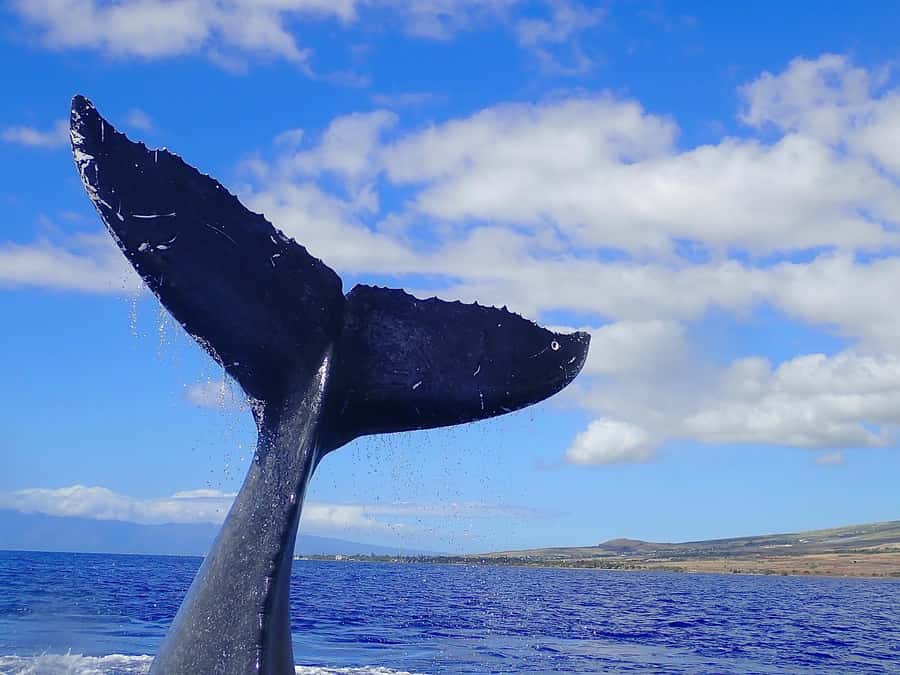
This trip is described as family-friendly, and the vibe is best when you like being outdoors and paying attention.
It’s not suitable for:
- Children under 2
- Pregnant women
- People with back problems
- People with heart problems
- Wheelchair users
Service animals are allowed, and there’s live English guiding.
If you’re comfortable with light-to-moderate ocean movement and you’re okay with a small craft setting, you’ll likely enjoy the up-close format. If health mobility issues make bumpy rides unsafe for you, it’s better to choose an option that fits your needs.
What to bring for a comfortable whale watch
The tour doesn’t include food and drinks, and it has one firm rule: no glass objects. Beyond that, keep it simple and practical.
Bring:
- A reusable water bottle (and snacks if you need them)
- A light rain/wind layer, plus something warm for the return
- Sunscreen and sunglasses
- Anything you need for seasickness if you’re prone to it
Also, double-check your camera plan. If you’re bringing items, keep them secure and avoid glass containers entirely.
Should you book this Lahaina whale watching tour?
I’d book it if you want the elements that usually make whale watching unforgettable: close positioning, a naturalist who explains what matters, and the chance to hear whale songs through the hydrophone. The $80 price feels more like “pay for quality time” than “pay for a long ride,” especially with the sighting guarantee or free return.
Skip or rethink it if you fall into the listed non-suitable categories (especially pregnancy, heart/back issues, wheelchair use) or if you know you can’t handle ocean motion. Also, if you’re traveling with no flexibility at all, the weather dependency is worth planning around.
If you can match it with a day that looks like decent conditions, this tour is set up to deliver the real Maui magic—humpbacks in their winter world, close enough to feel the scale.
FAQ
How long is the Lahaina day or sunset whale watching tour?
The tour runs about 90 minutes to 2 hours, depending on the scheduled start time and conditions.
Where do I meet for the tour?
Meet at Dive Maui, located at 1223 Front St in Lahaina.
Is hotel pickup included?
No. Hotel pickup and drop-off are not included.
What’s included in the ticket price?
You get whale watching with a naturalist. Food and drinks are not included.
Are whale sightings guaranteed?
Yes. The highlight notes guaranteed sightings, or you’ll receive a free trip for another day if sightings don’t happen as promised.
Can I bring glass items on board?
No. Glass objects are not allowed.
What happens if the weather is poor?
This experience requires good weather. If it’s canceled due to poor weather, you’ll be offered a different date or a full refund.
Is the tour suitable for young children or people with certain health conditions?
It is not suitable for children under 2, pregnant women, people with back problems, people with heart problems, or wheelchair users.