
REVIEW · MAUI
Polynesian Wood Carving on Maui
Book on Viator →Operated by Oni Foundation Inc - Wonderful World of Aloha Cultural Activity Center · Bookable on Viator
One hour, and you leave holding a carving. It’s a hands-on Polynesian wood carving on Maui session that mixes galleries, story, and a full carving demonstration. The big win here is the way the craft is explained with meaning, not just tools and technique.
I like that you get to see the carving process from start to finish, and then you get a chance to try it yourself with tools and wood provided. I also appreciate that the experience is family-friendly and doesn’t require prior carving experience. One possible drawback: it’s short (about an hour), so you won’t go deep enough to feel like you’re learning full carving skills for the long run.
In This Review
- Key Highlights You’ll Care About
- Checking In at Oni Foundation, Then Getting Positioned for 1:00pm
- Three Galleries on Migration, Costume, and How Art Travels
- Uncle Vili’s Talk Story: Tools, Methods, and Family Carving Traditions
- Watching the Carving From Start to Finish (Not Just the Finished Product)
- Your Turn: Hands-On Carving With Provided Tools and Wood
- Price and Timing: How $25 Fits Into a Maui Day
- Who Should Book This Wood Carving Session
- Tips to Get the Most Out of It
- Book It or Skip It?
- FAQ
- How long is the Polynesian wood carving experience on Maui?
- Where does the experience meet?
- When does the talk story and wood carving demonstration begin?
- Is the experience offered in English?
- Can I try carving if I’ve never done it before?
- Is there a limit on group size?
- Is free cancellation available?
Key Highlights You’ll Care About
- Costume galleries that connect Polynesian migrations to dance, art, and everyday Hawaiian life
- Talk Story with Uncle Vili focused on tools, methods, and carving symbology
- A from-start-to-finish demonstration so you understand what you’re seeing, step by step
- Hands-on practice with provided tools and wood, no experience needed
- Small-group feel with a maximum of 25 participants
- English narration throughout, plus the chance to ask questions
Checking In at Oni Foundation, Then Getting Positioned for 1:00pm
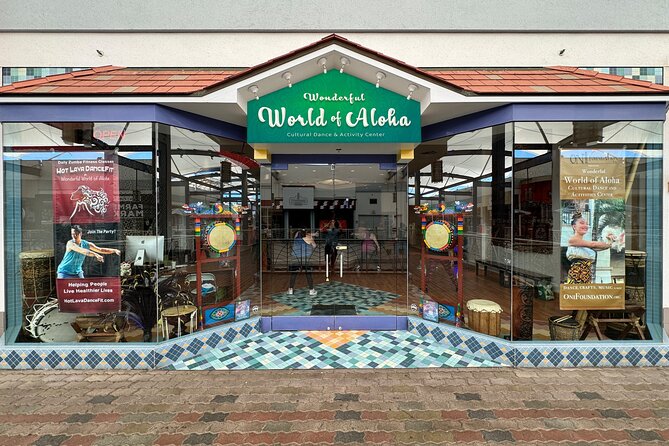
Most sessions like this run on a tight clock, so I’d treat arrival as part of the experience. Start at Oni Foundation Inc – Wonderful World of Aloha Cultural Activity Center in Kahului (275 W Kaahumanu Ave). Since the talk story begins at 1:00pm, showing up a bit early lets you settle in and see the galleries before the carving starts.
The center has three galleries of cultural costume exhibits, so you won’t be stuck waiting in a hallway. If you’re planning other stops the same day, give yourself breathing room. This is the kind of activity where you’ll enjoy it more if you don’t rush through the pre-show portion.
You can also read our reviews of more tours and experiences in Maui.



Three Galleries on Migration, Costume, and How Art Travels
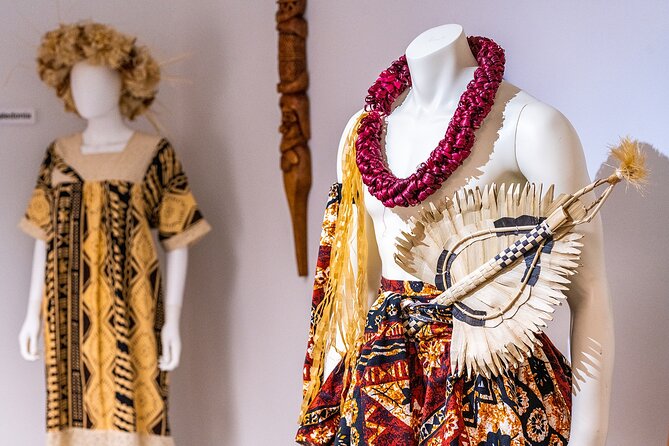
Before the carving demo, you’ll spend time with cultural costume displays tied to the migrations to Hawai‘i over the centuries. The exhibits trace changes from the first Polynesians through later plantation-era influences and into modern Hawai‘i. That thread matters, because Polynesian carving isn’t just decorative—it’s tied to identity, symbolism, and how communities adapt and carry traditions forward.
What I like about this gallery setup is that it gives you a map. Even if you’re not an expert in Polynesian culture, the displays frame what you’re about to see with context: dance, art, and Hawaiian life shaped by different influences over time. It also helps the carving talk story make sense, because the explanations reference meaning and tradition, not just technique.
A practical note: this pre-demo portion is part of the experience, so don’t plan to arrive exactly at 1:00pm and then hope you can catch everything. You’ll miss the flow that turns a woodcarving demonstration into a story you can follow.
Uncle Vili’s Talk Story: Tools, Methods, and Family Carving Traditions
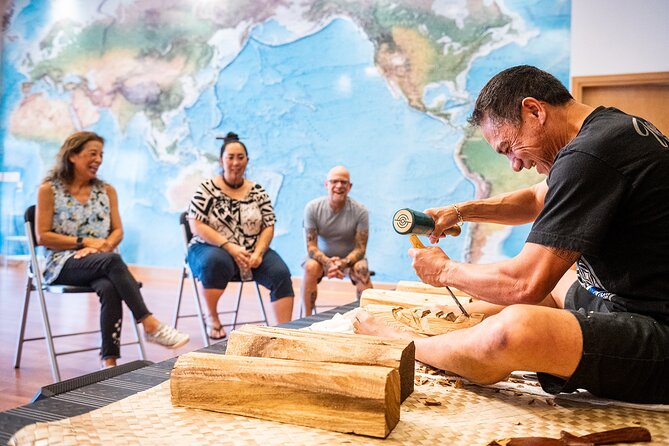
At 1:00pm, the focus shifts from gallery walks to a talk story led by the expert wood carver. His name is Uncle Vili, and the tone is friendly and conversational. This isn’t a lecture that lives in the front of the room—it’s structured as a back-and-forth story where you learn how the craft works and where it comes from.
Uncle Vili explains the tools and methods he uses, along with his approach to the ancient craft. He also shares the history, tradition, and symbology of Polynesian carving, plus his own family’s generations of carving. That family connection is one of the most compelling parts, because it makes the craft feel lived-in rather than museum-distant.
You’ll also get a chance to ask questions during the talk story. If you like learning by conversation, this is the part where the experience pays off.
Watching the Carving From Start to Finish (Not Just the Finished Product)
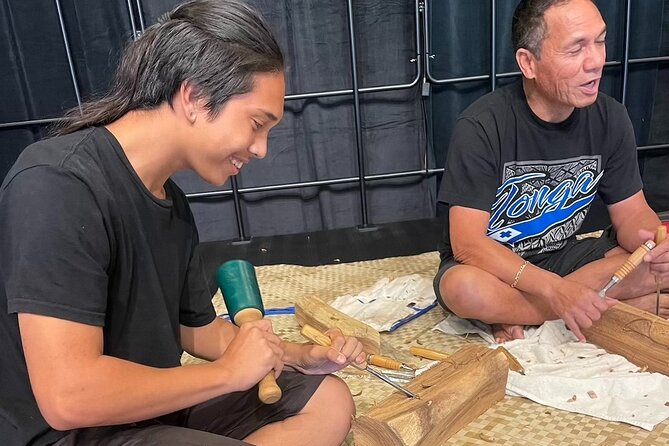
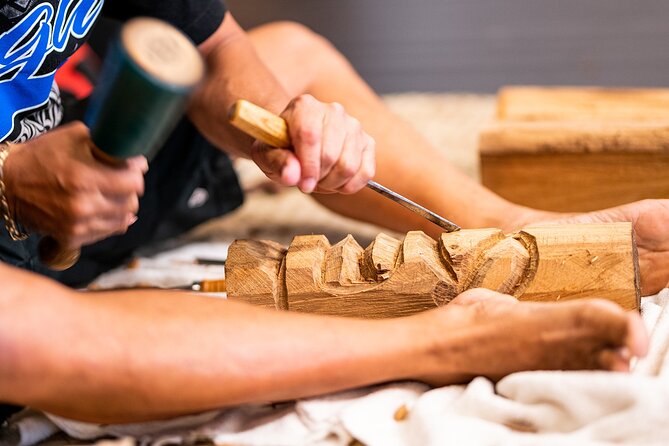
After the talk story starts, you’ll watch the carving take shape from start to finish. This is a big deal, because most people only ever see the end result—finished carvings on shelves. Here, you get to see the “in between,” where technique, decision-making, and carving rhythm show up.
You’ll learn how tools are used during the process and how meaning ties into the patterns. Even without any carving background, you can usually pick up what’s happening because the demo is explained out loud. The craft becomes a sequence you can follow rather than a blur.
The other reason this matters for you: once you see the steps, it becomes easier to try carving afterward. Your first attempt won’t feel random. You’ll know what the carver is trying to do at each stage, and that makes the hands-on portion less intimidating.
Your Turn: Hands-On Carving With Provided Tools and Wood
The experience includes a chance to give carving a try, and the good news is that no experience is necessary. Tools and wood are provided, which keeps things simple. You’re not expected to bring supplies or know the terminology in advance.
In practical terms, this is where the value becomes tangible. You’re paying for more than watching. You’re paying to participate in the craft for yourself—and that’s often what makes short experiences feel worth it.
What to expect from the hands-on portion:
- You’ll practice using the tools provided for the carving activity
- You’ll do it with guidance from the local guide/carver team
- You’ll get a feel for how carving turns a piece of material into a shaped form
A realistic expectation: with only about an hour total, your project won’t become a masterwork. But it will likely be your own. And that sense of completion—trying it, not just observing—is exactly why this type of workshop is popular for families and first-timers.



Price and Timing: How $25 Fits Into a Maui Day
At $25 per person for about one hour, this is priced as an entry-friendly cultural activity. It’s not a full-day workshop, and that’s the tradeoff. But for the time you spend, you get three key things: cultural context through the galleries, a guided talk story with Uncle Vili, and a hands-on carving attempt.
Also, the group size is capped at 25 participants, which matters more than it sounds. In small groups, it’s easier to ask questions and get help if you’re trying something new. If it were a huge crowd, the “try it yourself” part could feel rushed. Here, the setup aims to keep the experience accessible.
If you’re building a Maui itinerary, this works well as a midday or afternoon anchor. It’s also a good option when you want culture on a day when you’re not up for a long drive or an all-day tour.
Who Should Book This Wood Carving Session
This experience is a strong match for:
- Families looking for an interactive activity that works across ages
- People who want to learn the meaning behind Polynesian carving, not only the mechanics
- First-timers who enjoy demonstrations and then want a practical try
- Anyone who likes story-driven explanations with a real person, not a scripted video
It may be less ideal if:
- You want intensive, multi-session instruction to develop advanced carving skills
- You’re hoping for a lengthy, hands-on workshop where you spend most of the time carving
Tips to Get the Most Out of It
A few small choices will make the hour go better:
- Arrive early enough to enjoy the costume galleries at a comfortable pace
- Bring curiosity about symbols and tools—those are the themes Uncle Vili focuses on
- Plan a calm day around it, so you can settle in rather than sprinting between activities
Also, since this is an English-taught experience, English speakers will have an easier time keeping up with the explanations. If your group includes people who prefer not to use English, plan for the chance to follow along through the demonstration and visual exhibits.
Book It or Skip It?
I’d book this if you want a Maui activity that blends culture and craft, and you’re excited to actually try the carving. The combination of the costume galleries before the demo and the talk story with Uncle Vili makes it feel like more than a quick show. For $25 and about an hour, you’re getting real participation—plus an explanation of tradition and symbology that helps the craft mean something.
If you’re chasing deep, technical carving practice, you might want a longer class. But if your goal is a friendly, story-led introduction to Polynesian wood carving on Maui, this one is an easy yes.
FAQ
How long is the Polynesian wood carving experience on Maui?
It runs for about 1 hour.
Where does the experience meet?
It starts at Oni Foundation Inc – Wonderful World of Aloha Cultural Activity Center, 275 W Kaahumanu Ave, Kahului, HI 96732.
When does the talk story and wood carving demonstration begin?
The session starts at 1:00pm.
Is the experience offered in English?
Yes, it’s offered in English.
Can I try carving if I’ve never done it before?
Yes. No experience is necessary, and tools and wood are provided.
Is there a limit on group size?
Yes. The maximum group size is 25 participants.
Is free cancellation available?
Yes. You can cancel up to 24 hours in advance for a full refund. If you cancel less than 24 hours before the start time, the amount paid is not refunded.