REVIEW · MAUI
Semi Private Stand Up Paddle Boarding (SUP) Class at Kalama Beach in Kihei
Book on Viator →Operated by Surf Club Maui · Bookable on Viator
Kalama Beach makes SUP feel doable. I like that you get a semi-private class with hands-on guidance, and I really appreciate that all the gear is included so you can focus on learning, not shopping.
The lesson structure also makes sense: you start with a short on-land safety rundown, then you’re coached out on the water in Maui conditions. The upside is faster progress, especially if you’re a total beginner or you’ve only paddled casually.
One consideration before you go: the class requires that you can swim in the ocean and feel comfortable in deeper water. If you show up unable to swim or not comfortable, the session can be canceled and you won’t get a refund.
In This Review
- Key Things That Make This SUP Class Worth Your Time
- Why Kalama Beach SUP Lessons Work in Real Life
- Surf Club Maui Check-In: Gear Up Like a Pro
- The On-Land Part: Safety Rules and SUP Theory (Before You Wobble)
- On the Water at Kalama Beach: Coaching That Helps You Improve
- What’s Included (And Why It Changes the Value)
- Duration and Pacing: 1.5 Hours That Feel Like Progress
- Tips for Getting the Most From Your Lesson
- Who This SUP Class Is Best For (And Who Might Want to Think Twice)
- Using SUP Skills After the Lesson
- Should You Book This Semi-Private SUP Class at Kalama Beach?
- FAQ
- What’s the duration of the Semi Private SUP class at Kalama Beach?
- What’s included in the price?
- How big is the group?
- Do I need to sign a waiver before the lesson?
- Do I have to be able to swim?
- Is there a place to shower or change?
Key Things That Make This SUP Class Worth Your Time
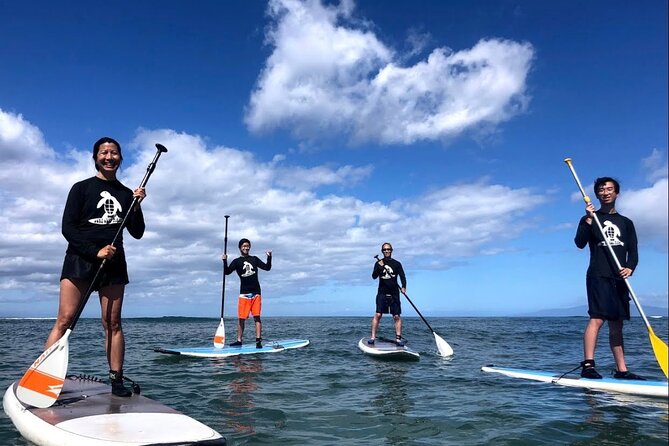
- Semi-private group only: it’s for your family and friends, not mixed with strangers
- Max 6 people: small enough for real feedback, not just a quick demo
- Gear kit included: reef shoes and a rash guard are part of check-in
- Short lesson on shore first: safety rules and key theory so you waste less time guessing
- Built for beginners and paddling newcomers: you’ll learn fundamentals and then apply them on the water
Why Kalama Beach SUP Lessons Work in Real Life
If you’ve ever looked at Maui water and wondered, Can I actually do this?, Kalama Beach is the answer you’re hoping for. This is a stand-up paddleboarding lesson built around getting you moving quickly and safely, without a lot of complicated “try to figure it out” time.
I like the practical rhythm. You don’t just get equipment and a vague suggestion to have fun. Instead, you start with rules and theory at Kalama Beach Park, then your instructor takes you into the water and coaches you from there. That sequence matters because SUP is equal parts balance and confidence. When you understand what to do first, your time on the board becomes productive instead of wobbly and frustrating.
Also, the semi-private setup is a big deal. You’re not sharing attention with a random crowd, and you’re not waiting your turn while the instructor works with someone else’s unique learning curve. In a place as scenic (and occasionally busy) as Maui, that focused guidance is how first attempts turn into real skill.
You can also read our reviews of more private tours in Maui

Surf Club Maui Check-In: Gear Up Like a Pro
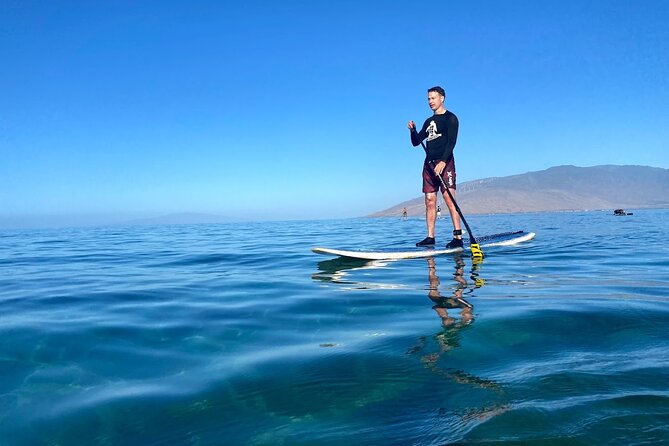
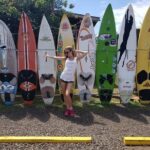
Your session starts at Surf Club Maui at 1900 S Kihei Rd, Kihei in Kihei. Expect to check in with the surf school team at the Kalama Beach area—there’s a van used for getting you set up. It’s a small detail, but it helps everything feel organized and low-stress once you arrive.
Here’s what I’d call out as the smart part of check-in: you’re outfitted with reef shoes and a rash guard surf shirt. That immediately makes the experience more comfortable for your body, and it also reduces the “I hope I packed the right stuff” anxiety. Even if it’s your first time on a board, you can focus on balance and paddle strokes instead of figuring out footwear.
Once you’re set, the plan is to start with a lesson on shore. Changing rooms and showers are available, which is useful if you want to rinse off and keep your day moving. And since the class includes free parking, you can treat this like a normal, straightforward stop on your itinerary rather than a logistics puzzle.
The On-Land Part: Safety Rules and SUP Theory (Before You Wobble)
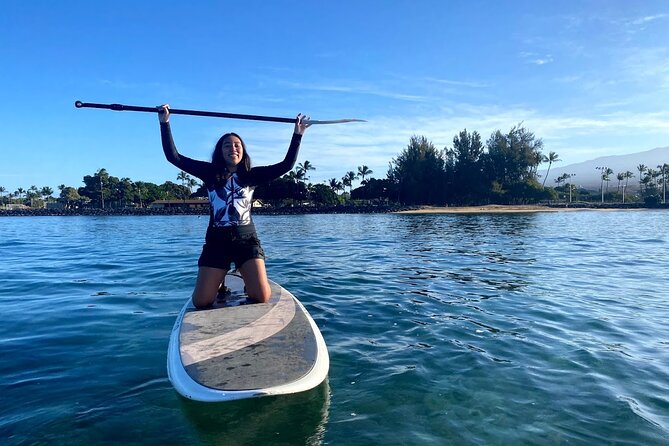
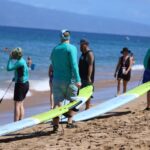
Before you hit the water, you get a lesson in the park to cover safety rules and basic theory. This is where the instructor sets you up for success—especially if you’re brand new.
The class is designed for both total beginners and people who already have some paddling experience. Either way, the on-shore teaching helps you understand what your body needs to do on the board:
- how to position yourself on the SUP
- how to manage your balance while moving
- what safety expectations look like in the ocean
In the real world, that matters because SUP in open water is not just a workout. It’s also about reading conditions and staying calm enough to follow instructions. When you start with the “why,” you tend to learn faster once you’re actually standing.
The other safety piece to take seriously: students must be able to swim. If you can’t swim or you’re not comfortable in deep water, the lesson won’t run, and there’s no refund. So before you book (or before you head to the beach), be honest with yourself about your comfort level in open water.
On the Water at Kalama Beach: Coaching That Helps You Improve
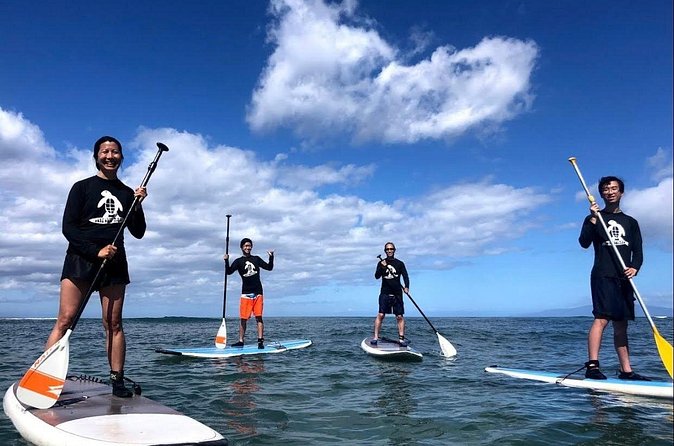
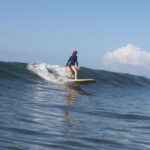
Once you’re on the water, the main event begins: instructors take you out and coach you while you paddle. This is where the class earns its high marks.
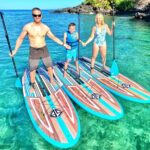
The small-group size (up to 6 travelers) is the practical reason you get real attention. With fewer people, the instructor can check your stance, watch how you’re paddling, and adjust what you’re doing without racing through the group. That personalized feedback is a common theme in the best experiences people talk about.
The names that came up in praised lessons include instructors like Turtle, David, Anton, and Mike—and the consistent message is patience. When you’re learning SUP balance, you don’t need pressure. You need someone who can correct small things and keep you comfortable trying again.
Also, the class is built to get you up and paddling quickly. It’s not a long, slow grind of standing still while you wait for progress. Your goal is to learn the basics and then leave with usable skills—things you can apply later in your Maui days.
And because the lesson depends on conditions, good weather matters. If conditions aren’t right, the experience can be canceled and you’ll be offered a different date or a full refund due to poor weather. That’s normal for ocean sports, but it’s still worth planning with some flexibility.
What’s Included (And Why It Changes the Value)
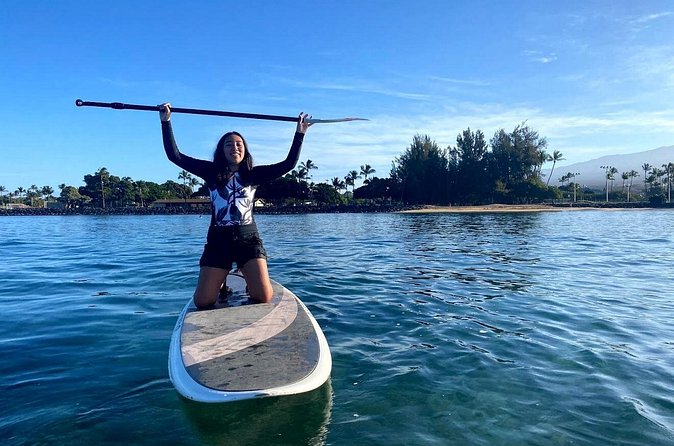
At $140 per person for about 1.5 hours, this isn’t a cheap activity. But when you look at what you actually get, the price starts to make more sense.
You receive:
- all necessary SUP equipment
- reef shoes and a rash guard surf shirt
- coaching from experienced surf instructors
- free parking
- taxes, fees, and handling charges included
For first-timers, equipment included is a big value lever. If you had to rent everything separately, you’d spend time shopping, waiting, and assembling gear. Here, you show up, get outfitted, and start learning.
The semi-private angle adds another layer of value. Since semi-private groups are only for your family and friends (not mixed with strangers), you’re paying for more targeted instruction. In practice, that can mean less confusion, better pacing, and more time for the instructor to correct what matters for your group.
Another small value win: changing rooms and showers. That might sound minor, but after ocean time, it’s real-life convenience. You can rinse off and keep enjoying the rest of Maui without feeling sticky for the whole day.
You can also read our reviews of more tours and experiences in Maui


Duration and Pacing: 1.5 Hours That Feel Like Progress
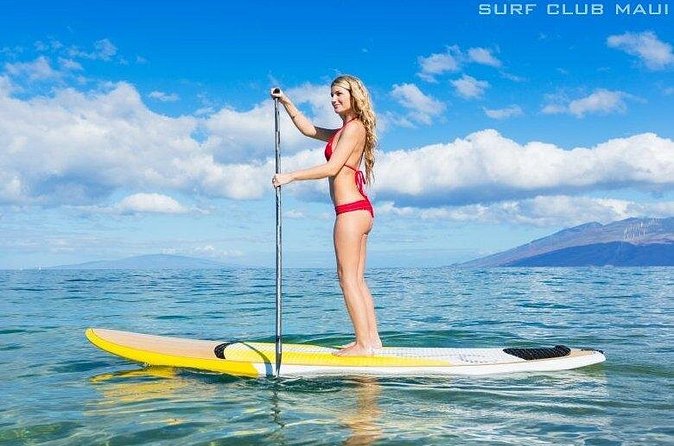
The class runs about 1 hour 30 minutes. That’s a sweet spot for learning. Long enough to cover basics and get you into the “I can do this” zone, but not so long that you wear out your balance before you even get started.
A common reason people struggle with SUP is trying to do everything at once: learning stance, learning paddle technique, and managing ocean conditions all in the first minute. This class reduces that stress by sequencing the day: park lesson first, water second.
Also, planning helps. The organizers ask you to arrive well rested and hydrated. That’s not just nice wording. Standing, balancing, and bracing your core takes energy. When you’re tired or dehydrated, your form goes first, and learning slows down.
Tips for Getting the Most From Your Lesson
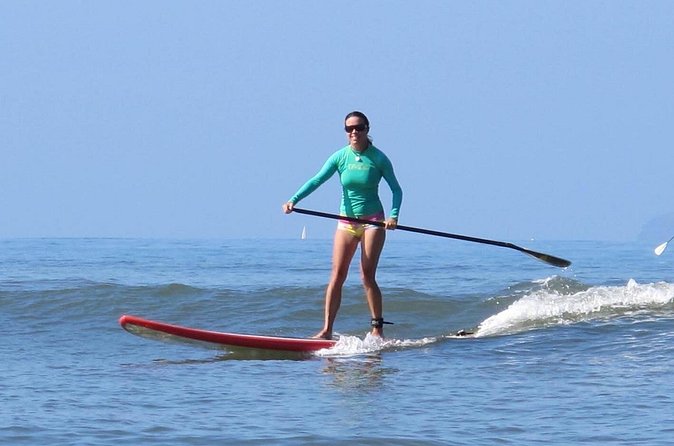
I’d treat this like a focused sports class, not just a scenic activity. You’ll get more out of it if you show up ready.
Here’s how to set yourself up:
- Hydrate before you go and bring water if you need it beforehand
- Wear comfortable swimwear under the rash guard if you’re able
- If you’re nervous, tell the instructor right away. Early honesty helps them coach you better
- Be ready for ocean exposure. The class has you in the water for real, not just a quick photo stop
One more practical note: bring some cash for a gratuity for your instructor. It’s explicitly encouraged, and it’s the kind of small gesture that makes the experience feel more respectful, especially for a sport where coaching takes real effort.
Who This SUP Class Is Best For (And Who Might Want to Think Twice)
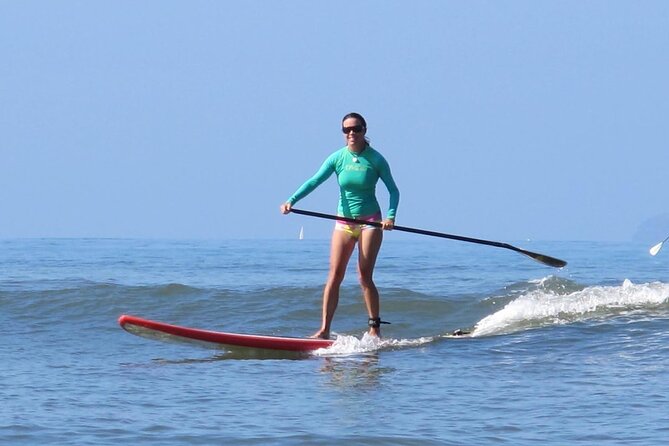
This semi-private SUP class is a great match if:
- you’re a total beginner and want instruction that moves you from zero to paddling
- you want small-group coaching without mixing with strangers
- you’re traveling with family or friends and want the lesson to feel more personal
- you’re moderately fit and ready to stand, paddle, and balance in the ocean
You should think twice if:
- you can’t swim or aren’t comfortable in deeper ocean water, because you must meet the swimming requirement for the lesson to run
- you’re dealing with pain or symptoms that could affect balance or body control. The session guidance includes instructions to stop if you notice lower back pain, neck pain, tingling, or numbness, and to seek medical attention if symptoms don’t go away
In other words, if your body feels stable and you’re honest about your swim comfort, the class is well aligned with what you need.
Using SUP Skills After the Lesson
One of the best reasons to take a basics class on Maui is what happens after. Once you can stand and paddle with some control, the rest of your trip gets easier. You can plan future water time without starting from scratch.
Even if you don’t book another paddle session right away, you’ll leave with practical understanding of:
- how to hold your stance so you don’t fight your board
- how paddling feels when your balance is improving
- what to focus on if the ocean feels different than you expected
That’s why people like this class as a first step. It’s not just an activity that takes 90 minutes. It’s an investment in confidence you can reuse.
Should You Book This Semi-Private SUP Class at Kalama Beach?
If you want a beginner-friendly way to learn SUP in Kihei, I think this is a solid choice—especially if you value personal coaching. The combination of small group size, included gear, and semi-private structure is a strong recipe for fast improvement.
I’d book it if:
- you’re traveling with family or friends and want your group to get the attention
- you’d rather learn fundamentals with coaching than do a self-guided paddle
- you’re comfortable swimming in the ocean and you’re ready to follow safety guidance
I’d skip it (or at least reconsider) if:
- you aren’t comfortable swimming in deeper water
- you show up unprepared and hope the instructor will somehow carry you through safety and balance at the same time
Overall, this experience has an excellent reputation with a 4.9 rating from 16 reviews and strong recommendation scores. And the consistent praise centers on friendly, patient instructors like Turtle, David, Anton, and Mike, plus a class structure that gets you paddling without chaos.
FAQ
What’s the duration of the Semi Private SUP class at Kalama Beach?
The class runs about 1 hour 30 minutes.
What’s included in the price?
You get all necessary SUP equipment, reef shoes, and a rash guard surf shirt, plus taxes and free parking.
How big is the group?
This activity has a maximum of 6 travelers.
Do I need to sign a waiver before the lesson?
Yes. You’ll be sent an online waiver link to sign before your lesson.
Do I have to be able to swim?
Yes. All students must be able to swim in the ocean. If you can’t swim or aren’t comfortable in deep water, the lesson will be canceled and there are no refunds.
Is there a place to shower or change?
Yes. Changing rooms and showers are available.