REVIEW · MAUI
Whale Watching Experience
Book on Viator →Operated by The Magic Merman Snorkel Charters · Bookable on Viator
Humpbacks off Ka’anapali feel unreal. This small-boat whale watch gives you close views and pairs them with on-the-water whale coaching from a marine naturalist (often Bethany), with captains like Bradley who work hard to get you positioned right.
What I love most is that the raft-style setup keeps you feeling connected to the water, not stuck behind distance, and the crew helps you understand what you’re looking at as humpbacks surface, move, and sometimes even interact with the boat. One thing to weigh: getting on and off can involve a dinghy-style transfer, and if you’re dealing with kids or limited mobility, that step can be tricky in choppy conditions.
In This Review
- Quick Take: What Makes This Whale Watch Worth Your Time
- Ka’anapali Beach Start: Getting Oriented Fast and Staying Comfortable
- The Raft-Style Boat Advantage for Close Humpback Views
- One realistic consideration: getting in and out
- Humpbacks in Real Time: What You’ll Learn to Notice
- Why the coaching matters
- How the Crew Works the Water: Finding Whales and Keeping It Ethical
- A note on environmental rules
- Comfort on Board: Drinks, Sun, the Bathroom, and Motion-Sickness Prep
- Do you get wet?
- Price and Value: Does $102.20 Make Sense for a 2-Hour Whale Watch?
- Who Should Book This Whale Watch, and Who Should Rethink It
- Final Call: Should You Book the Ka’anapali Humpback Raft Watch?
- FAQ
- How long is the whale watching tour?
- Where is the meeting point for the tour?
- Does the tour start and end at the same place?
- Is the tour offered in English?
- What is the group size?
- What drinks are included?
- Do I need to tip the crew?
- Is there a restroom onboard?
- What should I do if I get motion sickness on boats?
- What happens if weather is poor?
Quick Take: What Makes This Whale Watch Worth Your Time
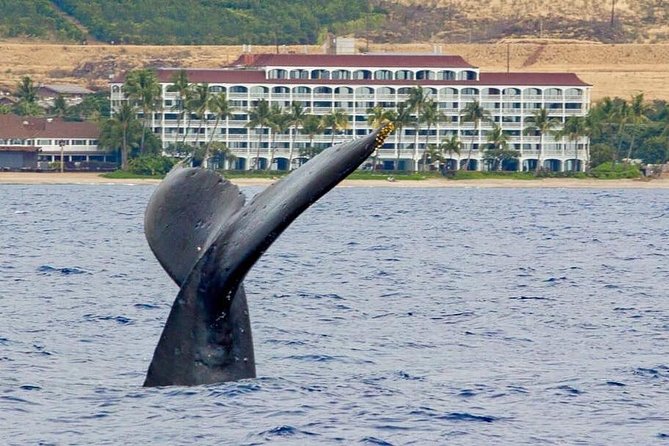
- Small group (max 20) means you’re not fighting for sightlines.
- Raft-style boat close to the water for intense viewing and great photos.
- Marine naturalist on board helps you read humpback behavior fast.
- Covered canopy + cold drinks make the ride more comfortable than you’d expect.
- Expect possible waves and getting wet, especially when conditions turn.
Ka’anapali Beach Start: Getting Oriented Fast and Staying Comfortable
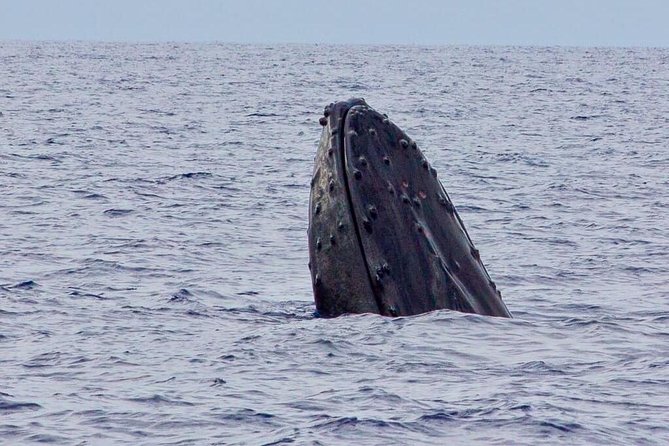
You start right in Ka’anapali, with the meeting point at 2435 Kaanapali Pkwy, Lahaina, HI 96761. The big practical win here is how direct it feels. You’re not traveling across the island for a long marina run. You show up, get sorted, then you’re headed to where the whales are.
Also, you’ll be using a mobile ticket, so have your phone ready. The tour is offered in English, which matters in Maui because whale watching is one of those experiences where the details really change how you see things. When the marine naturalist is talking through behavior—moms, calves, surface time, male competition—you don’t want to be guessing.
Plan to dress for a real marine outing. Even when the day looks calm on land, the ocean can flip the script. Wind can hit fast along the coast, and you’ll feel it on a smaller vessel. Bring layers you can manage, plus something that dries easily if you get splashed.
You can also read our reviews of more whale watching tours in Maui

The Raft-Style Boat Advantage for Close Humpback Views
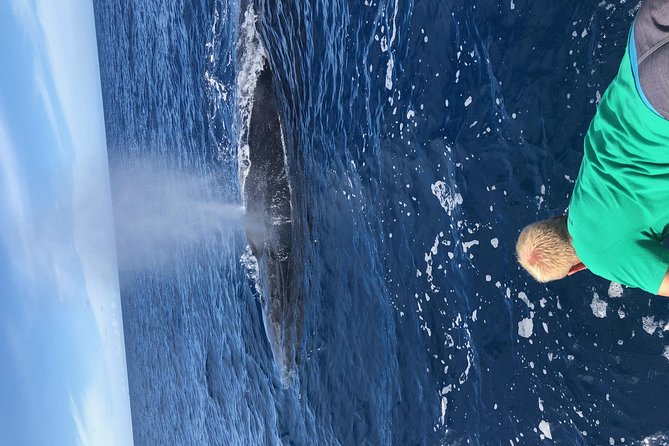
This is the kind of tour where the boat choice actually affects the whole experience. You’re on Ka’anapali’s raft-style option, built so that everyone gets a seat and you’re not watching from far away. Because the boat rides close to the water, your viewpoint stays lower and nearer to the action—so when a whale surfaces, you see it big and immediate, not tiny and distant.
A few small details make that easier:
- The boat has a canopy, which helps with sun.
- There are cold drinks onboard and bottled water plus soda/pop during the tour.
- There’s even a toilet onboard, which sounds minor until you’re already out there.
And that closeness is the whole point. When humpbacks come up near the boat, you get that wow moment where you realize you’re watching real animals do real things—not a distant sighting you passively observe. The crew also runs the tour with an eye toward keeping space respectful, so you feel involved without feeling like you’re invading.
One realistic consideration: getting in and out
Several visitors noted that the on/off process can involve a dinghy step before you reach the larger raft-style vessel. On a calm day it’s fine. In bigger surf, it can be rougher. The upside is that it’s understandable given what’s happening along Lahaina’s coast after the fires people mention. The downside is that it’s not ideal for anyone with mobility limits or kids who don’t handle wobble and getting wet well.
If you’re deciding between this and a boat with a dock, take that dinghy step seriously. If you know you do best with stable stairs and solid ground, this is where you might feel the difference.
Humpbacks in Real Time: What You’ll Learn to Notice
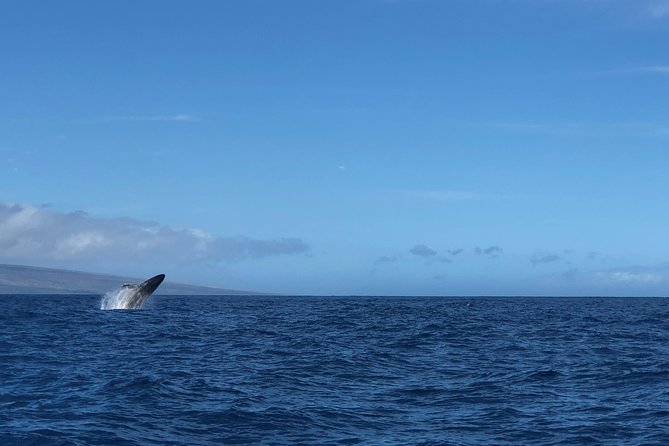
This tour is built around the North Pacific humpback experience—Northern Pacific humpbacks in Maui waters—and the crew’s goal is simple: help you understand what you’re seeing, then position you for the best chance at close sightings.
The marine naturalist part isn’t just trivia. It changes your attention. Instead of scanning randomly, you learn what to look for and what it means when whales surface, linger, and move around the boat.
Here’s what you can realistically hope to see, based on the experience pattern from many past outings:
- Moms and calves: People report seeing groups of mothers and babies, including a baby whale getting very close during a calmer window.
- Male behavior and competition: Some tours were timed with what sounded like intense male interactions—males competing for attention of a female, including multiple males visible at once.
- Curiosity: Several accounts describe whales coming near the boat, swimming underneath it, or staying at the surface long enough for repeated, close observations.
- Breaches and fin slaps: More than one outing included close approaches and dramatic behavior like breaches and repeated surface action.
One phrase used to describe the feeling was that you can feel like you’re within whale space—close enough that you’re basically told to sit still and let the whales do their thing. That’s not about you “driving the interaction.” It’s about being close enough for the whale’s body language to be obvious.
Why the coaching matters
Whales are not just scenery. They’re breathing, feeding, and socializing. When the naturalist explains behavior, you start noticing the pacing—how long a whale stays up, how groups shift, and how different whales behave when calves are present versus when you’re watching male competition.
If you love wildlife, this is the sweet spot: you get the action and you also get the meaning.






How the Crew Works the Water: Finding Whales and Keeping It Ethical
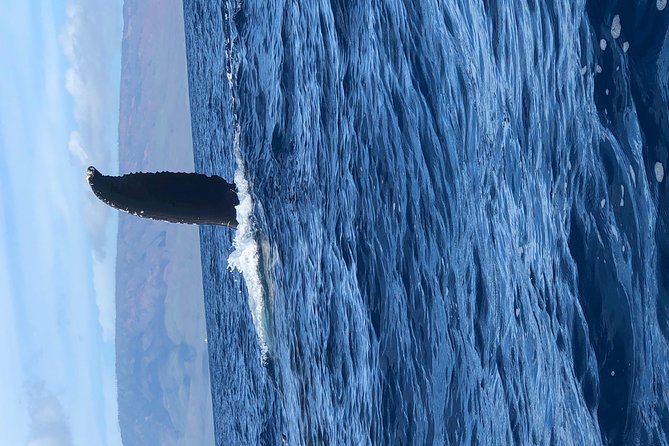
On a small boat, you can feel every change in wind and chop. That means the captain’s decisions matter more here than on big vessels. The crew’s approach (as people consistently describe it) is to be quick in locating whales and then getting you close in a safe, controlled way.
What stands out is the balance: you’re getting close, but not at the cost of disrespecting the animals. Many accounts mention environmental recommendations and keeping space. Translation: you’ll likely be positioned for clear views without feeling like the whales are being crowded.
You can also expect the tour to be active—moving to where sightings are. Some people described the crew responding rapidly when conditions turned good, including sprinting over when they believed there was an active competition happening.
A note on environmental rules
Even without getting into technical rules, you can tell when a crew is paying attention. In this kind of whale watch, the best captains don’t just chase. They watch the water, track whale movement, then set you up where you’ll see real behavior—not just a distant spout.
Comfort on Board: Drinks, Sun, the Bathroom, and Motion-Sickness Prep
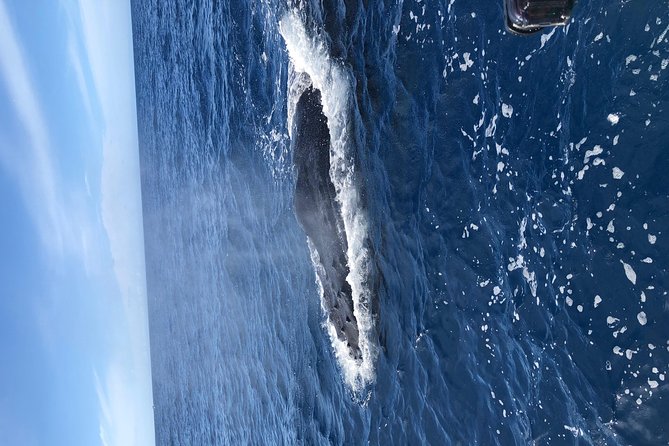
If you’re the type who hates feeling unprepared, this part matters. The boat is covered with a canopy, which helps on sunny days. On board, you’ll have a cooler of cold drinks, plus soda/pop and bottled water provided.
Some of the other “we thought of everything” touches that show up in feedback:
- Sunscreen is available onboard.
- There’s a toilet onboard.
- The seating is described as good for everyone to see.
And then there’s the one factor you can’t fully control: motion. More than one person warned that if you’re prone to motion sickness, be ready. That doesn’t mean you’ll get sick—but it does mean you should plan like it could happen, especially on a windy day.
My practical advice: if you get queasy on boats, tell the crew right away. The tour experience notes that they have tricks to help, so don’t wait until you’re already feeling rough. Bring your usual remedy too, just in case.
Do you get wet?
Yes, you might. Between chop, wind, and the dinghy-style transfer step that some outings mention, it’s smart to assume splash is possible. Several people said they expected to get wet, and that part felt normal once they were out on the water. Pack accordingly—something you can handle if damp.
Price and Value: Does $102.20 Make Sense for a 2-Hour Whale Watch?
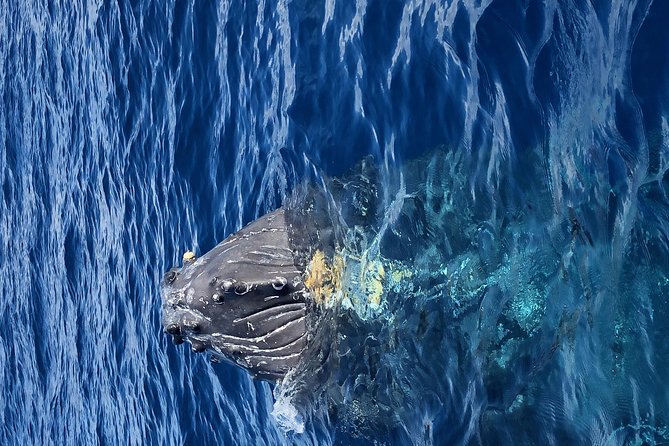
At $102.20 per person for about 2 hours, you’re paying for two things: time on the water and a setup that prioritizes closeness. If you usually compare whale watches based on “how many whales you see,” remember that’s partly luck and conditions. This tour helps stack the odds with a boat design that keeps you near the surface action.
Here’s the value angle I think matters most:
- Small group size (up to 20) usually means better viewing. You’re not looking past crowds.
- Raft-style close viewing can make a whale sighting feel three-dimensional.
- A marine naturalist on board adds meaning to what you’re seeing. That’s not free on every tour.
- You get drinks included (soda/pop and bottled water), plus sunscreen is available.
Tips are not included, and the tour explicitly asks for them (cash or Venmo). That’s normal, but it’s part of your real total cost, so budget it.
For the money, I’d say this is strongest if you care about the experience being close, not just “a boat ride where you might see whales.” If you’re okay with distance and you’d rather save cash, you might find cheaper options. But if you want that up-close feeling, this price starts to look fair.
Who Should Book This Whale Watch, and Who Should Rethink It
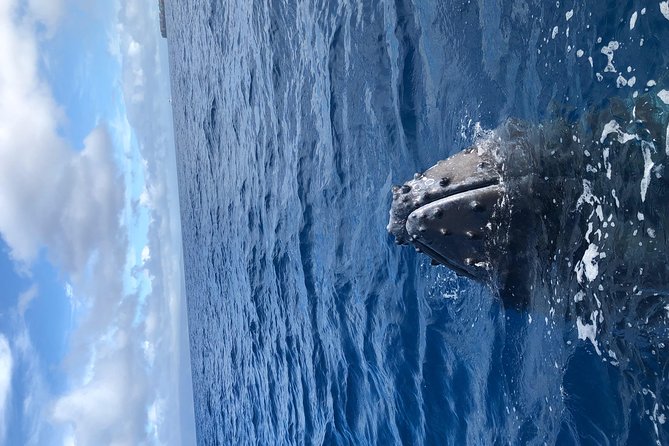
This tour is a great fit if:
- You want close whale views and clear photo opportunities.
- You like wildlife explanations and want help understanding behavior.
- You’re comfortable on smaller boats and can handle some wind and splash.
- You enjoy a more intimate group feel.
It’s a tougher fit if:
- You have trouble with uneven steps or would struggle with a dinghy transfer step in rougher surf.
- You’re very prone to motion sickness and don’t manage it well.
- You want a perfectly dry, totally cushy experience with no splash risk.
One other practical fit factor: the tour notes moderate physical fitness is required. That doesn’t mean you need to be an athlete. It does mean you should be able to handle short movements on a boat and likely the transfer process without major struggle.
Final Call: Should You Book the Ka’anapali Humpback Raft Watch?
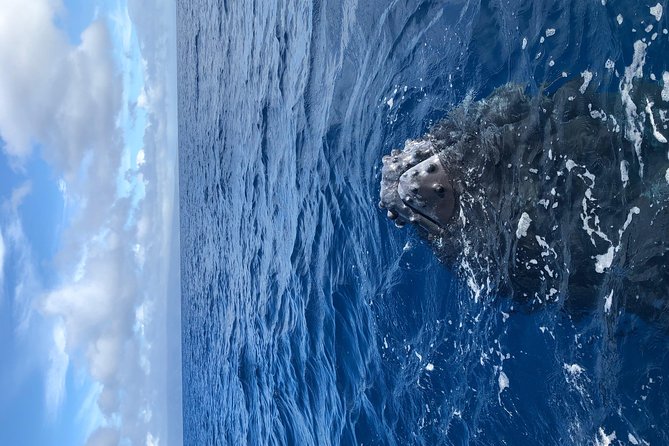
I think this is a strong “yes” for most Maui whale watchers because it hits the two things that matter: closeness and understanding. The boat setup keeps you nearer to the action, and the naturalist guidance helps you actually interpret humpback behavior—moms and calves, curious approaches, and those dramatic male competition moments.
If you’re the type who reads weather and adjusts plans, you’ll be fine. If your stomach or mobility is very sensitive to small-boat conditions, you should think carefully about the dinghy-style transfer and the motion possibility.
If you can handle being on the water in real coastal conditions, you’ll likely walk away feeling like you didn’t just see whales—you understood them.
FAQ
How long is the whale watching tour?
It runs for about 2 hours.
Where is the meeting point for the tour?
The meeting point is at 2435 Kaanapali Pkwy, Lahaina, HI 96761, USA.
Does the tour start and end at the same place?
Yes. The activity ends back at the meeting point.
Is the tour offered in English?
Yes, the tour is offered in English.
What is the group size?
The tour has a maximum of 20 travelers.
What drinks are included?
Soda/pop and bottled water are provided during the tour.
Do I need to tip the crew?
Tips are not included, and you should remember to tip the crew. Cash or Venmo are accepted.
Is there a restroom onboard?
Yes, there is a toilet onboard.
What should I do if I get motion sickness on boats?
If you’re prone to motion sickness, be prepared and tell the crew. They have tricks to help.
What happens if weather is poor?
The experience requires good weather. If it’s canceled due to poor weather, you’ll be offered a different date or a full refund.