REVIEW · MAUI
Complete Island 60-Minute Helicopter Tour
Book on Viator →Operated by Air Maui Helicopter Tours · Bookable on Viator
Maui looks one way from the road, then completely different from the sky. This 60-minute complete-island helicopter tour pairs big aerial views with pilot narration, so the flight feels like a guided tour, not just sightseeing. I especially like the unobstructed small-group setup (up to 6 people), and the way you can cover East and West Maui in one go.
The main thing to plan around is weather. Routes and sights can shift, and in some cases flights don’t run as scheduled for safety.
In This Review
- Key highlights worth knowing
- From Kahului Heliport to 180-degree Maui views in about an hour
- The cabin setup: comfy seats, stereo audio, and the seat/window tradeoff
- East Maui: sugar fields, Hana rainforest, and waterfall angles cars can’t touch
- Haleakala’s lunar side: flying near the crater feels like another world
- West Maui Mountains and the Wall of Tears: where the falls stack up
- Molokai views and whale chances: the outer-island angle that sells the price
- Window-photo tips and the souvenir USB (so your memories don’t vanish)
- Price vs. value: is $443 worth it for a full island hour?
- Who this tour fits best (and who might want to think twice)
- Should you book the Air Maui Complete Island helicopter tour?
- FAQ
- How long is the helicopter flight?
- Where does the tour start?
- Is hotel pickup included?
- What should I wear for better photos?
- Can I bring a bag or backpack?
- Does weather affect whether I fly?
Key highlights worth knowing
- A true full-island loop: East Maui, West Maui, Haleakala area, and onward views toward Molokai
- Pilot-guided narration through your headset: you get real-time context for what you’re seeing
- Small-group cabin: up to 6 passengers with forward-facing leather seats and stereo music
- Window-photo reality check: dark clothes help reduce glare, but seats near the back can be tougher for photos
- Winter bonus possibility: you might spot humpback whales from the air when conditions align
- Souvenir USB upgrade: you can purchase flight footage after landing, with the pilot’s narration
From Kahului Heliport to 180-degree Maui views in about an hour
This tour launches from Kahului Heliport, where you board an air-conditioned helicopter with comfortable leather seating. It’s designed for a small cabin experience, not a big, bus-style group. Once you lift off, the flight quickly shifts from coastline and fields to dramatic valleys and volcanic terrain.
You’ll hear narration through a headset as the pilot guides the route. That matters because Maui’s best moments aren’t just “pretty places.” You’re learning why certain ridgelines look the way they do, why the terrain changes fast, and what you’re looking at when the helicopter points into the crater region.
The total time on the clock is about 60 minutes of flight time, but the tour also includes time spent getting set before takeoff. If you’re trying to fit this into a busy day, I’d schedule it early—before dinner plans and before you start second-guessing whether you’ll feel like doing one more activity.
You can also read our reviews of more tours and experiences in Maui



The cabin setup: comfy seats, stereo audio, and the seat/window tradeoff
The helicopter holds up to 6 passengers plus the pilot, and seats are forward-facing. In practice, that means you’re packed tighter than most people expect from the photos, so it’s smart to think of this as a premium ride with limited “personal space.”
I like that you get both stereo music and narration, so there’s never that awkward “silent sightseeing” feeling. I also appreciate the pilot’s hands-on role: when the person flying is also the guide, your experience tends to feel smoother, since the route and narration stay synced.
Here’s the consideration: windows aren’t equal. Some people report that seats in the rear can make photos harder because of reflection and the small curved window design. If photography is a big priority, try to understand that your results depend on where you sit—so don’t plan on a perfect shot from every angle.
Quick tip that shows up again and again: wear dark clothing. Less window glare means your reflection won’t show up in your pictures as much.
East Maui: sugar fields, Hana rainforest, and waterfall angles cars can’t touch
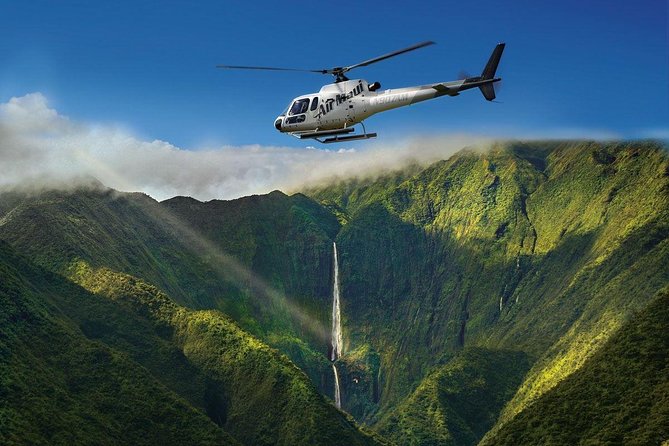
East Maui is where you get one of the biggest “wow” switches—from human-scale views to raw terrain. Early in the flight, the helicopter heads over areas with green sugar fields, then moves toward the Hana coast and the rainforest region.
From the air, the famous waterfall pattern of East Maui becomes clearer. You don’t just see one waterfall; you see how the valleys funnel water and how multiple falls stack in the terrain. It’s hard to understand from a viewpoint or a roadside stop because car travel compresses distances and hides the geometry.
I also like that this part of the tour is timed so you’re not just staring at clouds. You’re close enough to the textures—valleys, river cuts, and forest edges—that the narration feels grounded in what you’re actually seeing.
If you care about variety, East Maui delivers: coastline, rainforest, and the kind of layered falls that don’t look real until you’re above them.
Haleakala’s lunar side: flying near the crater feels like another world
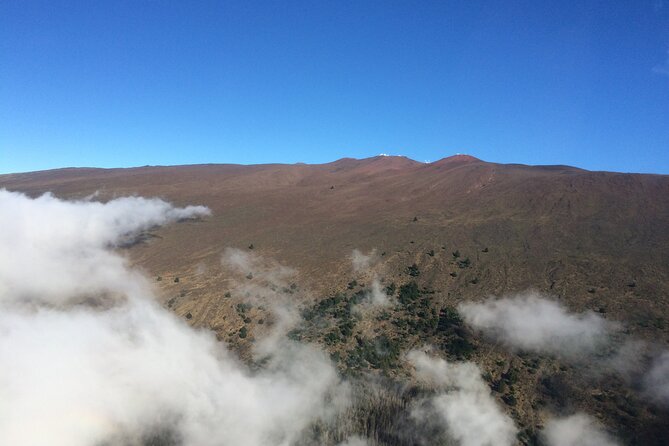
Soon after East Maui, the route reaches the Haleakala volcano area, including views near the crater region. You’ll go from lush and wet-looking terrain to something that looks more barren and sculpted, like a different planet.
This is one of the most valuable parts of the flight because the crater is hard to appreciate fully from the ground. Even if you’ve driven around the park, you still miss the “shape” lesson: the way ridges fold, where the crater opens, and how elevation changes how the land reads.
The pilot narration helps you connect the dots—what you’re looking at, and why it looks dramatic from the air. If you’re the type who likes your vacations to teach you something (without turning into a lecture), this section is a sweet spot.
Also, keep your expectations flexible. Routes can shift due to weather, and sometimes clouds can limit what you get over the highest or most sensitive sections. That said, when conditions allow, the crater views are usually a top reason people book the full island loop.
West Maui Mountains and the Wall of Tears: where the falls stack up
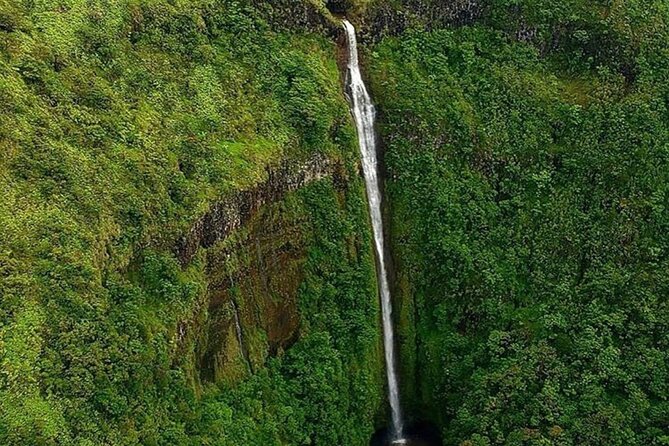
After the crater area, the helicopter turns toward the West Maui Mountains. This is where you get the sacred ridgeline feel—forest-covered ridges, steep valleys, and the kind of steep drops that look impossible at ground level.
One phrase you’ll hear connected to this region is the Wall of Tears. From the air, you can see why it earns that name: dozens of falls spilling down a rugged face, layered so closely together that they look like a moving pattern rather than separate waterfalls.
This is also the part of the flight where you notice how close the pilot can fly to the terrain while still staying safe. That’s the practical value of a helicopter tour in Maui: you get angles and proximity you can’t recreate from roads or standard sightseeing pullouts.
A couple photo reality notes for this section:
- The helicopter motion is gentle, but your hands still have to keep up.
- Rear seats can make it tougher to frame waterfalls cleanly because of window distortion and reflection.
If you want a stronger chance at great shots, dark clothing helps, and sitting where you have the clearest sightline matters.






Molokai views and whale chances: the outer-island angle that sells the price
As the tour continues over West Maui coastline, you also get views toward Molokai. Depending on conditions, you may see the legendary sea cliffs that rise around 4,000 feet, plus coastline detail that’s usually only visible if you’re already on the water.
Winter brings a special possibility: humpback whales can sometimes be visible from the air. It’s not guaranteed, and it depends on timing and weather, but it’s a fun reason to go even if you’ve seen other Maui highlights.
What I like here is the perspective shift. Instead of thinking of Maui as a single destination, you start seeing it as one island in a wider chain. That outer-island view makes your trip feel bigger than a single town loop.
Window-photo tips and the souvenir USB (so your memories don’t vanish)
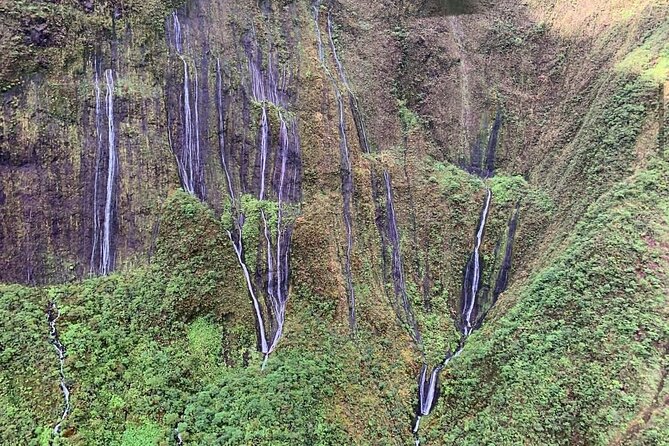
There’s a reason the guidance about clothing gets repeated: window glare can ruin photos fast. Dark clothing reduces reflection inside the cabin, and you end up with cleaner shots of the terrain and waterfalls.
Also, plan for how the cabin affects pictures:
- Small curved windows can distort views, especially from some seats.
- Inside reflections can show up more in lighter clothing.
- If you’re behind the pilot area, you may have a tougher time getting consistent angles.
If you want an extra layer of keepsake, you can purchase a souvenir USB after the flight. It includes footage of your ride with the pilot’s narration and Hawaiian music in the background. That’s especially helpful if you end up with shaky or glare-heavy photos—your best moments are still captured.
One more practical thing: the ride is designed with limited cabin space, and no bags are allowed on board. That includes purses, fanny packs, and backpacks. Have a plan for what stays at the heliport with you, and what you’ll leave behind.
Price vs. value: is $443 worth it for a full island hour?
At $443.34 per person for about an hour of flight, this isn’t the cheapest thing you can do in Maui. But it does hit a specific value sweet spot: in one loop, you cover East Maui rainforest, Haleakala crater views, and West Maui ridges and waterfall zones, plus you look toward Molokai.
You’re paying for three things:
- Time compression: you see a lot of island in a short window.
- Access: the helicopter gets angles and proximity you can’t get by car.
- Guided context: narration from the pilot-guide through your headset adds meaning, not just motion.
If you already have a solid road-trip plan and you’re tempted to skip the helicopter to save money, I’d think about what you’re actually aiming to collect from this trip. If your goal is seeing Maui in a way that feels physically different—terrain, elevation, and waterfalls from above—this tour can be one of the most effective purchases you make.
On the other hand, if you’re mainly after a relaxed, low-stress activity with no weather risk, this one isn’t for you. Weather can change routes, and in rare cases flights don’t run when conditions aren’t right.
Who this tour fits best (and who might want to think twice)
This tour fits best if you:
- Want a big, scenic “overview” early in your Maui time
- Like storytelling and real-time explanations while you look
- Are curious about geologic terrain, not just beach views
- Would rather see multiple eco-regions in one flight than plan separate days
It can be a strong choice for first-time helicopter riders too. Many people find the experience thrilling and surprisingly educational, especially when the pilot keeps the pacing smooth.
I’d think twice if:
- You’re strongly photo-dependent and you assume every seat angle will be Instagram-perfect
- You can’t handle any weather disruption at all
- You’re traveling with lots of gear you can’t leave behind (bags are not allowed)
One health note: motion sensitivity comes up. If you’re prone to nausea, consider preparing with what you normally use for motion sickness. The flight is typically smooth, but it’s still a helicopter, and your body may react differently.
Should you book the Air Maui Complete Island helicopter tour?
I’d book this tour if you want the “Maui from above” experience that feels like a different vacation category. The combination of East and West Maui in one hour, plus Haleakala-area views, plus the Wall of Tears and Molokai cliff perspective, makes it a high-impact choice.
Skip it—or at least consider an alternate plan—if your trip is too tight for any weather changes, or if you can’t do the small-cabin logistics (dark clothing, no bags, and limited window/seat consistency). Weather permitting is part of the deal, and the route can vary.
If you’re ready for a fast, guided aerial look at the island’s shape and water, this one is a strong yes.
FAQ
How long is the helicopter flight?
The experience includes about 60 minutes of flight time in the helicopter.
Where does the tour start?
It starts at 108 Lelepio Pl, Kahului, HI 96732 (Kahului Heliport) and ends back at the same meeting point.
Is hotel pickup included?
No. Hotel pickup and drop-off are not included.
What should I wear for better photos?
You’re asked to wear dark clothing to reduce reflection on the windows, which can help your photos.
Can I bring a bag or backpack?
No bags are allowed on board. That includes purses, fanny packs, and backpacks.
Does weather affect whether I fly?
Yes. The flight requires good weather, and routes and sights can vary due to weather. If it’s canceled due to poor weather, you’ll be offered a different date or a full refund.
If you tell me your travel month and whether photos matter most to you, I can help you decide the best timing and how to prioritize seats and expectations.