REVIEW · MAUI
Doors Off West Maui and Molokai 45 minute Helicopter Tour
Book on Viator →Operated by Air Maui Helicopter Tours · Bookable on Viator
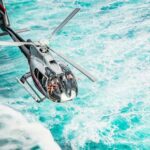
One minute you are on the ground. The next, you are looking straight down through open doors—on a 45-minute doors-off flight that skips the usual viewpoint lines and goes right for the dramatic stuff. I like that you cover Molokai’s North Shore cliffs and West Maui’s mountains plus coastline with a single booking, so your time in the air feels efficient. The vibe is exciting, but it’s also well run, with a professional pilot-guide talking you through what you’re seeing.
Two things I especially like: the small group capped at six passengers (so you’re not fighting for space), and the photo setup built for real phone pics. You get no-glare viewing windows, plus a lanyard so your phone stays secure while you shoot. One consideration: the flight is weather dependent and routes can shift, so you’re not buying a guaranteed flight path—you’re buying an opportunity to fly when conditions allow.
In This Review
- Key things to know before you go
- Doors-Off From Kahului: What You Really Get
- The 45-Minute Route: Molokai Sea Cliffs and West Maui Mountains
- Molokai North Shore: tallest sea cliffs plus rainforest and waterfalls
- West Maui North Shore: coastline, beaches, and mountain valleys
- Seats, Wind, and Why Comfort Changes the Flight
- Phone-Only Photography: How to Get Real Shots in Real Wind
- Gear Rules You’ll Actually Feel: Goggles, Jackets, Hair, and Shoes
- What the Pilot-Guide Focuses On While You Fly
- Price and Value: Is $388.67 Worth 45 Minutes?
- Booking Smart: Weight, Names, and Seat Confusion to Avoid
- Weight rules (and why they’re serious)
- Age rules for edge seating
- What you’re allowed to bring onboard
- Is This Tour for You? Choose Your Vibe
- Should You Book Doors Off West Maui and Molokai?
- FAQ
- How long is the doors-off helicopter tour?
- Where does the tour start and end?
- What can I take on board for photos?
- Do they provide any gear?
- What are the weight and seat rules?
- Can kids ride, and who can sit on the edge/outside?
- What happens if weather is bad or the flight has to change?
Key things to know before you go
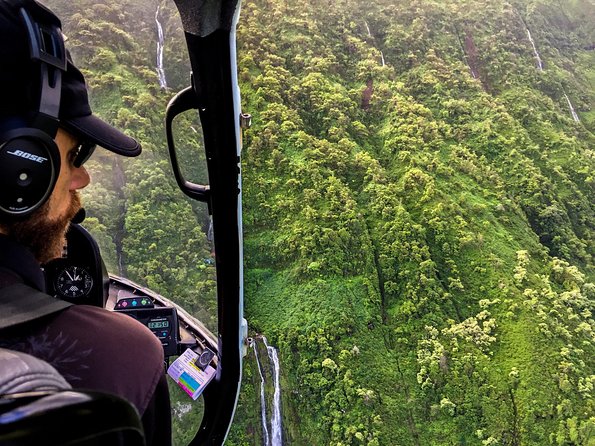
- It’s open-air and phone-only: Air Maui limits you to your cell phone, and they’ll provide a lanyard for it.
- Expect weather changes: Wind, visibility, and route choices can vary, and the experience requires good weather.
- You’ll be in a tight cabin: With a max of six passengers plus a pilot, your seat matters for comfort and views.
- Gear is provided, rules are strict: You’ll wear provided goggles and a windbreaker jacket, and they have clear limits on what you can bring.
- Weight rules can affect booking: You must provide names and weights, and there are rules for heavier passengers and groups.
Doors-Off From Kahului: What You Really Get
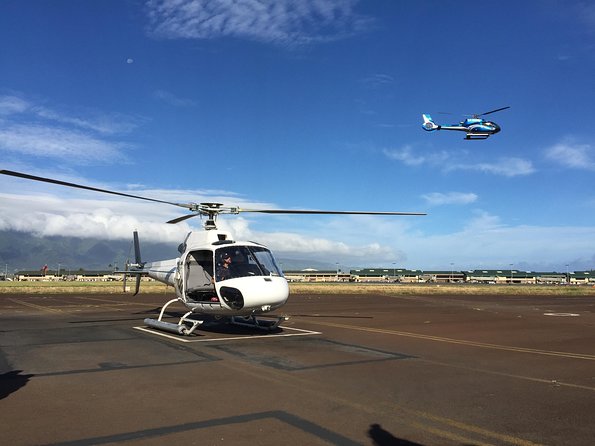
This tour starts and ends at 108 Lelepio Pl, Kahului, HI 96732, with the flight returning back to the same area afterward. The whole point is simple: you go doors off and get close to the view in a way that a regular helicopter flight just can’t match.
What makes this experience interesting is the mix of views in one short ride. You’re not just over the ocean and done. You’ll see misty rain patterns, waterfalls, and steep terrain that makes Maui feel bigger than it does from roads and beaches. And since it’s only about 45 minutes, you’re not spending your whole day tied to the schedule.
The other big value is the scale. A shared cabin of six passengers keeps it intimate. It also helps the pilot-guide manage the group and keep the focus on the sights and safety procedures.
You can also read our reviews of more tours and experiences in Maui



The 45-Minute Route: Molokai Sea Cliffs and West Maui Mountains
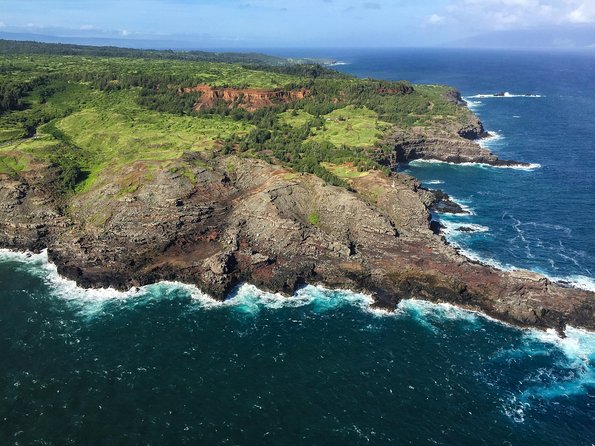
Your flight has two main view zones, and the order is designed so you get the most dramatic terrain early and then expand into coastline and beaches.
Molokai North Shore: tallest sea cliffs plus rainforest and waterfalls
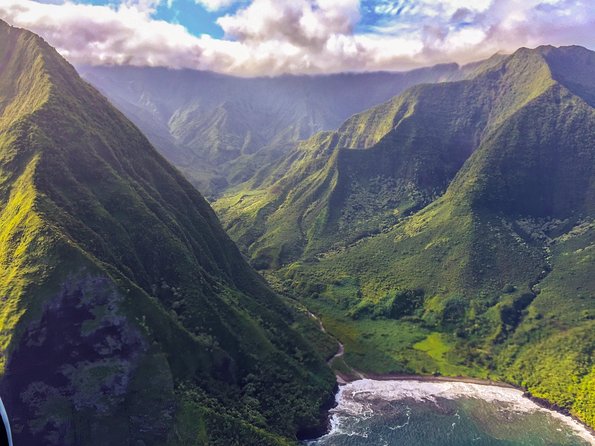
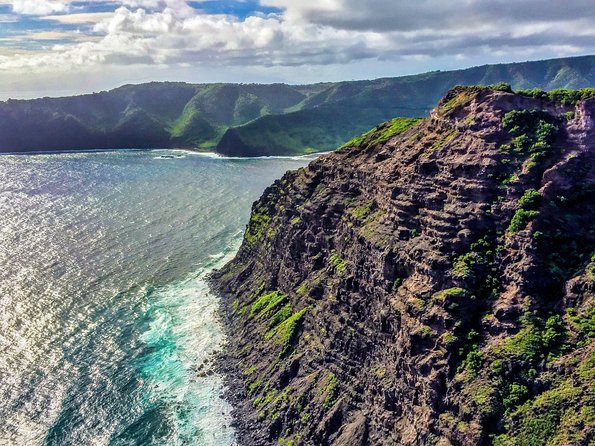
You’ll fly over the North Shore of Molokai, looking out at the tallest sea cliffs in the world. That detail matters because the cliffs don’t just look tall—they drop in a way that makes your brain register scale fast. You’ll also see rainforest and waterfalls, which is the Hawaii combo you come for: wet greenery with steep edges and sudden falls.
This stop is the one I’d prioritize for photo lovers, because it mixes texture (green canopy), motion (waterfalls), and shape (cliffs). Even if you only get a couple strong phone shots, the overall “wow” factor is built into the terrain.
A practical note: routes and sights may vary due to weather, so the exact look you get can change. Still, the promise here is clear—cliffs and wet mountainous scenery are the core.
West Maui North Shore: coastline, beaches, and mountain valleys
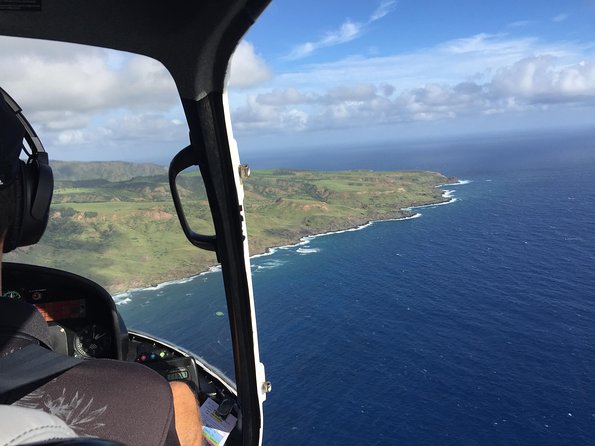
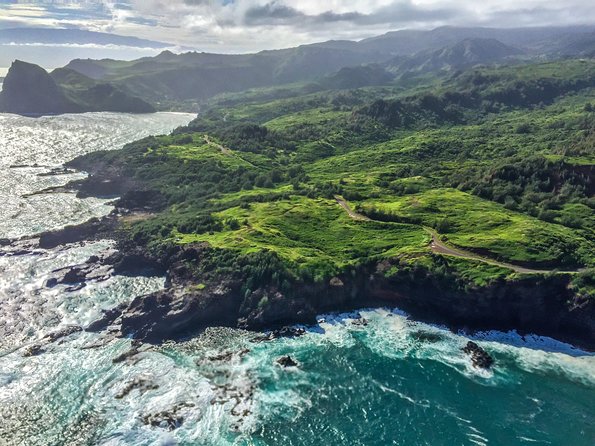
After Molokai, you’ll fly over the North shore of the West Maui mountains. This is where the view broadens out into the rainforest, the coastline, and the beaches—so you get both depth (mountain valleys) and reach (ocean edges).
This portion is great for understanding where everything sits. From the ground, Maui can feel like one long blur of roads and viewpoints. From the air, you start to see how neighborhoods cling to slopes, where valleys cut through, and where the coastline turns from dramatic cliffs to calmer stretches.
If you’re the type who likes to connect what you’re seeing overhead to what you’ll do later on the island, this second stop gives you that mental map fast.
Seats, Wind, and Why Comfort Changes the Flight
With a cabin sized for six passengers plus the pilot, you’ll feel every part of the experience a bit more than on bigger helicopters. The good news: you’re close to the action. The tradeoff: you should expect that the experience feels more personal—wind, vibration, and your seat position all matter.
One theme that stands out is that outside/edge seating can be intense at first. If you’re height-sensitive, consider choosing a more inside seat. In the details you provided, only age 16+ can sit on the edge/outside seat, so that’s also a family planning detail.
Seat comfort isn’t just about “being comfy.” It changes what you can do with your phone. You may be able to shoot continuously from some positions and struggle from others. One passenger noted the front seating near the pilot can feel tight and hard to move in, which matters because the flight is shot from angles—if you can’t shift your body, you lose options.
Bottom line: if you care about photos and quick framing, don’t treat seat choice as a minor detail.






Phone-Only Photography: How to Get Real Shots in Real Wind
This is a phone-first tour, not a camera tour. ONLY YOUR CELL PHONE IS ALLOWED ON BOARD—no other camera devices are permitted. Air Maui also provides a lanyard that you wear around your neck during the flight. That’s not just a safety rule; it’s a practical way to keep your phone steady while you look for the best moment to shoot.
For me, the biggest phone tip is the boring one: charge up. Several people recommend making sure your batteries are ready because you’ll want to shoot right away, then keep going as the terrain changes. Plan to conserve power between viewpoints, and expect you won’t want to spend time fiddling with settings in windy air.
Also, prepare for the goggles and wind. Even with clear conditions, you’ll be working against motion and gusts. Your best bet is to use stable grip and short bursts. Don’t wait for the perfect second. Hawaii scenery moves fast when you’re flying over it.
If you want extra recording options, note that a flight recording on USB is available for purchase. That’s separate from your onboard phone shooting.
Gear Rules You’ll Actually Feel: Goggles, Jackets, Hair, and Shoes
This is one of those tours where your preparation directly affects comfort. Air Maui provides a windbreaker jacket and goggles you must wear. The goggles requirement matters because it changes how your glasses fit and how your face feels in wind.
Here are the rules that can trip people up if they skim:
- No hats, bags, sunglasses, or loose items. Anything that could blow around is a problem.
- Closed-toed shoes or ankle-strap sandals only. Skip flip-flops and slide-on styles.
- Long hair must be tied up in a bun or braid.
- Nothing in your pockets. If you bring keys, they may hold car keys in the office while you fly.
- If you wear prescription glasses, bring your smallest pair or use contacts, since they must go under the goggles.
This gear setup is part of why the tour feels polished in the moment. When everyone is in the same protective gear, the flight becomes easier to enjoy—and you can focus on the view instead of worrying about wind and debris.
What the Pilot-Guide Focuses On While You Fly
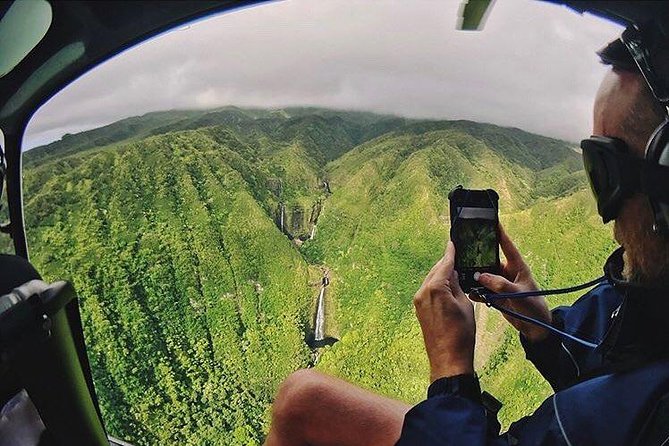
You’ll have a professional pilot-guide, and the experience is designed around having someone help you “read” what you’re seeing from above. The stops aren’t random. They map to what’s visually important: sea cliffs, rainforests, waterfalls, and the way coastline and beaches appear in a single sweep.
People also mention that the pilot approach can be calm and confidence-building, which makes sense for a doors-off flight. Your job isn’t to navigate. Your job is to look, listen, and enjoy the sensation of open-air flying.
And yes, the flight goes quickly. Several passengers wished it lasted longer, which is often the best sign of a tour that hits its target. At about 45 minutes, you don’t get exhausted, but you do get enough time to see both islands’ character.
Price and Value: Is $388.67 Worth 45 Minutes?
The listed price is $388.67 per person for about 45 minutes. On paper, it sounds like a lot for a short flight. In practice, it’s what you’re paying for:
- Access to a specific visual experience: doors-off flying over remote terrain.
- A route designed for high variety: Molokai cliffs plus West Maui rainforest and coastline in one ride.
- A small cabin: max six passengers, so you’re not crammed into a big group.
- Professional guidance: the pilot-guide helps make the time count, not just sit there while you enjoy motion.
Also, you’re not just buying “time in the air.” You’re buying a different way to understand Maui and Molokai. From above, you get scale fast—how high the cliffs drop, how waterfalls cut through the green, and how the coastline curves.
The main cost risk is weather. This experience requires good weather, and routes can change. If you’re there for a tight schedule, give yourself flexibility so one missed attempt doesn’t ruin the whole trip.
Booking Smart: Weight, Names, and Seat Confusion to Avoid
There’s a lot to love about how this is run. There’s also a lot of detail you should respect so check-in goes smoothly.
Weight rules (and why they’re serious)
You must follow the weight restrictions. The details you provided include:
- Total weight per passenger: 230 lbs
- If one passenger booking is 230 lbs or more, or if there’s a combined weight rule for two passengers, or groups of three or more with an average weight of 190 lbs or more, an additional seat must be purchased at booking.
- Any passenger over 250 lbs requires a comfort seat.
Also, all passenger names and weights must be advised at the time of booking. Underrepresentation of body weight may lead to cancellation at check-in with no refund.
This is the kind of policy that feels strict, but in a small cabin, weight and balance are the difference between a smooth flight and a problem.
Age rules for edge seating
Children must be at least 10 years old for doors-off. An adult must accompany anyone 10–18. And only age 16+ can sit on an edge/outside seat. If you’re traveling with teens, check this early so everyone knows where they can sit.
What you’re allowed to bring onboard
- Only your cell phone goes on board.
- No hats, bags, sunglasses, and no loose items.
- You’ll wear provided gear.
If you think you’ll want sunglasses for the sun, save them for after. In the air, goggles handle that.
Is This Tour for You? Choose Your Vibe
This is best if you want a high-impact, time-efficient Hawaii experience. If you like getting out of the checklist mode and into something you’ll talk about for years, this fits.
You’ll likely be happiest if you:
- Want Molokai cliffs and West Maui scenery in one go.
- Love photography and are comfortable with a phone-first setup.
- Prefer a small group experience over a bus-and-fan tour.
- Can handle open-air wind and a bit of motion without stress.
You might want to think twice if:
- You’re very sensitive to heights, since outside seating can be intense even when you get used to it.
- Your schedule is inflexible and you can’t risk weather-driven changes.
- You don’t want to follow strict onboard rules about devices and items.
Should You Book Doors Off West Maui and Molokai?
Yes—if you’re ready for a phone-first, open-air flight and you can plan around weather. The short duration is a feature, not a flaw. You cover two islands’ worth of dramatic terrain without spending half your day in transit.
Book this one if you want the kind of view that makes Maui feel three-dimensional—cliffs that drop, waterfalls that cut through green, and coastline angles you can’t see from land. I’d especially recommend it to anyone celebrating a special trip or hunting for one big “wow” moment that’s actually different.
FAQ
How long is the doors-off helicopter tour?
The tour is approximately 45 minutes in the air.
Where does the tour start and end?
You’ll meet at 108 Lelepio Pl, Kahului, HI 96732, USA, and the activity ends back at the meeting point.
What can I take on board for photos?
Only your cell phone is allowed on board. No other camera devices are allowed. Air Maui provides a lanyard for your phone that you wear around your neck during the flight.
Do they provide any gear?
Yes. Air Maui provides goggles (required) and a windbreaker jacket for each passenger.
What are the weight and seat rules?
Total passenger weight and weight balance rules apply. If you meet certain weight thresholds, you may need to purchase an additional seat, and any passenger over 250 lbs must purchase a comfort seat. Passenger names and weights must be provided at booking.
Can kids ride, and who can sit on the edge/outside?
Children must be at least 10 years old. An adult must accompany anyone 10–18. Only age 16+ can sit on an edge/outside seat.
What happens if weather is bad or the flight has to change?
The experience requires good weather. Routes and sights may vary due to weather, and the flight can be affected by conditions. If it’s canceled due to poor weather, you’ll be offered a different date or a full refund. For cancellations, the details you provided include free cancellation up to 24 hours for a refund, but also note no refunds or rescheduling within 48 hours—so plan to cancel well ahead if you need flexibility.