REVIEW · MAUI
Haleakala Crater Hiking Experience
Book on Viator →Operated by Hike Maui · Bookable on Viator
Haleakala can feel like another planet. This hike takes you into the crater with a tight group, real guide talk about Hawaiian ecology and history, plus food that keeps you moving. You’ll get a rounded crater experience, not just a quick pass-by.
I especially like the way the guides pace the day and keep it safe at altitude. I also love that you’re not hiking on empty—lunch and snacks are built into the route, so you can focus on the sky-high scenery.
One thing to consider: the hike is moderately difficult and the schedule can feel brisk, so you’ll want to come ready for sustained walking on rocky ground in cooler crater air.
In This Review
- Key Highlights You’ll Feel in Your Legs
- Walking Into Haleakala’s Crater World (Not Just Looking at It)
- The Morning Run-Up: Kahului Start, 8:30 Departure, and Mobile Tickets
- Stop 1: Haleakala Crater Hike—Snacks at 8,000 ft, Then Up to 10,000 ft
- Wildlife and Plant Moments You’re Actually Likely to Notice
- Stop 2: Haleakala Highway and Crater Road—Scenery Without the Grind
- Lunch and Snacks: The Real Secret to Enjoying High-Altitude Hiking
- The Guide Team: Marko, Joel, and the Small-Group Difference
- What to Expect From the Pace (and Who Should Skip This One)
- Weather Reality: All Conditions Run, So Dress Like It Matters
- Logistics That Affect Your Day (More Than You Think)
- Price and Value: Is $208.38 Worth It?
- Who This Hike Is Best For on Maui
- Should You Book This Haleakala Crater Hike?
- FAQ
- Where does the hike start and end?
- What time does the tour begin?
- How long is the experience?
- How long is the hike and what is the difficulty?
- Is lunch and snacks included?
- Do I need hotel pickup?
- What group size can I expect?
- How does weather affect the tour?
- Is there a minimum age?
- What wildlife and plants might you see?
- Is the tour offered in English?
Key Highlights You’ll Feel in Your Legs
- Small group size for a more personal pace, with a maximum of 9 per booking
- Altitude acclimation starting around 8,000 ft with snacks and crater-floor views
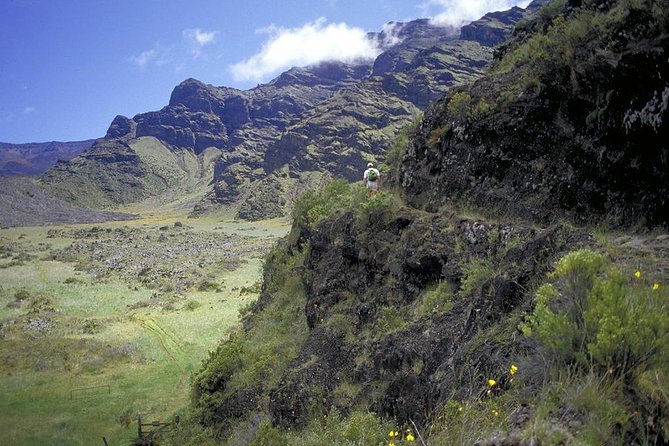
- Big crater views as you work up toward 10,000 ft and hike past cinder cones
- Real wildlife and plant talk tied to endangered birds like nene geese or petrels and silverswords
- Photo-help guidance from guides like Joel, who’s known for helping people get great shots
- Entertaining expert guiding from leaders such as Marko, plus help from guides in training
Walking Into Haleakala’s Crater World (Not Just Looking at It)
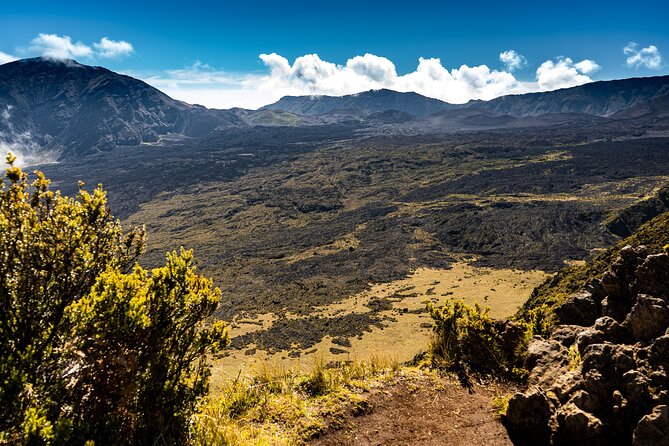
Haleakala Crater is one of those places where the scale hits you fast. The ground looks otherworldly. The air feels thin. And the silence inside the crater can be so strong you notice every sound—mostly wind, and sometimes the crunch of cinders under your feet.
What makes this hike work well for most people is that it’s not only about the view. You get a full-on guided experience: local wisdom about the mountain’s ecology and history, plus practical safety and pacing while you hike. That’s the difference between doing Haleakala as a scenic stop and doing it as an actual hike into the crater.
You’ll also be covering both sides of the crater experience, which helps you feel like you saw more than one angle. It’s still a day hike, not a multi-day quest—but it’s enough to earn that wow feeling without turning your trip into a boot-camp.
You can also read our reviews of more hiking tours in Maui

The Morning Run-Up: Kahului Start, 8:30 Departure, and Mobile Tickets
Your day starts at the Kahului Park & Ride at 8:30 am. The tour ends back at the same meeting point, and you’ll ride down the mountain before heading back toward Kahului.
This matters more than it sounds. Starting early helps you get the best chance at workable light for photos and stable conditions in a weather-prone environment. Also, because there’s no hotel pickup included, you’ll want to plan your arrival to Kahului Park & Ride so you’re not sprinting through Maui logistics while you should be conserving energy.
Another small detail that helps: you get a mobile ticket, which makes check-in smoother when you’re trying to keep the day moving.
Stop 1: Haleakala Crater Hike—Snacks at 8,000 ft, Then Up to 10,000 ft
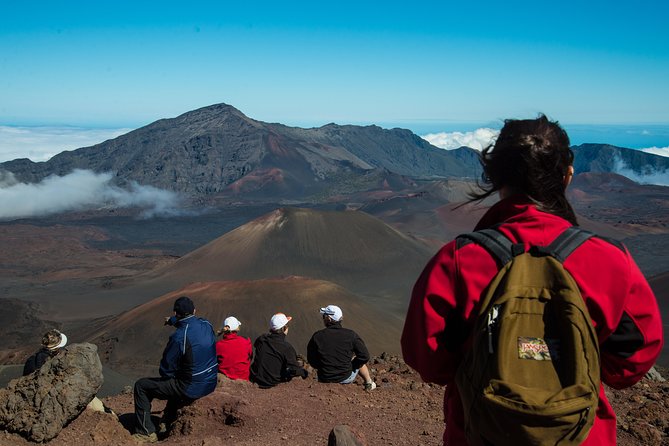
This is the heart of the day: a moderately difficult 4-mile (about 6.2 km) hike through the crater area. Expect rocky terrain, real altitude effects, and a steady effort over several hours.
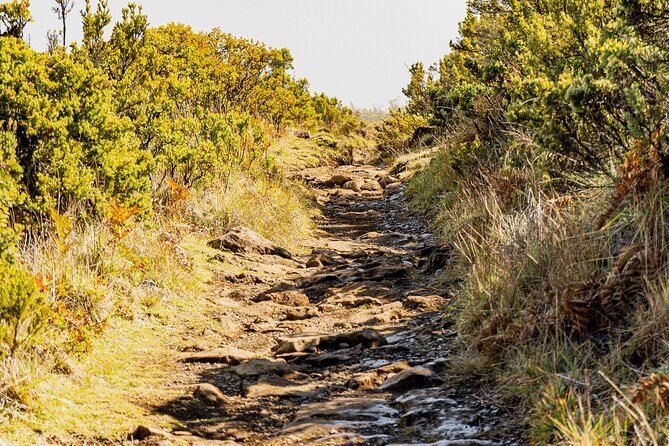
The route usually starts with acclimation around 8,000 feet. This is where you pause on a thin, lava-strewn trail—perfect for catching your breath and getting your bearings. You’ll also get hearty snacks with a view of the crater floor, which is smart. At altitude, your body burns fuel faster and you’ll feel it sooner if you start under-fueled.
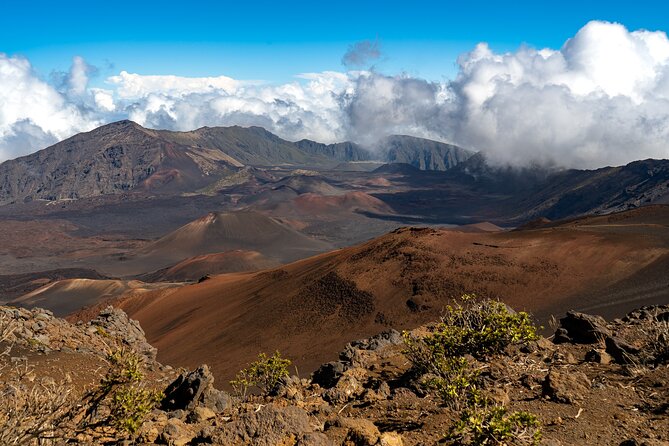
From there, you keep climbing toward the summit zone around 10,000 ft (about 3,048 m). This section pushes you upward through terrain with cinder cones popping out from the Earth. The colors can be startling—subtle one moment, almost dramatic the next—because volcanic rock holds light differently up there.
Then there’s the quiet factor. The crater’s atmosphere can feel like it mutes everything. The wind becomes the main soundtrack, and your footfalls become noticeable. It’s a strange kind of calm—one that’s hard to recreate anywhere else on Maui.
Wildlife and Plant Moments You’re Actually Likely to Notice
Haleakala National Park is home to endangered species found nowhere else on most visitors’ radar. Your guide is set up to point these things out as you hike.
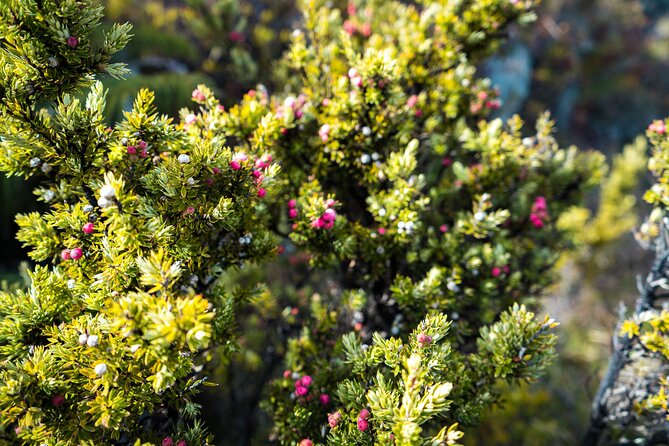
You might spot endangered birds such as nene geese or petrels, and you could also walk past blooming silverswords that grow from the rocky terrain. Even if you don’t see animals, the guide’s focus on ecology can help you understand what you’re looking at—so the hike feels meaningful even on a day when nature stays a little shy.
Stop 2: Haleakala Highway and Crater Road—Scenery Without the Grind

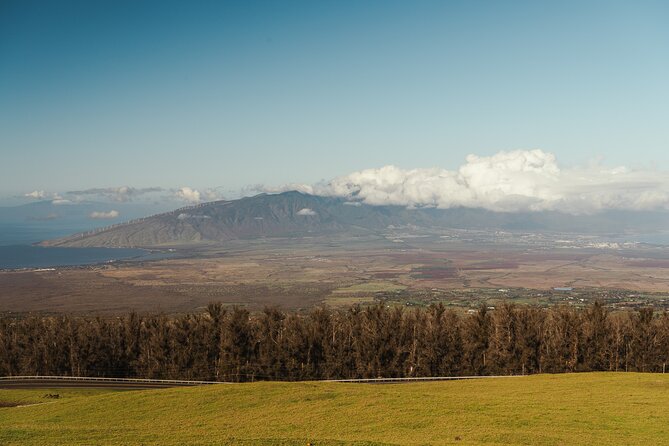
After the crater hike, you’ll shift gears. The second stop is along Haleakala Highway / Crater Road, which gives you a chance to take in broader volcanic scenery without adding more miles on sore legs.
This part of the day is valuable because it changes the pace. You’ve done the physical work inside the crater. Now you get space to look around, process the views, and snap photos you might not have had the energy for during the climb.
One practical note: there’s a small chance your day feels slightly less linear than you’d hoped if conditions require adjustments. I’m not expecting a perfect schedule fairy tale. Instead, think of this as a guided mountain day where the goal stays the same—safe hiking and good viewpoints.






Lunch and Snacks: The Real Secret to Enjoying High-Altitude Hiking
It’s easy to assume a hike “includes food” means a token granola bar. This one is different. You get a nutritious lunch and snacks built into the timing.
That snack stop during acclimation at 8,000 ft is especially helpful. It turns the climb from “push and suffer” into “push and recover.” You can keep moving with steadier energy, and you won’t be tempted to ration what little you brought from home.
Also, because the tour runs in all weather conditions, having food that isn’t only an emergency plan is reassuring. You don’t know how the air will feel once clouds or wind show up. Fuel helps either way.
The Guide Team: Marko, Joel, and the Small-Group Difference
The biggest reason this hike scores so well is the guiding. People consistently highlight guides as friendly, experienced, and genuinely invested in teaching.
Two names come up again and again: Marko and Joel. Marko is described as entertaining and packed with information. Joel is known for helping people get strong photos—useful if you’re chasing Instagram shots but don’t want to spend the hike fighting your own camera settings.
You’ll also have support from guides in training, which can feel like you’re getting the best of both worlds: expert leadership plus extra help along the route.
And here’s the practical takeaway for your day: small groups mean more attention on pacing, footing, and comfort at altitude. It’s not just “nice.” It’s a safety and enjoyment upgrade.
What to Expect From the Pace (and Who Should Skip This One)
The hike is rated moderately difficult, with a minimum age of 8. You should have a moderate fitness level.
What that means on the ground: you’ll be walking on uneven volcanic terrain and dealing with thinner air as you climb. The good news is that the guides plan in breaks and don’t run you like a stopwatch. The not-so-fun part is that the effort is real enough that a lot of people feel it the next day.
If you’re the type who prefers flat, predictable trails, this may feel like too much. If you can handle several hours of continuous walking and rocky steps, you’re in the right zone.
A smart pre-hike move: do a few easier hikes or long walks before your trip. If you’re already active, this will feel challenging but doable. If you’re mostly sedentary, it can turn into a slow grind.
Weather Reality: All Conditions Run, So Dress Like It Matters
This tour operates in all weather conditions, so you should assume you’ll hike in wind and temperature swings. Dress appropriately.
A simple checklist that works: layers you can add or remove, warm clothing for the crater air, and shoes with grip for rocky surfaces. If you’ve only packed “beach Maui” gear, this hike will politely humble you.
The day will still be worth it if conditions aren’t perfect. That said, the experience depends on weather, so schedules can change if conditions are poor enough. Your best move is to plan your Maui itinerary with flexibility so you’re not tied up with non-refundable plans right after the hike.
Logistics That Affect Your Day (More Than You Think)
A few logistics points can make or break your experience:
- No hotel pickup or drop-off: you’re starting at Kahului Park & Ride and ending there.
- Small caps on group size: max 9 per booking; total max 11 travelers.
- Minimum numbers apply: if there aren’t enough passengers, you may be offered an alternative or full refund.
- English is the offered language: helpful if you want to follow every detail about plants, birds, and Hawaiian terms.
One more practical tip: this tour is often booked ahead (about 42 days on average). If Haleakala is on your must-do list, don’t wait for the last week and hope it works out.
Price and Value: Is $208.38 Worth It?
At $208.38 per person for about 7 hours, you’re paying for a guided, altitude-focused crater hike with real included food. You’re not just renting a route—you’re buying planning, interpretation, safety, and timing.
Here’s why it can be good value:
- You get local guiding that adds meaning beyond the scenery.
- You get lunch and snacks, which are especially helpful at altitude.
- The small-group format makes the hike more personal and manageable.
- The route gives you both the crater-floor perspective and higher viewpoints near 10,000 ft.
If your goal is only photos from a viewpoint, you could do Haleakala another way for less. But if you want a guided walk where you learn what you’re seeing while you move through the crater, the cost starts to make sense quickly.
Who This Hike Is Best For on Maui
This tour is a strong match if you:
- Want a guided crater experience rather than a short lookout stop
- Like learning about endangered species and native plants like silversword
- Prefer a small-group day with guides who can answer questions
- Can handle a moderately difficult hike and don’t mind cooler crater weather
It’s also a good family fit for kids 8+, especially if your kids actually enjoy learning and nature spotting. Many families come away saying it’s a top day—likely because it combines scenery with guide-led storytelling and a clear sense of accomplishment.
If you’re prone to altitude discomfort, it’s worth thinking carefully. The route climbs to the 10,000 ft zone, so you’ll want to be cautious and follow guide pacing and instructions.
Should You Book This Haleakala Crater Hike?
If Haleakala is high on your Maui priorities, I think this is the kind of tour that makes the day count. You’ll hike real terrain, reach high viewpoints, and get guided context that turns the crater from scenery into understanding.
Book it if you want:
- Guides who teach (and help you photograph what you see)
- Included lunch and snacks that support the hike
- A small-group day that feels organized and not chaotic
Skip it (or plan carefully) if:
- You dislike strenuous, rocky hiking and want only easy walking
- You can’t get to Kahului Park & Ride on your own
- You’re staying schedule-tight right after the hike, since weather can affect timing
If you’re flexible, reasonably fit, and excited by the idea of being inside a volcanic crater, this one is worth your time.
FAQ
Where does the hike start and end?
The tour starts at Kahului Park & Ride in Kahului and ends back at the same meeting point.
What time does the tour begin?
The start time is 8:30 am.
How long is the experience?
The duration is about 7 hours.
How long is the hike and what is the difficulty?
It’s about a 4-mile (6.2 km) hike and is described as moderately difficult.
Is lunch and snacks included?
Yes. The tour includes lunch and snacks.
Do I need hotel pickup?
No. Hotel pickup and drop-off are not included, so you’ll need to get to the meeting point on your own.
What group size can I expect?
There is a maximum of 9 passengers per booking. The tour can have up to 11 travelers.
How does weather affect the tour?
The tour operates in all weather conditions, and you should dress appropriately. If canceled due to poor weather, you’ll be offered a different date or a full refund.
Is there a minimum age?
Yes, the minimum age is 8 years.
What wildlife and plants might you see?
You might encounter endangered birds such as nene geese or petrels, and you may walk past blooming silverswords.
Is the tour offered in English?
Yes. The tour is offered in English.