REVIEW · MAUI
Lauhala Bracelet Craft Class on Maui
Book on Viator →Operated by Oni Foundation Inc - Wonderful World of Aloha Cultural Activity Center · Bookable on Viator
A small braid turns into Maui culture. In about an hour at Oni Foundation, you’ll weave your own lauhala bracelet, and the process stays friendly even if you’ve never tried weaving. I like that you leave with a real keepsake, not just a lesson you forget later.
Arrive early for the Migrations costume galleries, then Ku’ulei connects the craft to how the lauahala plant is prepared and what it has meant in Hawaiian life. My second favorite part is the mix of hands-on technique with the cultural context, which makes the finished bracelet feel personal. The only catch: the class needs some finger finesse, so it’s best for ages 12 and up and can feel fiddly for little kids.
In This Review
- Key Highlights You’ll Want to Know
- Lauhala Bracelet Class at Oni Foundation: A Simple Craft With Real Meaning
- Getting Oriented at Oni Foundation and the Migrations Costume Galleries
- From Lauhala Plant to Bracelet: What You’ll Actually Learn
- Ku’ulei’s Teaching Style: Culture, Craft, and Helpful Hands
- What You’ll Walk Away With: A Wearable Keepsake That Shows Your Work
- Price and Value: Why $25 Makes Sense for This Kind of Class
- Timing, Location, and Group Size: The Practical Stuff That Can Save Your Trip
- Who Should Book This Lauhala Bracelet Craft Class?
- Should You Book This Lauhala Bracelet Craft Class?
- FAQ
- How long is the Lauhala Bracelet craft class?
- Where does the class meet on Maui?
- What is the cost?
- Is the class in English?
- Do I need weaving experience?
- Will I get supplies, or do I need to bring anything?
- What should I plan for food and drink?
Key Highlights You’ll Want to Know
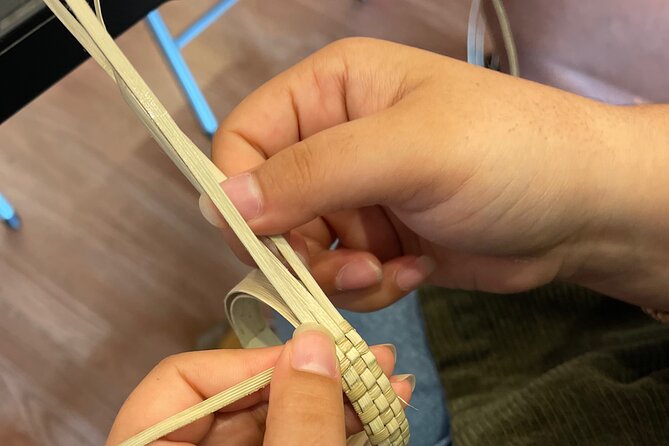
- Take home a handmade lauahala bracelet you weave yourself
- Ku’ulei teaches the craft and ties it to culture, in English
- Arrive early to browse the center’s Migrations costume galleries
- Supplies are included, so you just show up ready to work
- Max 25 people, which helps the class feel supportive and not rushed
Lauhala Bracelet Class at Oni Foundation: A Simple Craft With Real Meaning
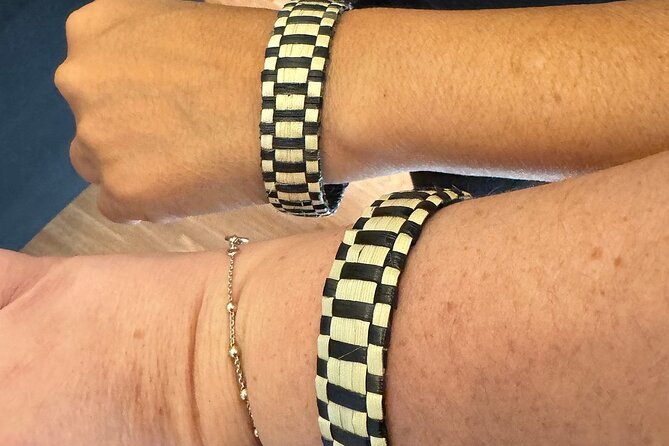
This class is one of those Maui activities that’s short on time and long on satisfaction. For $25, you get a focused 1-hour weaving session where you make an actual wearable item from lauhala—not a vague souvenir. The tone is relaxed and practical, and you’re doing the work yourself from start to finish.
What makes it stand out for me is how much of the experience centers on your hands. You’re not just learning the steps; you’re training the small motions that turn leaves into structure. And then Ku’ulei adds the why behind the how, so your bracelet isn’t only pretty—it feels rooted in Hawaiian life and materials.
The small group size also matters. With a maximum of 25 participants, you’re not stuck watching from afar. You can ask questions, get help when your fingers get stuck on a tricky point, and still finish with something you’ll actually wear.
You can also read our reviews of more tours and experiences in Maui



Getting Oriented at Oni Foundation and the Migrations Costume Galleries
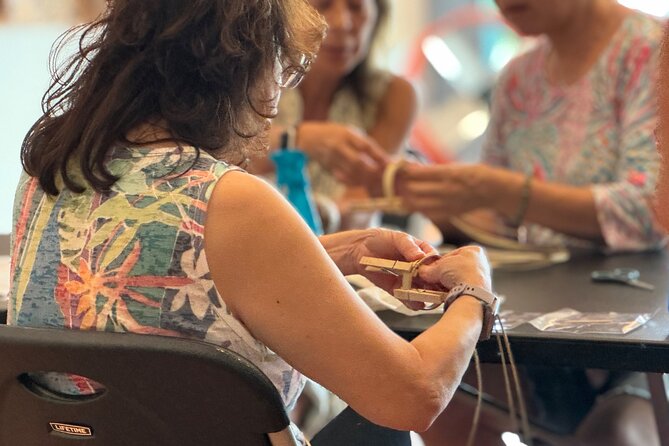
Timing matters here, but not in a stressful way. The class starts at 1:00 pm, and the recommendation is to arrive early so you can explore the center before the weaving begins. That early window is for the Migrations costume galleries, which are housed in the Oni Foundation space.
I love this part because it changes the feel of the afternoon. Instead of walking into a room right before your hands start weaving, you get a sense of place. You can look at costumes and displays at a calm pace, and it primes you to listen better when the instructor starts explaining the plant and techniques.
If you’re using the Queen Ka’ahumanu area as a reference point, plan for the possibility of confusion. One of the most common real-world issues with this kind of activity is people ending up stuck near the mall and circling a bit before they find the exact cultural activity center location. Keep your eyes on the address—275 W Kaahumanu Ave, Kahului, HI 96732—or ask for directions to Oni Foundation if you feel turned around.
From Lauhala Plant to Bracelet: What You’ll Actually Learn
The weaving expert begins with an introduction to the lauhala plant and how to prepare the leaves for weaving. That first explanation is more important than it sounds. Understanding what you’re working with helps you weave more confidently, because you know the leaves aren’t random strips—they’re prepared materials meant to behave a certain way.
Then you move into basic bracelet techniques. The class is designed so no experience is necessary, which is great news if you’re the type of traveler who worries they’ll slow down the group. You’ll still need patience and steady hands, though. This isn’t like assembling something with big, simple steps. It’s more like learning a small skill: repeat, adjust, and keep going.
Supplies are included, so you’re not standing there hunting for tools or missing a component you didn’t know you needed. You’ll practice the fundamentals and use what you learn to weave a bracelet of your own. Your final bracelet will likely look slightly different from everyone else’s, which is a good sign. It means you’re not producing a factory-identical item—you’re making something personal using the same techniques.
One practical tip for the handwork: don’t rush the early passes. Your first few minutes matter because they set the tension and structure for what comes next. When people get frustrated, it’s usually from trying to force speed instead of letting the material guide the rhythm.
Ku’ulei’s Teaching Style: Culture, Craft, and Helpful Hands
Ku’ulei is central to the experience, and the vibe she brings shows in how the class feels. She’s patient, engaging, and willing to talk through details—especially the parts that link the craft to Hawaiian culture and history.
That matters because lauahala weaving isn’t just about the final product. It’s about understanding a material and a practice. When you hear the cultural context alongside the steps, the technique becomes more than a trick. It starts to make sense as a craft people developed and passed along because it works.
I also appreciate how the instructor keeps expectations realistic. You’re encouraged to participate even without prior weaving experience, but you’re also warned (implicitly through the class design) that it takes some finger and hand finesse. That’s the right balance. It prevents the common mismatch where a “beginner” class is actually beginner-only on paper.
If you’re going with a parent-child group, a couple, or a friend date, this teaching style is a strong match. People who like hands-on learning tend to leave happier, and people who don’t often still enjoy themselves because the instructor helps you succeed step by step.
What You’ll Walk Away With: A Wearable Keepsake That Shows Your Work
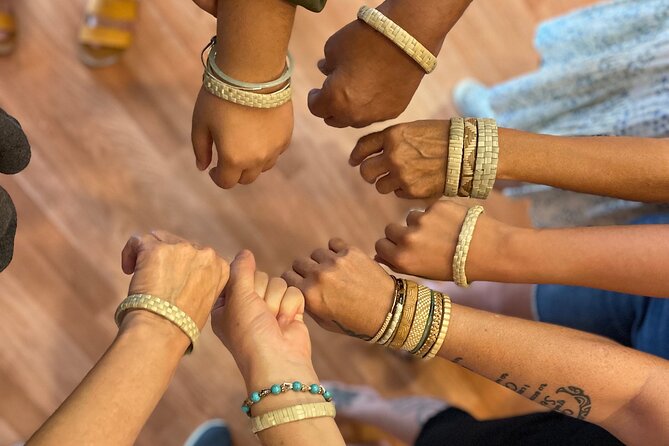
The best part is obvious: you leave with your own bracelet, woven by you. Not every class in Maui includes a true take-home item, and not every take-home item feels worth the time. Here, your bracelet is the whole point—your work turns into something you can put on right away.
What I like about that is the emotional payoff. You get that quiet satisfaction of seeing how your choices affected the result. Even when everyone follows the same basics, the bracelets can come out unique and different—still beautiful, just different. That’s normal for handmade work, and it’s part of why it makes a stronger souvenir than something printed or mass-made.
It’s also a good option if you’re trying to balance your schedule. You’re not signing up for an all-day excursion. Instead, you get a focused activity in the afternoon that’s easy to pair with other Maui plans. And because you’re working with your hands, it’s also a nice break from the heat if you’ve had a busy morning outdoors.






Price and Value: Why $25 Makes Sense for This Kind of Class
At $25 per person, this isn’t a budget-only activity and it’s not priced like a long, multi-stop tour either. It sits in that sweet spot where you’re paying for instruction plus the materials, and you’re getting a real keepsake out of it.
Supplies are included, which is a major value lever. If you had to buy tools or materials separately, the price would sting more. Here, you can treat it as a straightforward, pay-and-participate experience: the instructor provides the structure, the center provides the environment, and you provide your attention and a bit of finger control.
Meals and refreshments are not included, so plan on snacks or drink before or after you weave. Also note that gratuity isn’t included, so if you like the teaching style, budget a little extra cash for that at the end.
If you’re the kind of traveler who loves culture but gets impatient with lectures, this is a good fit. You’re learning in motion, and the cultural information is attached to what your hands are doing.
Timing, Location, and Group Size: The Practical Stuff That Can Save Your Trip
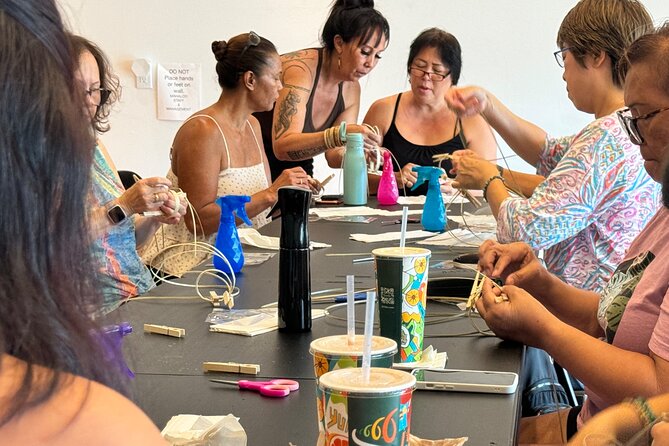
This class runs for about 1 hour. It starts at 1:00 pm, and it ends back at the meeting point. That makes it easier to plan the rest of your day because you’re not dealing with transfers or long walking routes afterward.
The meeting place is Oni Foundation Inc – Wonderful World of Aloha Cultural Activity Center, at 275 W Kaahumanu Ave in Kahului. It’s near public transportation, which helps if you’re not driving or you’re mixing activities around the Kahului area.
You’ll also want to remember the class size: up to 25 travelers. Smaller groups make a difference in craft classes because you need space to work and enough staff attention to keep your weaving moving forward.
Language is English, and the ticket is mobile, so you’re not wrestling with paper confirmations. Service animals are allowed, which is good to know for travelers who rely on them.
Cancellation is free up to 24 hours before the experience starts, which gives you flexibility if weather or schedules shift. Since the class is short and time-specific, it’s smart to keep your afternoon realistic when you book.
Who Should Book This Lauhala Bracelet Craft Class?
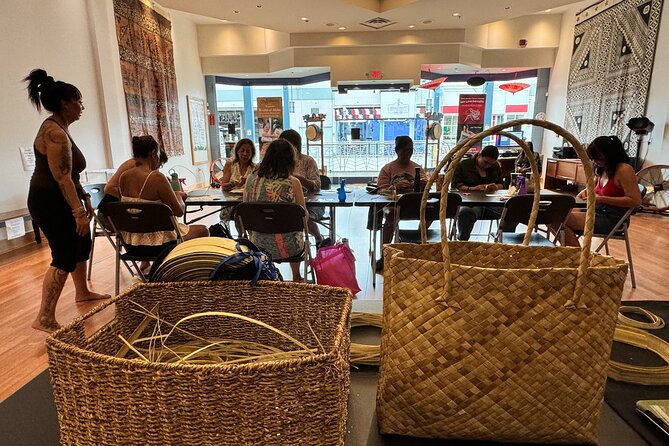
You’ll probably love it if you:
- like hands-on learning and want a skill you can show off
- want a short, meaningful activity that fits into a Maui afternoon
- enjoy cultural context that explains why a material and craft matter
- want a group activity that works for couples and families
It might feel like a struggle if you’re bringing younger kids who aren’t ready for close finger work. The experience is recommended for ages 12 and up, and weaving is one of those activities where dexterity and patience are real factors.
Should You Book This Lauhala Bracelet Craft Class?
If you want one Maui activity that’s genuinely interactive and ends with something you can wear, I’d book it. The value is strong because supplies are included, the class is only about an hour, and Ku’ulei brings both craft instruction and cultural context into the same session.
Choose this when you want a break from the bigger tours—something calm, focused, and personal. Just go in knowing it takes some hand finesse. Then you’ll come out with a bracelet that feels like it belongs to you.
FAQ
How long is the Lauhala Bracelet craft class?
The class lasts about 1 hour.
Where does the class meet on Maui?
It meets at Oni Foundation Inc – Wonderful World of Aloha Cultural Activity Center, 275 W Kaahumanu Ave, Kahului, HI 96732, USA.
What is the cost?
The price is $25.00 per person.
Is the class in English?
Yes. The experience is offered in English.
Do I need weaving experience?
No experience is necessary. You’ll learn basic techniques during the class.
Will I get supplies, or do I need to bring anything?
Supplies are included.
What should I plan for food and drink?
Meals and refreshments are not included. You may want to eat or snack before or after the class.