REVIEW · MAUI
Maui: Two Hour Beginner Group Surf Lesson in Kihei
Book on Viator →Operated by Surf Shack Maui · Bookable on Viator
Learning surf skills in Kihei is a real payoff. You’ll get a calm, structured start to an iconic Hawaiian activity, built for first-timers and paced so you can actually stand up. Small-group coaching and practical ocean safety are the big reasons this lesson works.
I especially like that you’re never tossed in solo. The class runs about two hours with a max group size of 6, so the instructor can coach your paddling, wave timing, and basic surfing rules. I also like the included gear—board, rash guard, and water booties—so you can show up ready to go.
One consideration: Maui’s surf is never fully predictable. Even in a beginner setup, wave conditions can affect how many rides you get, and the provided water shoes are described as fairly thin, so you might want your own if you’re picky about foot protection.
In This Review
- Key things to know before you go
- Where You Meet in Kihei and What to Do While Others Paddle
- The Two-Hour Lesson Format: Instruction, Then More Attempts
- Small-Group Coaching That Keeps You From Getting Lost
- Ocean Awareness and Water Safety (Before Anyone Tries Standing)
- Getting Up on a Board: What Skill Progress Feels Like
- Equipment and Comfort: What’s Included, What Might Need Upgrading
- Optional In-Water Photos: Nice Proof Without Making You Second-Guess the Trip
- Price and Value: Is $98 Worth It for Beginners in Kihei?
- Who This Lesson Fits Best (And Who Might Prefer Private)
- Practical Tips to Get More Out of Your Session
- Should You Book This Beginner Surf Lesson in Kihei?
- FAQ
- How long is the beginner surf lesson in Kihei?
- What age is the minimum for this group surf lesson?
- What’s included with the surf lesson?
- Where do we meet for the lesson?
- Is hotel pickup included?
- Can I cancel and get a full refund?
Key things to know before you go
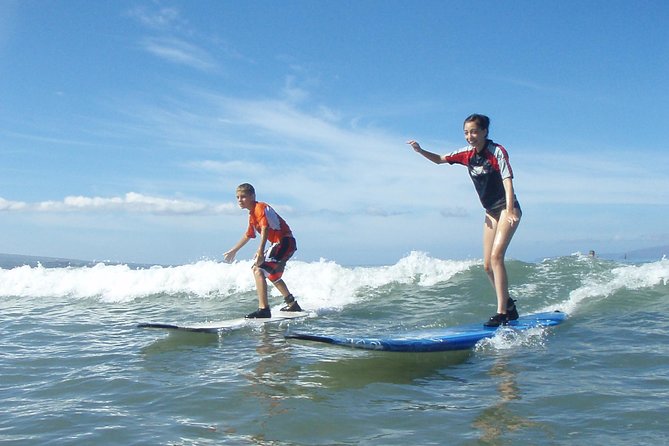
- Max 6 people means more hands-on attention during your attempts
- Included gear covers the board, rash guard, and water booties, so packing is lighter
- Two-hour beginner format mixes quick instruction with lots of practice time in the water
- You’ll learn rules and etiquette, not just how to stand up
- Optional photographer can capture action shots if you want proof
Where You Meet in Kihei and What to Do While Others Paddle
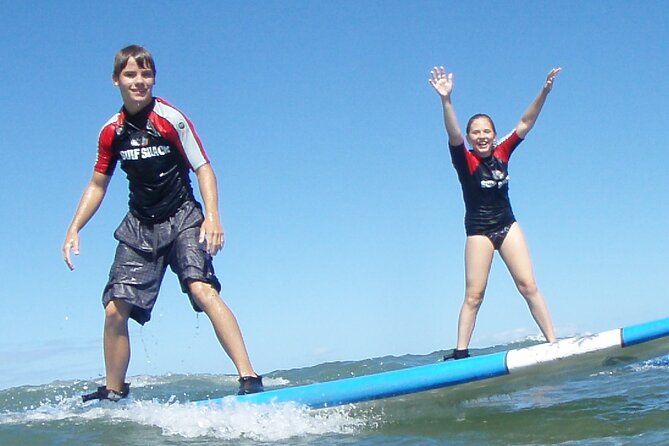
Surf Shack Maui’s meeting point is easy to find: Surf Shack, 1976 S Kihei Rd, Kihei, HI 96753. There’s no hotel pickup or drop-off, so plan to drive or arrange your own way there. Parking is described as convenient, which matters on Maui when you’re on a schedule.
If you’re coming with family members who are watching, the setup can be helpful. One review notes there are family-friendly beaches within a short walk for anyone waiting, plus shops and food trucks across the street. That turns the “waiting around” time into something you can actually enjoy instead of just killing time.
Expect the lesson to start with brief setup and orientation, then move into instruction on land before you head out. The faster you get your gear sorted and your mindset switched to mellow focus, the better the whole session feels.
You can also read our reviews of more tours and experiences in Maui



The Two-Hour Lesson Format: Instruction, Then More Attempts
This is designed for beginners and first-timers. The class is about 2 hours, with a structured flow that generally moves from a quick tutorial to putting skills into practice. One common theme in the feedback is that instructors give a clear on-land demonstration first, then take you into the water to help you find the best wave for your level.
A big part of why this works is the pacing. You’re not stuck in long lectures. You’re getting repeated chances—standing up, riding small waves, then resetting and trying again. That cycle is what turns “I don’t get it” into “okay, I can do this.”
You also get a built-in confidence boost: there’s a guarantee that you’ll be surfing in one lesson, and if you don’t, your next lesson is free. Even if you’re anxious going in, that guarantee helps you commit to the process.
Small-Group Coaching That Keeps You From Getting Lost

The small-group rule is a core part of the value here. The lesson is limited to no more than six students, and the description frames it as no more than five other students with you. In real terms, that kind of cap is what allows instructors to notice details—how you’re paddling, where your stance is landing, and what to fix on the next attempt.
Names that come up often include Ivan, Mike, Jay, Francisco, Justo, Sofi, and Sofia (spelling may vary). Across the feedback, they’re praised for being patient, encouraging, and tuned into first-timer needs. If you’re the type who freezes when you feel rushed, you’ll probably appreciate a coach who keeps things calm.
There’s also a practical benefit: when the group is small, it’s easier to manage the lineup. One review notes the area can be a little crowded, but it still works fine for first-timers because instruction and wave selection are part of the plan.
Ocean Awareness and Water Safety (Before Anyone Tries Standing)
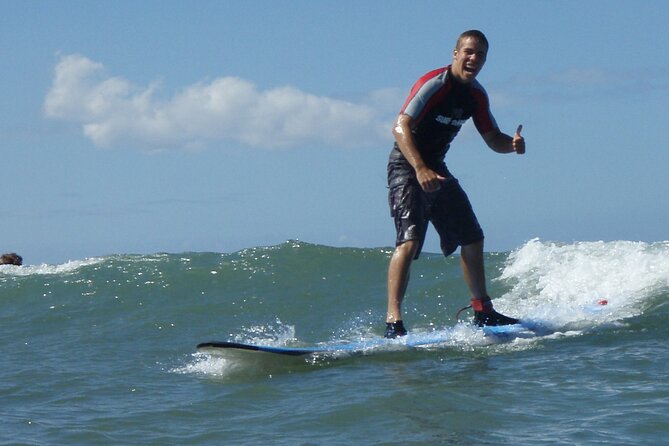
Surfing isn’t just balance. It’s rules, risk awareness, and not turning your “fun” into someone else’s problem. This lesson covers ocean awareness and water safety, along with surfing etiquette.
That matters because beginners often focus only on the board and the wave. But the real skill jump is learning how to be a good ocean neighbor: where to sit, when to paddle, how to respond if conditions change, and how to avoid collisions. Good etiquette coaching also makes you feel less stressed once you’re out there.
You’ll also get guidance on wave riding fundamentals, including how to approach the board for your first successful stand. Instructors use both demonstration and real-time cues, which helps you connect what you think you’re doing with what your body is actually doing.
Getting Up on a Board: What Skill Progress Feels Like
You can expect an outcome-driven lesson. The goal isn’t just to “try surfing.” The goal is to get you to that first real sensation of standing and catching a wave.
From the feedback, the pattern is usually:
- A quick on-land explanation and demonstration
- A few runs focused on fundamentals (paddling, positioning, timing)
- Then the breakthrough attempts where you stand and ride a small wave
Multiple people mention that even if they were convinced they couldn’t stand up, they did—often by the second try. That doesn’t mean you’ll master surfing in two hours. It means the lesson is built to get you your first wins instead of just filling time.
Also, pay attention to how conditions influence learning. One review says the water was calm, so it could be a bit harder to find waves, which ironically can give you more time to rest between runs. If the surf is gentler, you might practice the basics more, even if the number of rides varies.
You can also read our reviews of more tours and experiences in Maui






Equipment and Comfort: What’s Included, What Might Need Upgrading
Good news: you don’t need to bring much. Included are:
- Surf board
- Rash guard
- Water booties
- Professional instruction
The rash guard and booties do a lot for comfort. They reduce friction and help you feel steadier stepping on and off the board. One review notes the water is shallow when you jump or fall off the board, which is typical for beginner training and helps new surfers feel safer.
One caution: those provided water shoes are described as fairly thin. If you already own sturdier surf booties, bringing them can be a smart upgrade—especially if you’re sensitive to rough rocks, sand, or just prefer thicker protection. The listing includes booties, but your comfort can improve with your own gear if you have it.
Optional In-Water Photos: Nice Proof Without Making You Second-Guess the Trip
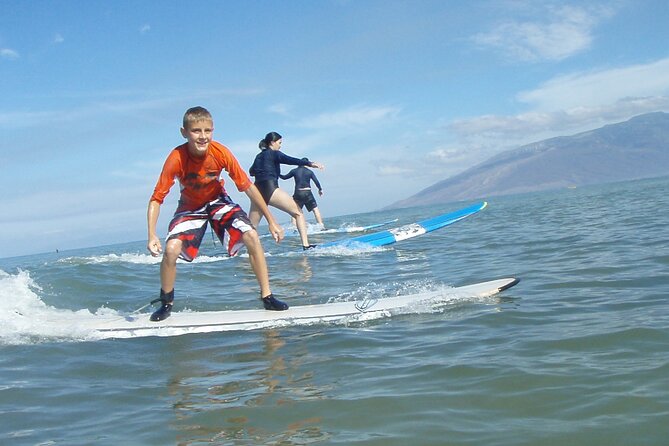
If you want proof that you actually rode a wave, there’s an optional photographer in the water. Several reviews mention a photographer who captures both action attempts and posed shots.
Pricing is noted in the feedback:
- $40 for one photo
- $75 for all photos (one person describes getting about 20 photos with this option)
This is worth considering because beginner surfing can be chaotic—your brain is focused on timing, not remembering details. Having a set of photos can turn the lesson from a memory you hope you remember into something you can share later.
If you’re photo-budget conscious, you could treat it as a “choose later” decision. If you end up with a few great shots, the full set is often the cleanest choice.
Price and Value: Is $98 Worth It for Beginners in Kihei?
At $98 per person for around two hours, the price lands in the “activity that’s actually worth doing” category—mainly because the lesson includes the gear and professional instruction. Many surf experiences charge extra for equipment, so the all-in nature here helps keep the total cost predictable.
Value also comes from risk reduction. The guarantee that you’ll be surfing in one easy lesson—or the next lesson is free—reduces the fear that you’ll pay and only stand on the shore. That guarantee isn’t a small detail. For first-timers, it’s the difference between “maybe this works” and “I can trust the structure.”
The additional mention of a state ocean stewardship fee and taxes is also part of what you’re paying for. You’re not just paying for instruction; you’re contributing to stewardship that supports ocean resources.
What you should weigh: the session depends on ocean conditions. If the surf is weaker that day, you might get fewer rides. But the coaching and safety focus still make it a quality introduction, and small-group attention usually keeps attempts moving.
Who This Lesson Fits Best (And Who Might Prefer Private)
This is built for:
- Beginners and first-time surfers
- People who want a guided, confidence-building first step
- Families with older kids, since the minimum age matters
Age rules are straightforward:
- Minimum age is 9
- Children must be accompanied by an adult
- Ages under 9 should take a private lesson for both safety and getting the most from the lesson
- Ages 5 to 9 should book a private lesson for safety
So if you’re traveling with kids under 9, don’t try to force the group class. The setup is designed for beginners, but the safety logic still points toward private coaching for the youngest riders.
Teenagers do well here too—one review says it’s great for teens, with enough coaching to learn skills they can practice afterward. If you’re an adult who’s nervous, the encouraging coaching style described in the feedback can also be a big plus. One person mentions wanting to try surfing for decades and finally doing it with help that felt supportive and manageable.
Practical Tips to Get More Out of Your Session
Before you go, treat this like an “arm workout with a skill payoff.” Paddling, getting up, and resetting takes effort, especially when you’re learning technique. Plan to wear the included rash guard over swimwear, or bring a suit that stays comfortable when wet for two hours.
Bring the basics:
- Your swimwear under the rash guard plan
- Sun protection (Maui sun is real)
- Water and snacks nearby if you’re waiting for a group
- If you have them, consider bringing thicker surf booties if the provided ones feel too thin for you
Also mentally prepare for the “beginner crowd” factor. One note says the area can be a little crowded, but it still works fine for first timers. That means the instructor’s job is even more important—follow directions quickly and trust the wave selection.
Should You Book This Beginner Surf Lesson in Kihei?
Yes, if you want a structured first surf lesson with small-group attention, included equipment, and clear coaching that targets standing up quickly. The guarantee is a meaningful safety net for first-timers, and instructors like Mike, Ivan, Jay, Francisco, and others are repeatedly described as patient and encouraging.
Skip it or consider private instruction if:
- You have a child under 9 (the guidance points to private lessons for safety)
- You’re expecting a “stand up and surf for hours” experience (this is a beginner intro, and ocean conditions still affect ride count)
- You don’t drive and can’t easily handle the lack of pickup and drop-off
If you’re aiming for a Maui memory you can physically claim—like actually catching waves this trip—this lesson is one of the most direct ways to do it in two hours.
FAQ
How long is the beginner surf lesson in Kihei?
The lesson runs for about 2 hours.
What age is the minimum for this group surf lesson?
The minimum age is 9 years old. Ages under 9 should take a private lesson for safety and to get the most from the class. Ages 5 to 9 should also book private for safety.
What’s included with the surf lesson?
You get a surfboard, rash guard, water booties, and professional instruction. The $1 state ocean stewardship fee and taxes are included in the price.
Where do we meet for the lesson?
You meet at Surf Shack, 1976 S Kihei Rd, Kihei, HI 96753. The activity ends back at the meeting point.
Is hotel pickup included?
No. Hotel pickup and drop-off are not included.
Can I cancel and get a full refund?
Free cancellation is available if you cancel up to 24 hours in advance for a full refund. If you cancel less than 24 hours before the start time, you won’t get a refund.