REVIEW · MAUI
Discover Scuba Diving Class from Lahaina
Book on Viator →Operated by Dive Maui · Bookable on Viator
Scuba lessons in Maui start with homework. This Discover Scuba experience pairs PADI eLearning before you arrive with hands-on coaching at a reef location, plus a good shot at seeing turtles and colorful fish.
I really like the small group size (max four) and the way your instructor sticks with you through the core skills, whether you’re learning with Matt or getting calm, steady guidance from Joe. I also like that all the necessary gear is provided and you get a structured plan instead of a free-for-all.
One possible drawback: you’ll carry your own heavy scuba gear in and out, and you must be comfortable swimming and floating in open water. If you want a super slow, pool-only ramp-up, this setup may feel like a lot at first.
In This Review
- Key Highlights That Make This Worth Your Time
- Price and What You’re Actually Buying
- The Must-Do Before Arrival: PADI eLearning
- Your Small-Group Setup and How Coaching Works
- From Lahaina to the Water: Walking, Entry, and Timing
- What You Learn Under Supervision (Before You See Anything Cool)
- Reef Time: Turtles, Fish, and the Shark Possibility
- Who This Works Best For (And Who Might Struggle)
- Safety Rules That Can Affect Your Day
- Should You Book This Intro Scuba Class?
- FAQ
- How long is the Discover Scuba experience?
- Is previous scuba experience required?
- Do I need to complete PADI eLearning before I arrive?
- How big is the class?
- Is all the scuba gear provided?
- Do I need to fill out a medical form?
- What swimming level do I need?
- Is there a minimum age?
- Can I fly soon after the experience?
- What happens if weather cancels the activity?
Key Highlights That Make This Worth Your Time
- PADI eLearning first, so your in-water time starts with review and skills, not a full classroom lecture
- Max four participants, which makes it easier for the instructor to correct small problems fast
- Gear included, but you’re still expected to manage it yourself on the beach
- Skill practice before the reef, so you learn how breathing, buoyancy, and mask/fin basics work underwater
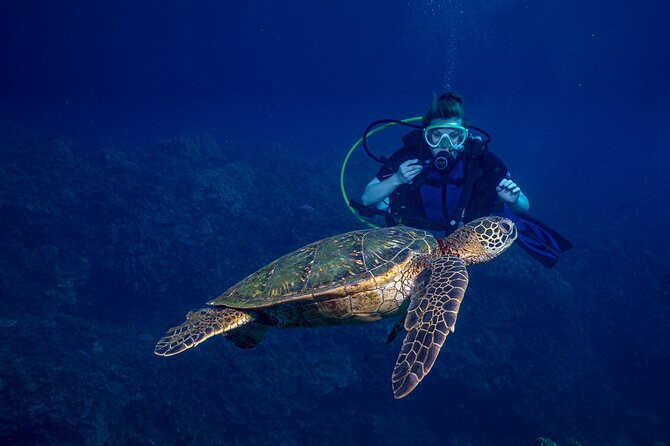
- Wildlife opportunities, often including sea turtles and lots of reef fish, with some chance of sharks depending on conditions
- Many instructors lean patient and calm, with names like Sean, Abby/Abbi, Scott, Annika, and Gretchen showing up in reviews
Price and What You’re Actually Buying
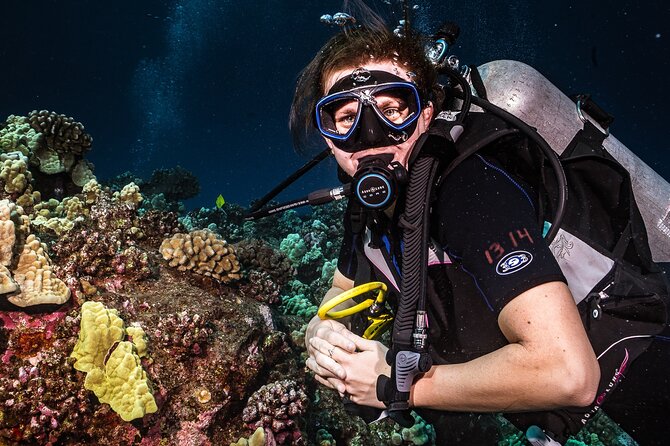
At $158.43 per person for about 3 hours, this isn’t cheap in the way a casual snorkel boat ticket can feel. But you’re not just watching fish. You’re getting a guided, instructor-led introduction to scuba basics with PADI eLearning completed ahead of time, plus scuba gear provided and active practice under supervision.
That price makes more sense when you think about the tradeoff: you pay for (1) a trained professional, (2) equipment, (3) time in the water focused on skills, and (4) tight group control. With only four participants, you typically spend less time waiting and more time getting feedback.
So the value is best if you want a real start toward confidence—learning how breathing, buoyancy, and equipment feel underwater—rather than a quick “see what happens” experience.
You can also read our reviews of more scuba diving tours in Maui
The Must-Do Before Arrival: PADI eLearning
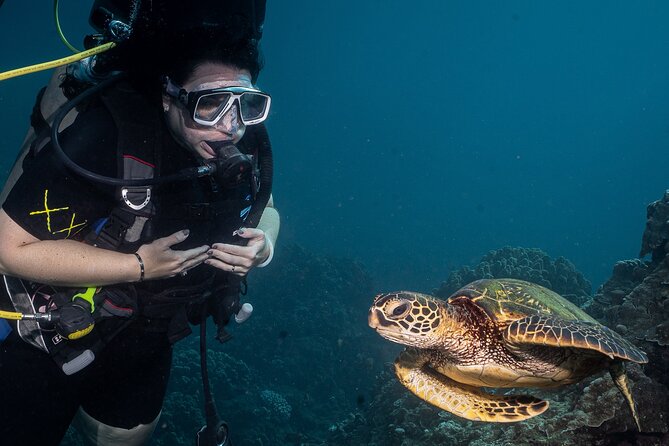
This program uses PADI eLearning that you complete before you show up. After booking, you’re given a login, and you’re expected to finish the required reading and videos ahead of time. On arrival day, your instructor reviews what you completed and uses it to set expectations for the water skills and dive plan.
Two practical points matter here:
First, the eLearning isn’t a formality. It affects what you do in the ocean. Your in-water time is for confirming understanding and building muscle memory, not teaching every concept from scratch.
Second, your refund depends on completion. If you haven’t finished the online work, refunds aren’t given for that reason. If you’re the type who likes to wing it, this part may annoy you. If you’re organized, it’s a good system that helps you arrive ready.
Think of eLearning as your warm-up. It lowers the shock factor when you put the gear on and start breathing underwater air.
Your Small-Group Setup and How Coaching Works
This experience runs with a maximum of four participants, which is a big deal for beginners. Fewer people means your instructor can watch your breathing, buoyancy control, and equipment setup in real time and adjust quickly.
In the reviews, instructors like Sean and Matt get singled out for patience—especially during that first tricky stretch when you’re still figuring out mask fit and how to breathe comfortably through the regulator. The best part of this kind of coaching is that it doesn’t just correct technique. It helps you manage nerves so you can actually learn.
Expect the instructor to:
- go over the gear and how it works while you’re swimming underwater
- explain the key skills you’ll use on every scuba session
- check that you’re comfortable enough to continue
- supervise your practice at the water location before you move into the next phase of the experience
If your comfort level isn’t there yet, your instructor has the option to keep you at a safer plan pace. That’s not the same as “push through no matter what.” It’s more like: safety and readiness come first, and the instructor adapts.
From Lahaina to the Water: Walking, Entry, and Timing
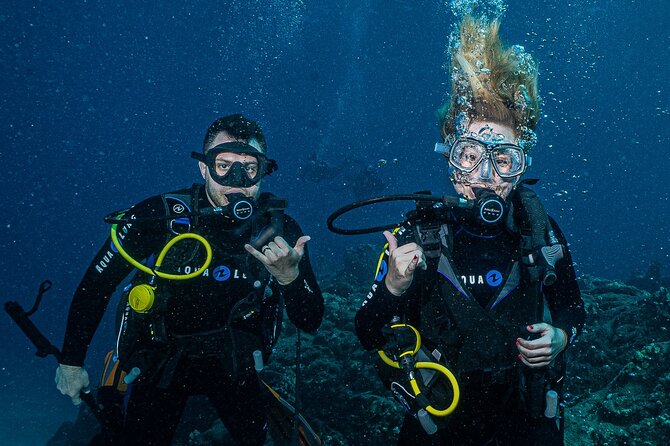
You meet at 1223 Front St, Lahaina, HI 96761, and the activity ends back at the same meeting point. From there, you head to the reef location.
Here’s what you should plan for physically. You must be able to carry your own scuba gear in and out of the water. That gear can feel heavy, especially when you’re new and you’re also trying to remember how everything connects. Some reviews also mention rocks and a challenging path, so wear footwear you trust for uneven surfaces.
Entry and exit also take real-world coordination. Your instructor times the group’s water entry to manage conditions at the site and keep things moving safely. If you’re anxious, this “organized pace” can feel rushed. But in practice, an efficient, controlled entry often reduces risk on uneven, rocky terrain.
If you have a sensitive back, knee problems, or you get winded easily, take that seriously. This isn’t just sitting on a boat. You’re doing a short workout with scuba gear on your back.
What You Learn Under Supervision (Before You See Anything Cool)
The intro is designed for people with no previous scuba experience. Still, it’s not a magic carpet. You’ll need to practice. Your session includes:
- studying basics through PADI eLearning beforehand
- reviewing equipment and how it’s meant to be used
- learning core skills you’ll rely on during every scuba session
- practicing those skills at the water location with your instructor right there
In plain terms, the early part is about getting comfortable with three things:
1) Breathing through the regulator
If you feel startled by the first minutes underwater, you’re not alone. The best instructors slow you down, check in often, and help you settle into an even rhythm.
2) Mask comfort and calm control
You’ll learn how breathing and body position affect your mask and comfort. When you get this right, the whole experience becomes easier.
3) Buoyancy basics
You’ll practice how to stay steady enough underwater so you aren’t kicking frantically or sinking. That’s when you start to enjoy the reef instead of thinking about your hands and feet.
Only after you feel confident do you continue together with your instructor and spend more time exploring the coral area.
You can also read our reviews of more tours and experiences in Maui




Reef Time: Turtles, Fish, and the Shark Possibility
Once you’re through the skills practice, the fun part kicks in. Maui’s reef world is the reason most people book this.
From reviews and the program description, you can expect opportunities to see:
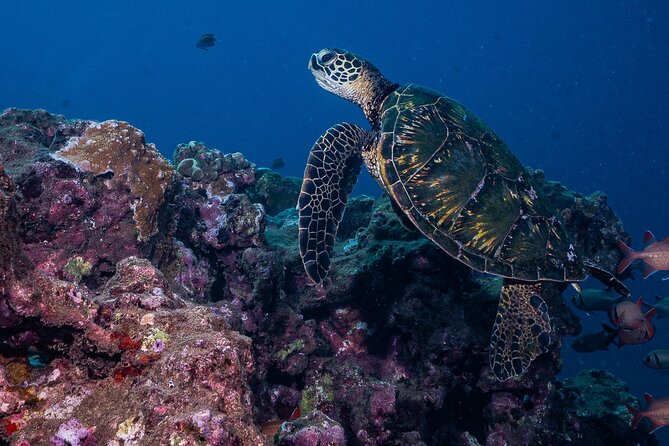
- sea turtles close up
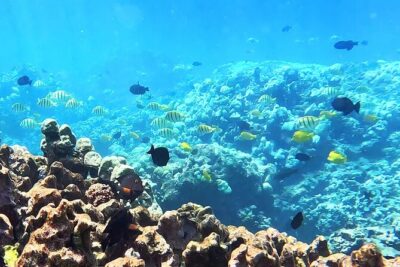
- tropical fish and colorful reef life
- coral systems you can actually swim past, not just watch from a distance
Some reviews mention impressive turtle counts, including sessions where people saw many turtles within arms reach. Others mention sharks such as white-tipped sharks and nurse sharks, plus stories of spotting puffer fish and eels.
A realistic note: wildlife depends on conditions—water clarity, time of day, and the specific reef area that day. But if you go in expecting turtles and a lot of fish, you won’t feel let down.
If you’re a little nervous, focus on the instructor’s cues for buoyancy and breathing. The moment you stop fighting your body position, the wildlife becomes the main event.
Who This Works Best For (And Who Might Struggle)
This program is for people who can meet the basics:
- must be able to swim
- must feel comfortable in the ocean
- travelers should have moderate physical fitness
- minimum age is 10 years old
It also requires you to carry your own gear. That’s part of the real-world reality of a shore-based scuba experience.
This works especially well if you:
- want a guided introduction without needing to be certified already
- like structured learning, where you practice before you explore
- want a smaller, more personal session (max four)
It may be harder if you:
- hate the idea of heavy gear walk-ins
- don’t have much water comfort (floating can be a sticking point)
- want a long, shallow acclimatization period like you’d get in a pool
- have medical conditions that require clearance but aren’t ready to handle the paperwork in time
One negative review described feeling rushed and anxious due to minimal acclimatization and equipment-heavy entry. The operator’s reply emphasized that water comfort is required and that the plan can’t always proceed if floating or swim comfort isn’t met. Translation: this is beginner-friendly, but it’s still real ocean water.
Safety Rules That Can Affect Your Day
Scuba safety is paperwork and practice. You’ll need to complete a medical questionnaire. If you answer yes to anything on the form, doctor approval is required to dive. Refunds aren’t authorized for yes answers if you can’t get cleared.
Also:
- you cannot fly or go to elevation within 18 hours of the tour
- you must be comfortable swimming and carrying your own gear
- service animals are allowed
- the activity requires good conditions and can be affected by weather
The upside of all these rules is that they reduce the chance of a “wing it” situation. The downside is that if you don’t finish the eLearning and medical steps, you may lose the experience or face limited flexibility.
If you have any health question at all, handle it before you go. It’s easier than trying to solve it on a vacation schedule.
Should You Book This Intro Scuba Class?
I’d book it if you want a real introduction to scuba basics with PADI eLearning, a small group, and a hands-on instructor who can guide your first underwater skills. The best version of this experience feels confidence-building: gear on, core skills practiced, then reef time with sea turtles and lots of reef fish.
I’d think twice if you’re uncomfortable swimming, dread carrying heavy gear, or want very slow acclimatization with pool-style pacing. Ocean entry and gear transport are part of the deal here, and you’ll need to meet that comfort level to enjoy it.
If you’re organized—finish the eLearning, complete the medical form early, and show up ready to swim—this is a strong way to see Maui’s reef while learning how scuba actually works from the first moments.
FAQ
How long is the Discover Scuba experience?
It lasts about 3 hours (approx.).
Is previous scuba experience required?
No. This is an intro program that does not require previous experience.
Do I need to complete PADI eLearning before I arrive?
Yes. You’ll be assigned an eLearning login and you must complete the required reading and videos before your dive. Refunds are not given if you haven’t finished the online work.
How big is the class?
It’s capped at four participants, so you get more direct attention from the instructor.
Is all the scuba gear provided?
Yes, the necessary gear is provided.
Do I need to fill out a medical form?
Yes. You must complete a PADI medical form. If you answer yes to anything, doctor approval is required to dive.
What swimming level do I need?
You must be able to swim and you should be comfortable in the ocean.
Is there a minimum age?
Yes. The minimum age is 10 years old.
Can I fly soon after the experience?
No. You cannot fly or go to elevation within 18 hours of the tour.
What happens if weather cancels the activity?
If it’s canceled due to poor weather, you’ll be offered a different date or a full refund.