REVIEW · MAUI
Maui Lahaina Group Surf Lesson
Book on GetYourGuide →Operated by Royal Hawaiian Surf Academy · Bookable on GetYourGuide
Lahaina surf lessons can get you standing fast. This 2-hour beginner group in West Maui pairs you with a professional, CPR-certified instructor and keeps the class small (max 5), so you’re not waiting around all day. You’ll get the kind of guided turns, wave timing, and surf etiquette coaching that makes a first session feel way less intimidating.
I especially like the hands-on structure: a short beach briefing, then repeated time in the water with turn-taking, so you build momentum. I also like the included gear package—board, rash guard, and water shoes—because it cuts down what you need to carry and buy. One possible drawback: the price is on the higher side for Maui surf lessons, and one review did mention an unpleasant moment with a specific instructor, so it’s smart to start with the attitude that safety and communication matter.
In This Review
- Key things I’d zero in on
- Lahaina guardrails: where your beginner waves actually happen
- Check-in and gear pickup: what $125 covers (and what it doesn’t)
- That first 15-minute land lesson sets your whole session up
- Two hours in the water: why the pacing feels fair
- Surf technique you’ll use right away (not someday)
- Photographer during the session: how you get a real keepsake
- Timing tips: choose the day like a strategist
- Who this is best for (and who might want private)
- Value check: is $125 a good deal here?
- Should you book this Lahaina surf lesson?
Key things I’d zero in on
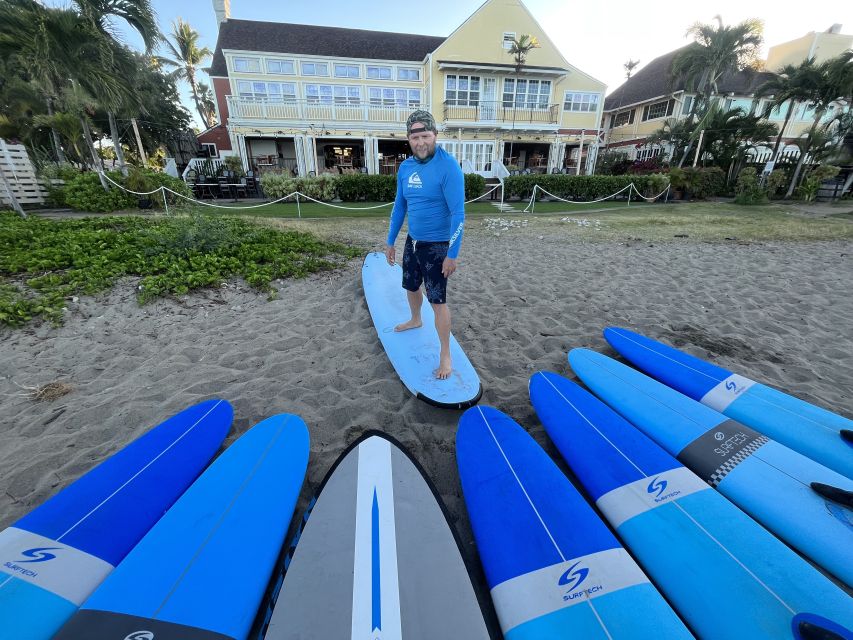
- Max 5 surfers per group means more attempts and faster feedback
- 15-minute land lesson first, then you’re out riding in a controlled way
- Included UV rash guard and water shoes make the day easier on your body
- Professional photographer during the session turns your learning day into a keepsake
- Local Lahaina operating area (guardrails) is set up for beginner-friendly conditions
Lahaina guardrails: where your beginner waves actually happen
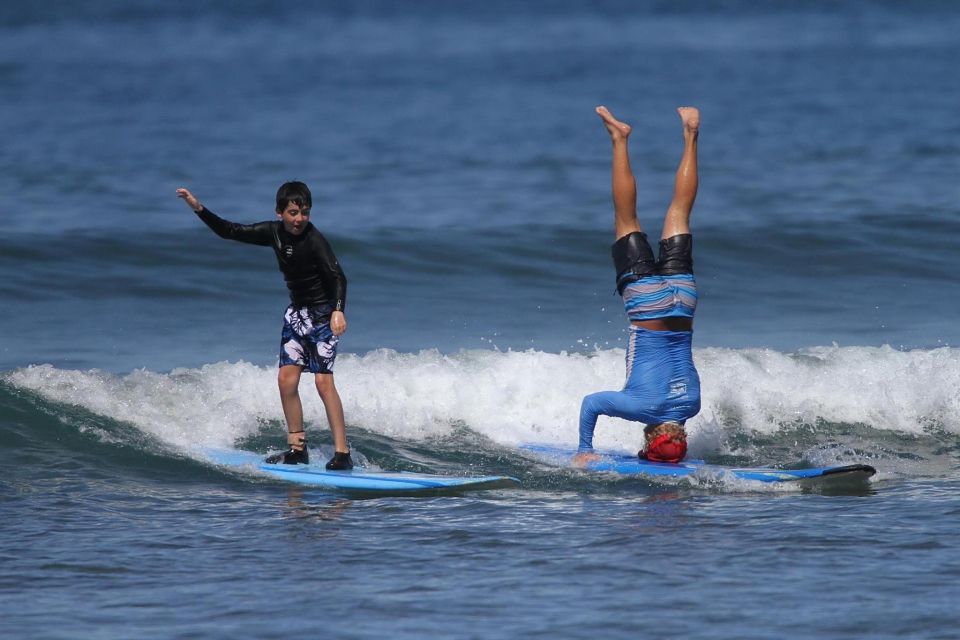
This lesson runs in Lahaina at the guardrails stretch, located between Puamana Beach Park and Launiopoko Beach Park. What that matters for you is simple: beginners learn best where conditions are readable and the plan is organized, not where you’re guessing at currents and wave behavior.
West Maui is the big selling point here. The setup is aimed at calm-water, beginner-friendly sessions, with a surf break that can work year-round. In plain terms, you’re not signing up hoping for a miracle swell—you’re signing up for a guided attempt where the instructor can adjust your time on waves.
You can also read our reviews of more tours and experiences in Maui



Check-in and gear pickup: what $125 covers (and what it doesn’t)
The routine starts at 505 Front Street, Lahaina, where you need to check in 30 minutes before your lesson. After the paperwork (including a liability release), you’ll be pointed to cubicles to store anything you don’t want to get wet—anything that doesn’t float, basically.
The included gear is a big value lever at this price:
- Surfboard
- Long-sleeve UV rash guard
- Water shoes
- Professional surf instructor (also listed as CPR certified)
What’s not included is also worth noting so you’re not scrambling:
- Towel
- Sunscreen
- Swimsuit
I’d treat those three as “bring-on-purpose” items. Maui sun is no joke, and a towel matters once you’re done wringing out your gear and drying off before you head back.
As for how you find the beach setup: you’re told to park at the yellow flag on the mountain side of the highway. That small detail saves time and stress, especially if you’re arriving close to start.
That first 15-minute land lesson sets your whole session up
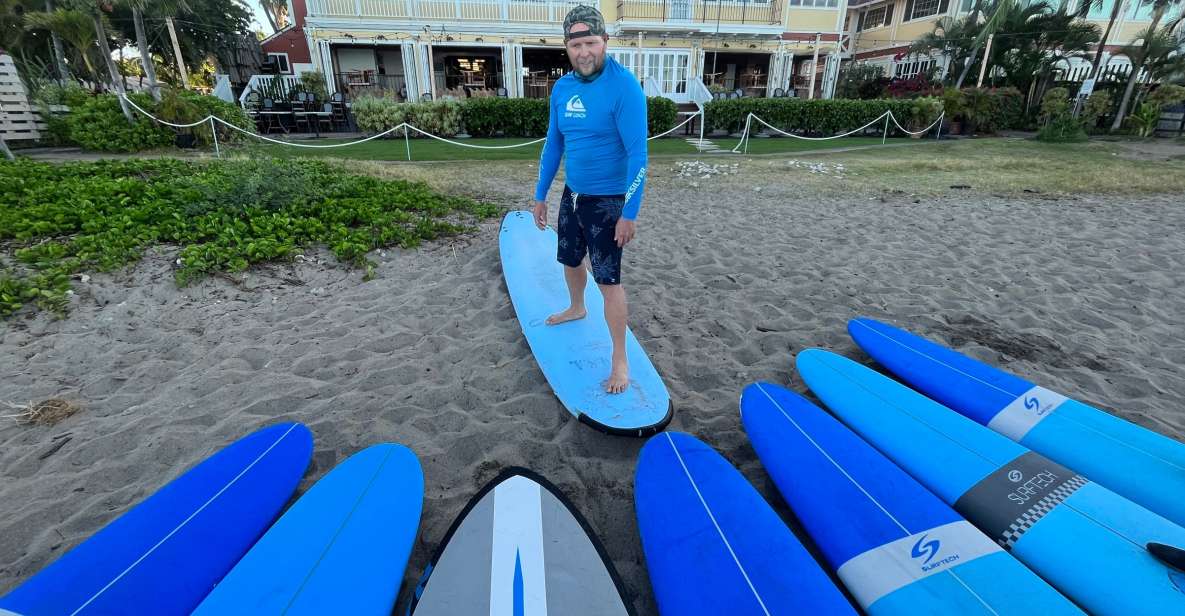
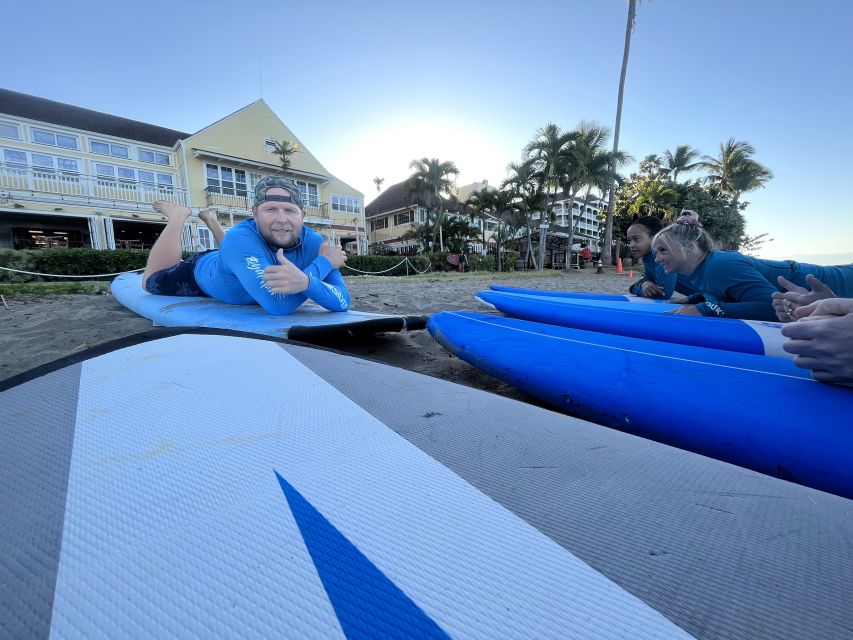
Before you hit the water, you’ll get about 15 minutes on the beach. This isn’t just a formality. It’s where the instructor covers safety measures and procedures, plus the basics that help you avoid the most common beginner mistakes.
You’ll also get the “how this day works” rhythm: when to go in, where to wait, and how to take your turn. People who felt successful in their session repeatedly mention that the instructors didn’t just yell from the shore—they helped you understand what to do when it was time, then guided you as you tried.
On technique and etiquette, the lesson is designed to teach the basics, not just survival. You’ll practice proper wave behavior and learn the unwritten rules of sharing the lineup—things that keep you safer and help the group progress without confusion.
Two hours in the water: why the pacing feels fair
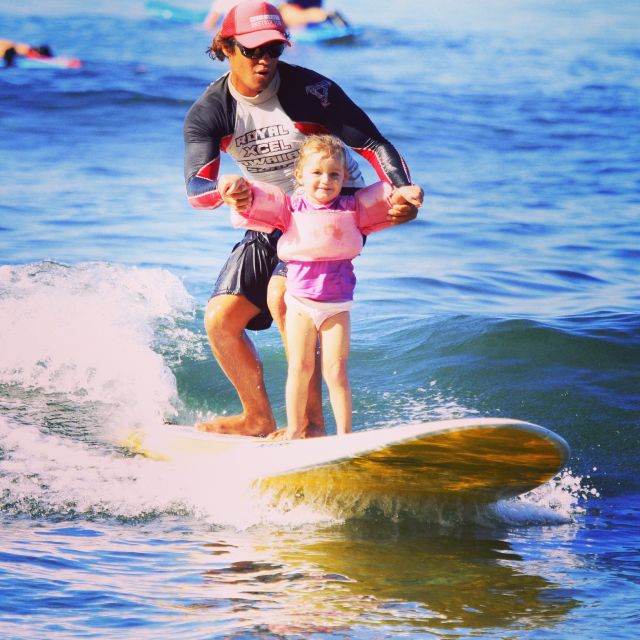
From the time you leave the surf shop to when the instructor signals you back in, the total time is about 2 hours. Inside that window, you’ll use repeat attempts rather than a single long try.
The group is capped at 5 surfers, which changes the math fast. Each surfer gets their own turn, then returns to a designated waiting area until the instructor signals again. The early rides can be slow—this is normal. Once everyone understands the timing and how to position themselves, the pace usually picks up.
A pattern I’d expect you to notice (based on what people reported) is that the instructors actively manage you through fatigue. One review described being helped out to deeper water using a technique where an instructor used the board to reposition you when paddling got tough. Others talk about push-assistance as a way to help beginners connect with the wave before they’re strong enough to do it solo.
That’s the key for first-timers: your goal isn’t to “win” the ocean. Your goal is to get enough wave time that you start learning the flow—paddle timing, takeoff timing, and standing balance—without burning out.
Surf technique you’ll use right away (not someday)
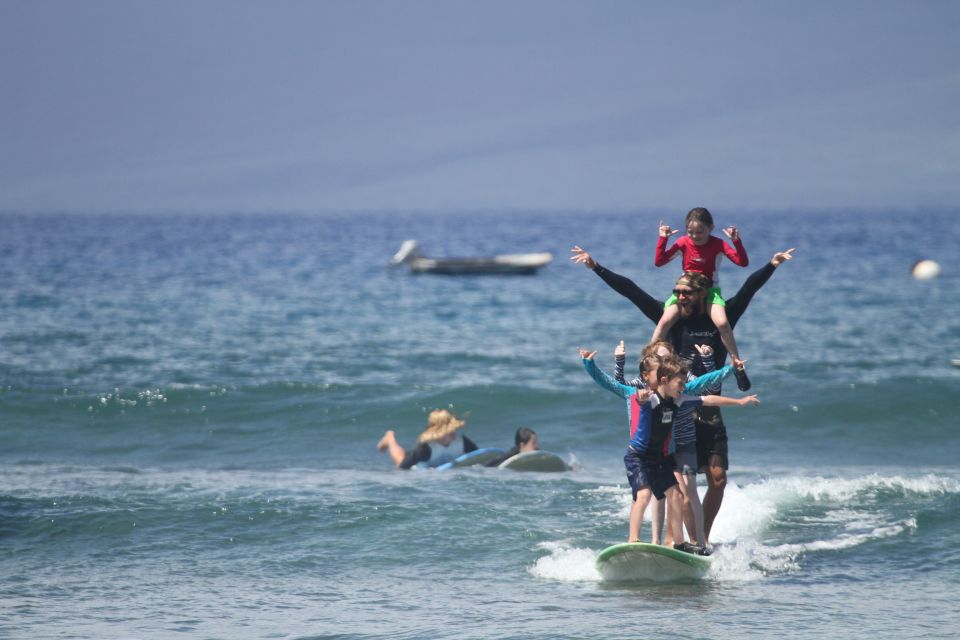
The lesson focuses on proper wave techniques and etiquette, and the best part is that you’re not only hearing advice. You’re watching someone help you apply it in real conditions with real waves.
From the way instructors are described, here’s what you can expect the coaching to feel like:
- Clear instructions before each attempt so you’re not guessing mid-wave
- Hands-on help when paddling or positioning is the bottleneck
- Corrections that prioritize safety and small, repeatable improvements
Guide styles seem to vary, but names that came up often include Lee, Inaldo, Connor, Josh, and JB, with other staff like Steve (manager) also getting mentioned for stepping in to help with extra learning time. People also credited instructors like Marcelo and Kayla for their approach—though one review singled out Kayla for a poor experience, including rough handling during an incident at the end of class. That’s a good reminder: safety is the baseline, and you should feel comfortable communicating if something feels off.
If you’re nervous about the ocean, the best sign is patience. Multiple reviews emphasize instructors who stayed calm, explained what to do, and kept beginners feeling like they could stand up and progress. That’s what you’re paying for: a structured path from shaky first attempts to actual rides.






Photographer during the session: how you get a real keepsake
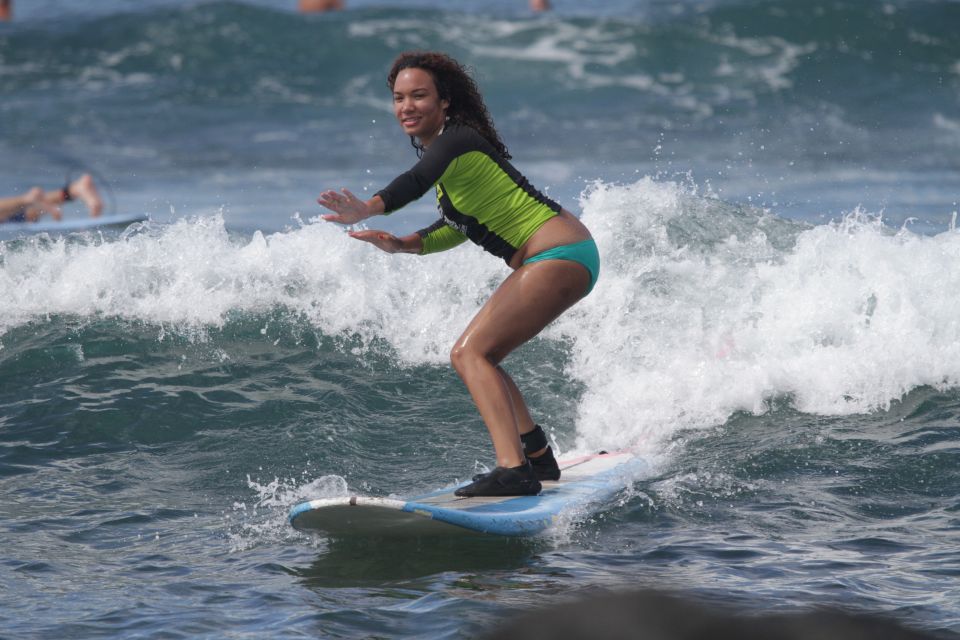
One pleasant bonus is the professional photographer who takes close-up shots during the lesson. That’s not just for marketing—it’s for memory. Learning to surf can feel chaotic while you’re doing it, so having photos helps you remember what you did right and what worked.
Photos are available for purchase after the class. One review mentioned a $25 per person photo option, paid by cash, Venmo, or card—so if you want this, plan to bring a payment method you can use quickly.
After you finish, you’ll carry your surfboards back to the shop, then head back to the beach area to shower off in fresh water. That shower moment is more important than it sounds. Salt and sunscreen residue can stick around, and a real rinse makes the rest of your Maui day more comfortable.
Timing tips: choose the day like a strategist
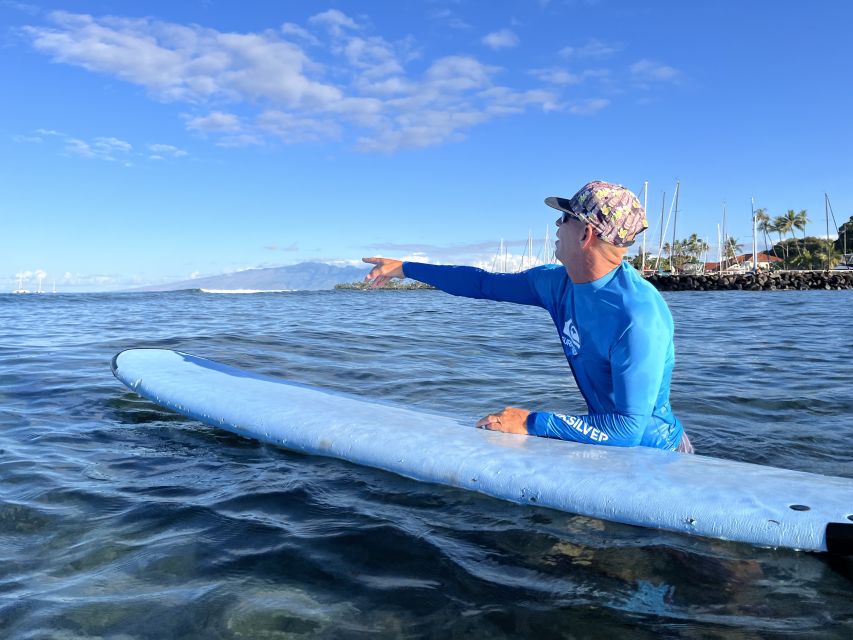
The lesson duration is fixed, but your experience can change with the conditions and the crowd level. One family said they were glad they booked an earlier start (they referenced 7:45 am) because it felt less crowded and they caught plenty of waves.
So if you can pick times, I’d do this:
- Choose an earlier slot when possible for easier lineup management
- Dress for sun and wind, not just for warmth
- Expect the session to be tiring—paddling builds up fast, even when the waves are beginner-friendly
If you finish early, you can wait at the beach until the rest of the class is done. That matters if you’re traveling with people who don’t move at surf-sprint pace.
Who this is best for (and who might want private)
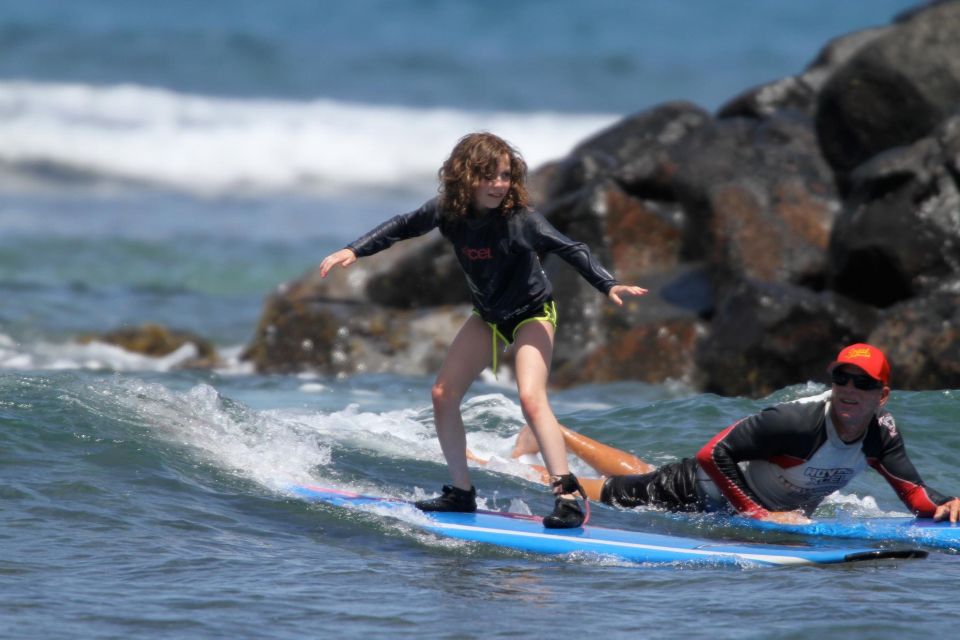
This is a beginner-focused group lesson, and the age rule is clear: 10 years old and older for group lessons. 9 and younger are recommended to do private or semi-private lessons. One review reported that a 9-year-old was required to upgrade to semi-private and that it cost extra, so it’s smart to think ahead if your child is close to the age cutoff.
This lesson also fits you if you want:
- A first-time surf introduction with instruction in the water
- A small group where you get attention without crowding
- Included gear so you don’t waste time preparing
If you’re already surfing and want more advanced progression, you might find a group lesson can still help, but you’d likely get the most targeted improvement from a private or semi-private session when the goal is specific technique.
Value check: is $125 a good deal here?
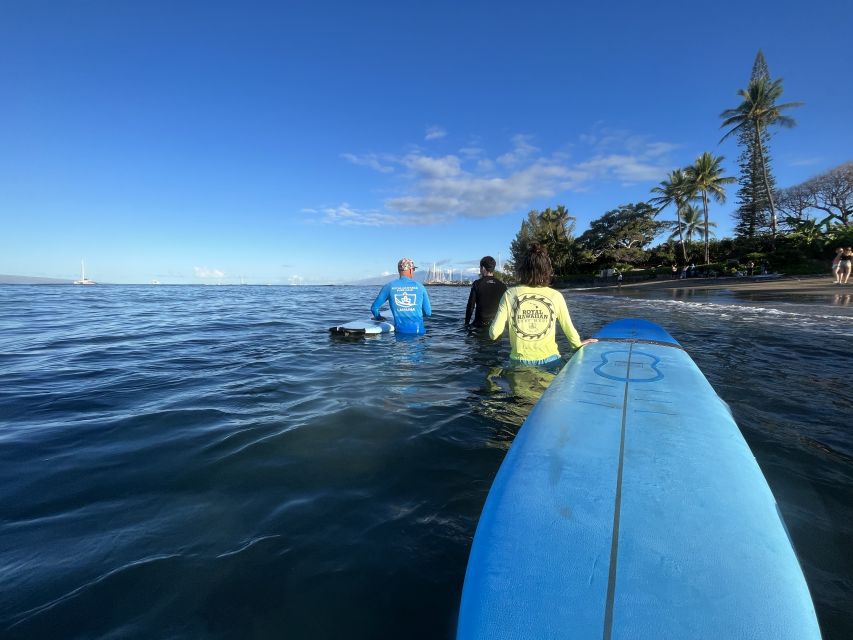
At $125 per person for a 2-hour lesson, the value comes from three places:
1) Gear included
A board plus a rash guard plus water shoes is real cost you don’t have to carry or buy.
2) Small group size
Max 5 surfers means more turns and more chances to correct mistakes. When you’re learning to surf, time on your feet beats time on shore.
3) In-water coaching + CPR-certified safety
People repeatedly praised instructors for being patient and guiding them step-by-step. Add in the CPR-certified detail, and this is clearly built to be a structured, safety-first learning environment.
The main reason it might not feel like a bargain is purely personal: if you’re comparing to cheaper lessons elsewhere, you may feel the price difference. And with any small-team activity, you’re also buying instructor fit—one review didn’t have a good experience with a specific instructor, while many others were thrilled.
Should you book this Lahaina surf lesson?
Book it if:
- You’re learning for the first time and want a small group with real coaching in the water
- You like the idea of included gear and don’t want to source a bunch of equipment
- You want a photo keepsake built into the experience
Consider a different option if:
- Your priority is minimizing price rather than maximizing coaching time
- You’re bringing a younger child near the 9-and-under boundary and want to avoid possible lesson changes
- You know you’ll need extra reassurance and you’re worried about instructor personality fit (it can vary)
If you do book, send yourself into it ready: bring sunscreen, wear a swimsuit you’re comfortable getting wet in, and treat the first rides as setup. The best sessions are the ones where you follow instructions, ask questions early, and stay calm when the ocean tries to act like a trickster.