REVIEW · MAUI
Maui: Group Surf Lesson
Book on GetYourGuide →Operated by Sea Maui Surf · Bookable on GetYourGuide
Catch your first wave in Maui.
This group surf lesson at Ka’anapali Beach turns a day at Whalers Village into a real, hands-on skill session in the Pacific. What I like most is the small class size (up to four people per instructor) and the fact that you’re surfing on one of Maui’s most recognizable shorelines, not some random beach.
The one big consideration: this is for age 13+ and you need to feel comfortable swimming in the ocean. If that part isn’t true for you, the lesson won’t feel fun or confidence-building.
In This Review
- Key Highlights You’ll Care About
- Why Ka’anapali Is a Great First-Surf Choice
- Price and Value: What $120 Gets You
- The Meeting Point at Whalers Village (and Why Timing Helps)
- Gear Check: What You’ll Wear and Bring
- The 90 Minutes: What Happens From Check-In to First Ride
- 1) Safety briefing and surf instructions
- 2) Grab your board and walk down to the sand
- 3) Paddle out with the instructor close by
- 4) Catch waves as a small group
- 5) Back to shore, feeling like you belong
- What the Small Group Format Changes for You
- What Makes the Team So Popular
- Who This Surf Lesson Is Best For
- Should You Book This Maui Group Surf Lesson
- FAQ
- What’s the duration of the Maui group surf lesson?
- How much does the surf lesson cost?
- Where do I check in?
- What gear is included?
- What should I bring?
- What age is the lesson for?
- What language are the instructions given in?
- What happens if weather affects the lesson?
Key Highlights You’ll Care About
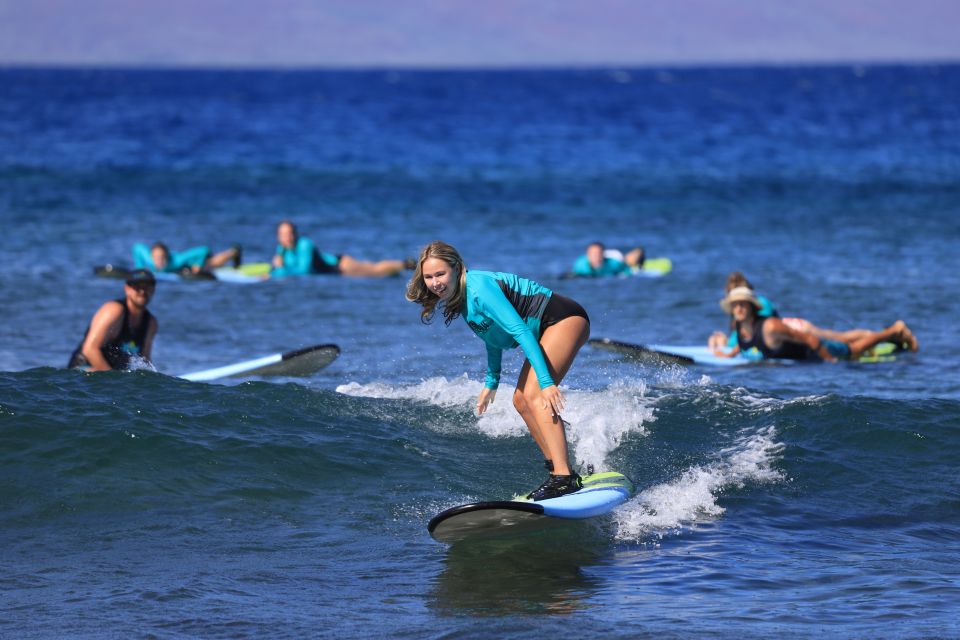
- Up to four students per instructor means you’re not stuck waiting your turn.
- Ka’anapali Beach gives you that iconic Maui surf setting while you learn.
- Instructor stays close in the water so you can focus on the surf lesson instead of guessing.
- All the key gear is included: board, leash, rashguard, and reef booties.
- You paddle out and catch waves during the 90-minute session, not just watch from shore.
Why Ka’anapali Is a Great First-Surf Choice
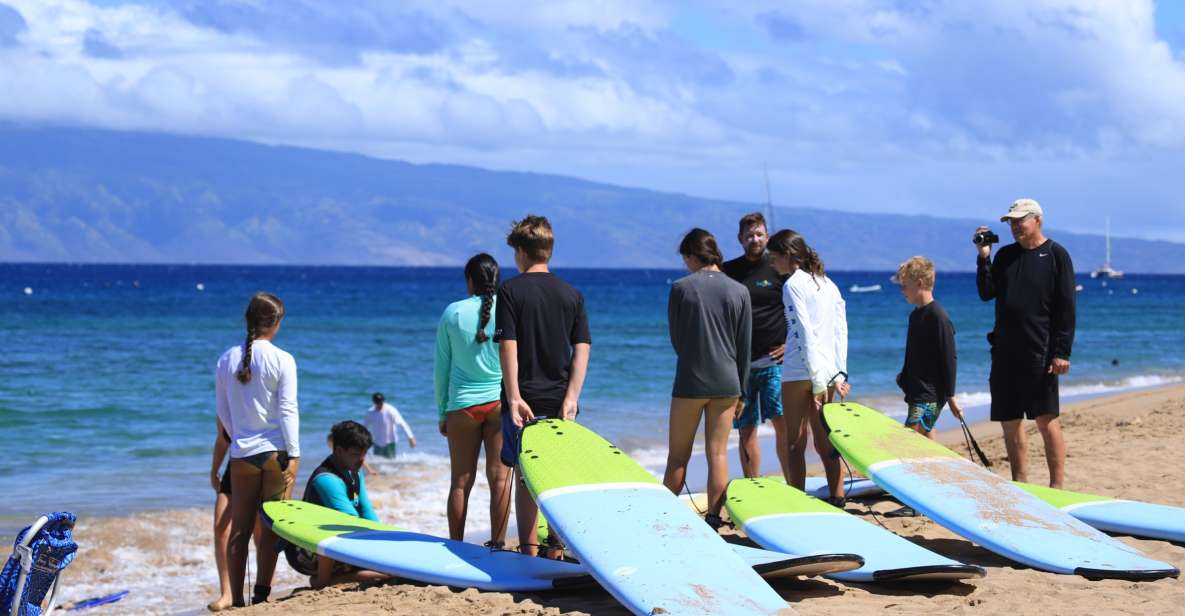
Maui has plenty of surf spots, but Ka’anapali is a smart pick for a first-timer. It’s easy to get to, easy to understand (you’re learning right off the beach), and it has that classic Hawaii surf vibe that makes the whole thing feel legit. You’re not just standing on the sand. You’re walking out with your board, paddling into the ocean, and learning how to work with the waves instead of fighting them.
I also like how the experience is structured around getting you to water quickly. After you check in, you go straight into an ocean safety briefing and surf instructions. That matters because surfing looks carefree from shore, but once you’re in the water you want clear guidance on what to do next.
You can also read our reviews of more tours and experiences in Maui



Price and Value: What $120 Gets You
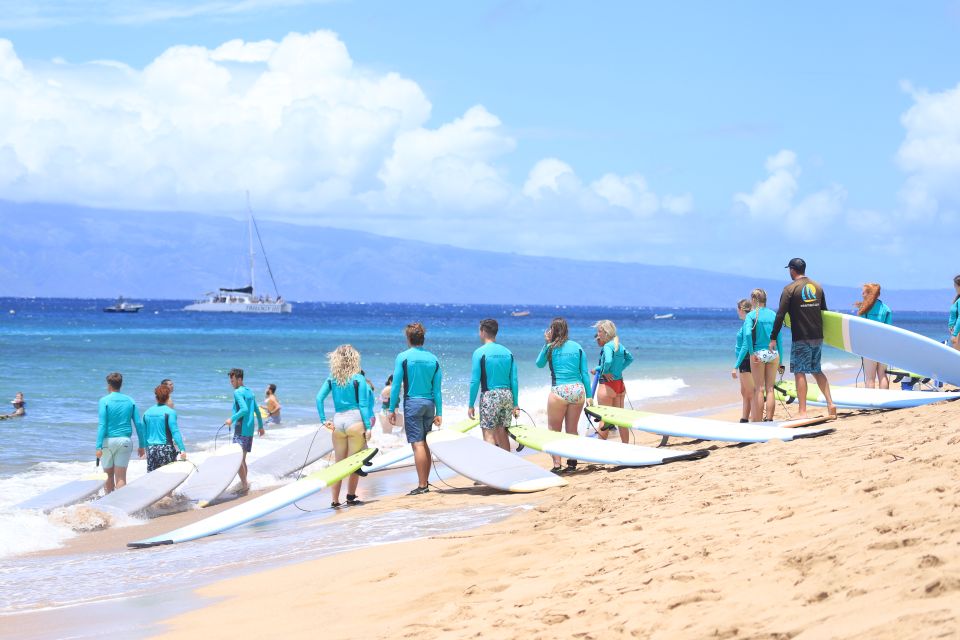
At $120 per person for 90 minutes, this isn’t a “cheap and casual” activity. You’re paying for three things that actually matter when you’re new to surfing: instruction, safety support, and quality equipment.
Here’s what’s included:
- Surf lesson and instructor
- Protective rashguard
- Reef booties
- Surfboard with leash
For first-time surfers, these inclusions are a big deal. You don’t need to hunt down gear, you don’t need to worry about the leash setup, and you can show up prepared without turning the trip into a shopping trip. The lesson time also isn’t short-on-value. Ninety minutes gives enough time to get through the basics and still spend meaningful moments in the water.
The Meeting Point at Whalers Village (and Why Timing Helps)
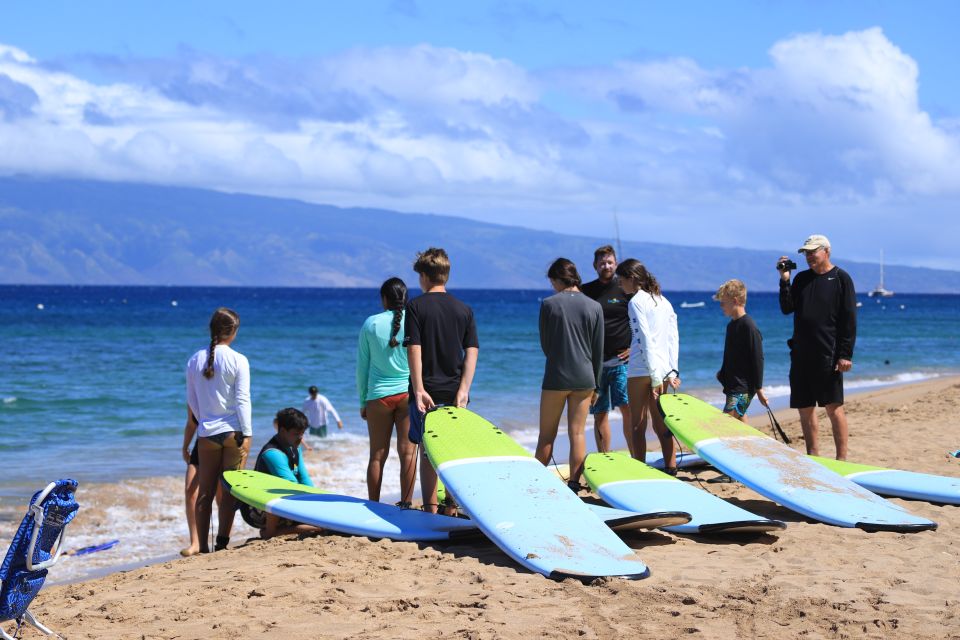
You check in at the Sea Maui Surf booth located on the beach side of Whalers Village, between Leilani’s restaurant and the Westin. That location is convenient because you’re basically starting your surf day in a place where you can grab a few essentials nearby and keep your day moving.
If you’re driving, arrive early to allow time for parking at Whalers Village. You’ll also want to bring your ticket from the Whalers Village parking structure when you check in. The activity provider stamps it for four hours of complimentary validation. It’s one of those small details that can noticeably cut the cost of a day already filled with Maui expenses.
Gear Check: What You’ll Wear and Bring
The lesson provides the surf essentials that usually trip people up:
- rashguard
- reef booties
- surfboard with leash
That means you can focus on comfort and basics. For your part, bring:
- swimwear
- towel
- biodegradable sunscreen
Also, plan to come already dressed in your swimwear. It sounds minor, but it saves time when you’re trying to get out to the water quickly, especially if the schedule shifts due to surf and safety conditions.
The 90 Minutes: What Happens From Check-In to First Ride
This lesson has a clear flow, and you feel it from the start.






1) Safety briefing and surf instructions
You meet your instructor and head to the beach for an ocean safety briefing. For a first lesson, this is where you build the confidence to actually go paddle out. Surfing isn’t just standing up. It’s managing the ocean, your board, and your timing. Having an instructor who stays focused on safety keeps the whole session from turning into guesswork.
2) Grab your board and walk down to the sand
Once you’re briefed, you get your equipment and you walk down to the beach. This is the part where you go from watching to doing. The board is yours for the session, and the leash setup is what helps you stay connected to the experience even when the ocean does what the ocean does.
3) Paddle out with the instructor close by
Then comes the part you came for: paddling out into the Pacific. You’ll taste the salty ocean water as you paddle, and that first “I’m really in it now” moment is part of the fun. The instructor stays near you, and that’s a huge advantage in a group setting. You’re not alone in the water trying to figure things out while everyone else moves ahead.
4) Catch waves as a small group
This is a group lesson, but the group stays small. With a maximum of four participants per instructor, you get more attention during the learning moments. When conditions aren’t too strong, you have a real shot at catching a wave during the lesson window. Even if the ocean isn’t cooperating, you’re still practicing the key actions you’ll need for the next try.
5) Back to shore, feeling like you belong
After you finish, you head back to the beach feeling like a person who actually surfed in Hawaii. That’s not just a feel-good line. Surfing turns travel into a skill memory. You’ll walk away with the sense that you didn’t just tour the destination. You learned something real here.
What the Small Group Format Changes for You
Small groups sound nice on paper. In the water, they matter.
With up to four students per instructor, you spend less time waiting and more time getting feedback. That helps you avoid the common first-timer problem: you only learn by trial and error, but you don’t get enough chance to try safely or adjust quickly.
This format also makes a difference emotionally. Surfing can be intimidating for people who are new to ocean conditions. When your instructor is close by and you can see what’s happening, you can keep your brain on learning instead of fear.
What Makes the Team So Popular
The most praised part of this experience is the way the instructors guide you. The lesson is repeatedly described as well-prepared, with guides who are helpful and motivating. That matters because surfing has a learning curve, and a good instructor doesn’t just keep you safe. They help you understand what to do next so you can make progress within the session.
One of the best practical benefits of this teaching style is pacing. If waves are manageable, the class moves in a way that gives most people a shot to stand and ride. If the conditions are tougher, you’re still getting instruction and staying oriented to what’s safe and possible.
Who This Surf Lesson Is Best For
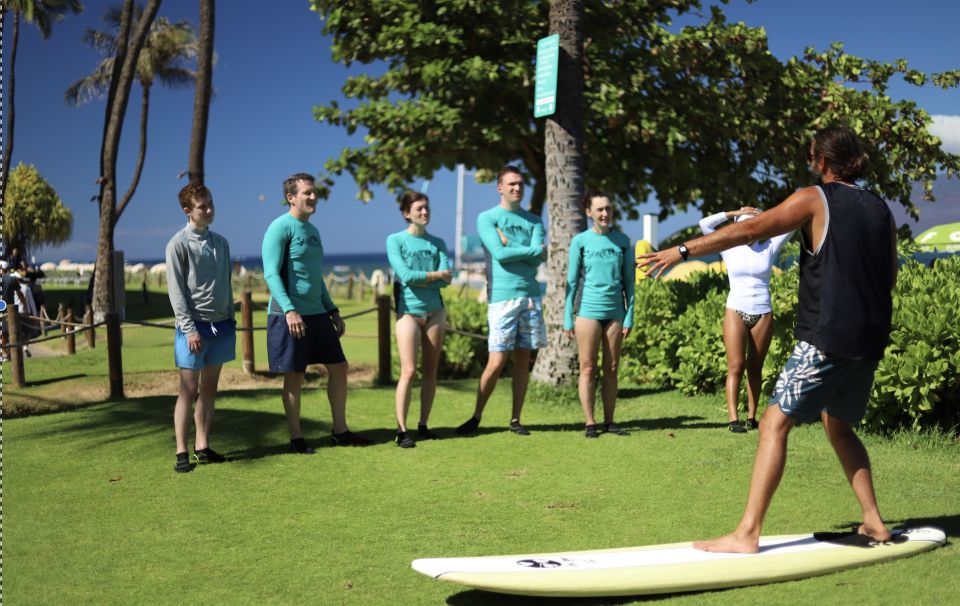
This lesson is designed for people who can swim confidently in the ocean and who are willing to wear a rashguard and get in the water for 90 minutes.
It’s a strong match if:
- you’re 13 or older
- you feel comfortable swimming in the ocean
- you want a first surf experience with real supervision
- you’re traveling with friends or family and want to learn together in one small group
It’s not suitable if you have:
- children under 13
- back problems
- mobility impairments
If any of those apply, it’s better to look for a different kind of Maui activity that fits your needs without forcing the ocean into a bad match.
Should You Book This Maui Group Surf Lesson
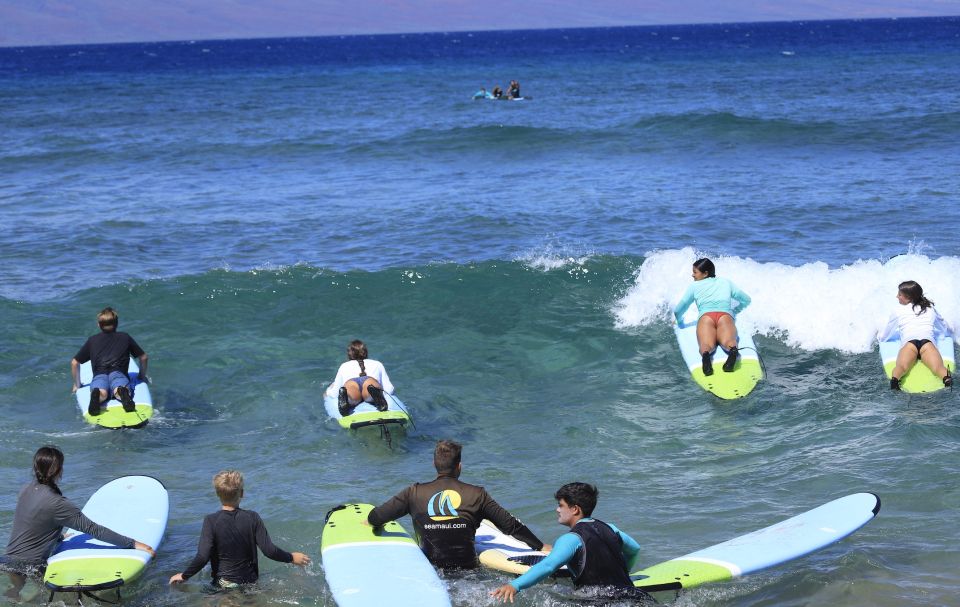
I’d book it if you want a straightforward, safety-first way to try surfing at one of Maui’s most famous beaches. The included gear cuts friction. The small group size gives you the kind of attention that helps first-timers progress. And the lesson is timed so you’re not just learning theory. You’re paddling, you’re catching waves when conditions allow, and you’re leaving with a true Maui activity story.
Skip this one if you’re not comfortable swimming in the ocean or if you fall into the activity’s stated non-suitable categories. Surfing should feel exciting, not stressful.
If those boxes check out, this is a solid value for your time: you’re paying for close guidance and a real chance to ride waves, not just a look at the water from the sand.
FAQ
What’s the duration of the Maui group surf lesson?
The lesson lasts 90 minutes.
How much does the surf lesson cost?
It costs $120 per person.
Where do I check in?
Check in at the Sea Maui Surf booth on the beach side of Whalers Village, between Leilani’s restaurant and the Westin.
What gear is included?
You’ll receive a protective rashguard, reef booties, and a surfboard with leash, plus an instructor and the surf lesson.
What should I bring?
Bring swimwear, a towel, and biodegradable sunscreen.
What age is the lesson for?
The lessons are for those 13 years or older who feel comfortable with their ocean swimming abilities.
What language are the instructions given in?
The instructor speaks English.
What happens if weather affects the lesson?
Lessons can be rescheduled or cancelled due to weather for safety. If a rescheduled time can’t be accommodated, a full refund is issued. Free cancellation is available up to 24 hours in advance.