REVIEW · MAUI
Group Surf Lessons from Kaanapali Beach
Book on Viator →Operated by Sea Maui Surf · Bookable on Viator
Surfing in Maui sounds easy on postcards, but it’s real work in the ocean. This group surf lesson at Ka’anapali Beach is built for beginners who can swim, and it’s the kind of activity where you start with safety and end with actual wave time. I love the small student-to-instructor ratio (max four students per instructor), and I love that you’re fully kitted out with surf board, rash guard, and booties. One thing to think about: the paddling can be demanding, and if you’re not in decent physical shape or motion-sickness prone, you may want to take it slow.
In practice, what makes this lesson feel worth your time is how quickly the team works to get you moving—standing up is the goal, not just hanging out on the shore. You also get an ocean safety briefing before you go in, so you’re not guessing what to do once you’re out past the shallows. If you’re hoping for a long, step-by-step class on land, the format is more action-based than lecture-heavy.
In This Review
- Key Points to Know Before You Go
- Why Ka’anapali Beach Works for First-Time Surfing
- The Gear You Actually Need (And What It Changes)
- Group Size: Why This Lesson Feels Like Coaching, Not Crowding
- What Happens in 90 Minutes at Ka’anapali
- Ocean Safety Briefing: The Part You’ll Be Thankful For
- The Physical Side: What Moderate Fitness Really Means
- Instructors Who Get You Standing: What the Best Coaching Looks Like
- The One Stop That Matters: Ka’anapali Beach
- Price and Value: Is $120.46 Worth It?
- Who This Surf Lesson Fits Best
- The Bottom Line: Should You Book Sea Maui Surf at Ka’anapali?
- FAQ
- What is the age requirement for the surf lesson?
- Do I need to be able to swim?
- How long is the lesson?
- What’s included in the price?
- Is the group small?
- Where do we meet?
- Is the lesson offered in English?
- What if the weather is bad?
- Can I cancel for a full refund?
Key Points to Know Before You Go

- Max four students per instructor means more hands-on coaching
- Ka’anapali Beach is the launch point for your first attempts on Maui waves
- Provided gear covers the basics: board, rash guard, and booties
- Ocean safety briefing first helps you understand what to do in the water
- 90 minutes is short, so you’ll want to be ready to move fast once you’re in
Why Ka’anapali Beach Works for First-Time Surfing
If you’re booking a first surf lesson, the beach you start from matters. Ka’anapali Beach is a popular spot on Maui, and it sets the tone for the experience: lots of energy, clear “you’re here for water time” vibes, and an established surf scene around it. That matters because you want your first lesson to feel focused—gear on, safety understood, then into the ocean.
The other big reason this location works is that the lesson is designed for beginner-level surfing while still respecting ocean conditions. You’re not just watching. You’re getting put on boards and coached through what to do next, with an emphasis on comfort and timing rather than bravado.
You can also read our reviews of more tours and experiences in Maui



The Gear You Actually Need (And What It Changes)
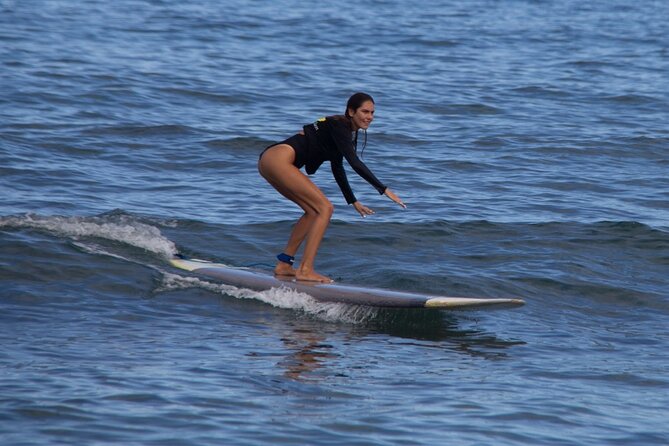
This lesson includes the stuff that usually slows people down or adds cost: surf boards, rash guards, and booties. That’s a big deal for value, because you’re not paying extra for the right equipment or trying to figure out what to rent at the last minute.
Here’s what that gear inclusion does for your day:
- Rash guard helps with sun and skin comfort when you’re out in the water.
- Booties matter for traction and comfort when conditions call for it.
- Board means you can get on a proper surf setup rather than trying to “make do.”
You’ll also notice the lesson tends to move quickly once you’re outfitted. When everyone has the same basics, the instructor can focus on body position, timing, and wave selection instead of troubleshooting mismatched gear.
Group Size: Why This Lesson Feels Like Coaching, Not Crowding
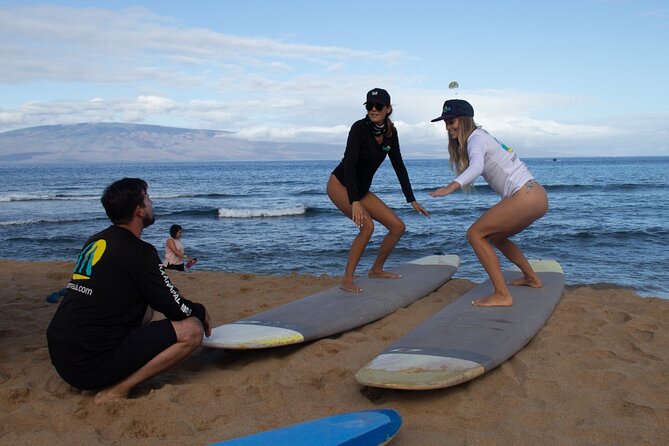
The maximum group size is small: the activity has a maximum of four travelers, and the operator keeps the student-to-instructor ratio at up to four students per instructor. That’s one of the most praised aspects, because it shapes how your lesson actually feels.
In a typical big group, one instructor can only see you from one angle and you get long pauses. Here, you’re much more likely to get:
- quick corrections right when something isn’t working
- encouragement that matches your progress
- attention during transitions, like moving in and out of the surf zone
Even better, this is designed for anyone who signs up—not a super-limited club. The class is open, but it stays controlled so everyone can get time. Many lessons on Maui become a “watch others surf” situation. This one is built to reduce that risk.
What Happens in 90 Minutes at Ka’anapali
The timing is about 1 hour 30 minutes, and the format is straightforward: meet at Ka’anapali, get your gear sorted, hear the safety briefing, then you’re in the water with instruction. The experience ends back at the meeting point, so you’re not piecing your day together with extra transfers.
At a practical level, expect this rhythm:
- Check-in and gear setup so you’re ready to move when the group goes in.
- Ocean safety briefing before entering the water. This is where you get the rules of the surf situation—what to watch for, how to behave in the lineup, and how not to get in each other’s way.
- Beginner surf instruction with shared guidance from the instructor(s). You’ll get coaching geared to first-timers, not advanced surfers.
- Time on the waves that’s long enough to matter. Multiple instructors in the feedback helped people stand on their first time out, and many people said they were surfing soon after hitting the water.
One realistic note: because the class is short, you should show up thinking like an athlete. If you hang back mentally, the ocean will keep moving on without you. When you’re ready, the lesson can feel fast—in a good way.
Ocean Safety Briefing: The Part You’ll Be Thankful For
You might think a safety talk is just a requirement. On the water, it’s more like a cheat sheet. Before anyone goes in, you get an ocean safety briefing, and that tends to reduce the fear factor for first-timers.
That’s especially important for two reasons:
- Surfing is physical. Even if you do everything right, ocean conditions can surprise you.
- Beginner mistakes usually happen during transitions—paddling out, repositioning, and reading waves.
When a lesson includes real safety instruction up front, you can focus on learning instead of worrying.






The Physical Side: What Moderate Fitness Really Means
This experience asks for moderate physical fitness. That doesn’t mean you need to be a competitive swimmer, but you do need to be comfortable working in the water and doing repeated paddling motions.
One reviewer called out that the paddling is the hardest part. Another noted that motion sickness is a factor for some people and suggested Dramamine if you’re prone. That’s not universal, but it’s useful to know.
My practical advice:
- If you can swim comfortably and handle being in the ocean, you’ll likely do fine.
- If paddling for short bursts feels tough, do some light cardio before your trip so your body isn’t surprised.
- If you get seasick easily, plan for that risk before you go in.
If you’re 13 or older (the minimum age), this is set up for you. But your best experience will come from showing up ready to work.
Instructors Who Get You Standing: What the Best Coaching Looks Like
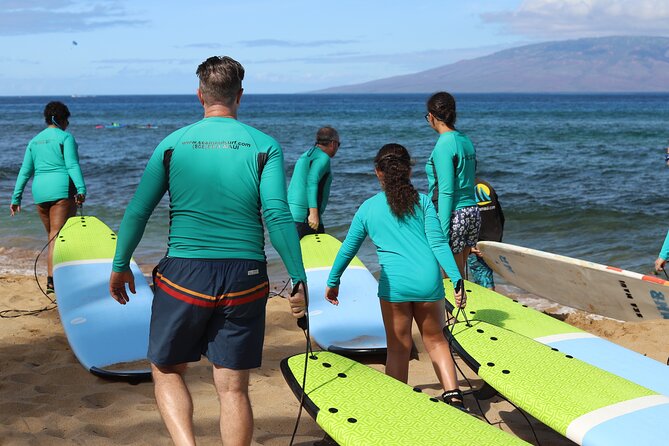
The instructors are the difference between a fun attempt and a frustrating day. This lesson repeatedly gets high marks for being patient and supportive—people describe instructors as helpful, knowledgeable, and quick to make first-timers feel comfortable.
Names showing up in strong feedback include Steven, Devin, Tyler, Danny, TJ, Joe, and JT, along with instructors like Sky and Steve. You’ll also see the theme that the coaching is personalized within a group setting, which is exactly what the small ratio is meant to enable.
What I like about this style of instruction is that it’s not overly complicated. The goal is to help you:
- get the board positioned
- time your movement with the wave
- recover and try again without feeling embarrassed
Some people even mentioned seeing turtles between waves—an extra Maui moment that happens when you’re paying attention to what’s around you, not just staring at your feet.
The One Stop That Matters: Ka’anapali Beach
There’s just one stop: Ka’anapali Beach. For you, that’s a plus. Less time moving means more time actually surfing.
Ka’anapali also tends to offer the kind of conditions where a beginner lesson can work without feeling chaotic. You don’t have to hunt for the right shoreline or solve transport puzzles. You go, you learn, and you return to where you started.
Meeting point is 2435 Kaanapali Pkwy, Lahaina, HI 96761, USA. Since it ends back there, it’s simple to plan the rest of your day.
If you’re driving, one review mentioned free parking might be possible if you ask to have parking validated. That’s not a guarantee from the basic details, but it’s a smart question when you arrive.
Price and Value: Is $120.46 Worth It?
At $120.46 per person for about 90 minutes, you’re paying for three things:
- professional coaching
- included surf equipment (board, rash guard, booties)
- a small group structure designed for actual wave time
Here’s the value angle: if you were to rent gear separately and still only got minimal instructor attention, the lesson would feel pricey. But with the gear included and a max group size, the cost starts to make sense—especially for first-timers who benefit most from quick, hands-on feedback.
Also, most of the cost is tied to the time in the water. Short lessons can be a downside if you don’t learn much. In this case, the strong ratings suggest the lesson is long enough to get at least one real “I did it” moment for many participants. That’s the kind of payoff you want for your first surf day.
The only extra cost that might pop up: a photographer is sometimes available for a fee. If you like memories you don’t have to pose for yourself, that option can be worth considering.
Who This Surf Lesson Fits Best
This is a good fit if:
- you’re 13+ and comfortable swimming in the ocean
- you want beginner coaching, not a self-guided “go try” experience
- you value a small group and direct instruction
- you’re in decent shape and ready for paddling work
It may be less ideal if:
- you don’t feel comfortable with ocean swimming
- paddling is a struggle for you
- you’re very prone to motion sickness and don’t want to plan for it
The Bottom Line: Should You Book Sea Maui Surf at Ka’anapali?
If you’re in Maui and you want a beginner surf lesson that treats you like a learner—not a spectator—this one is easy to recommend. The combination of small group size, real ocean safety briefing, and included gear helps keep the day focused and fair.
I’d book it if you’re ready to work a bit physically and you want your first surf attempt to be guided from the moment you hit the beach. Skip it or think twice if ocean swimming and paddling would put you outside your comfort zone.
FAQ
What is the age requirement for the surf lesson?
The group lessons are designed for students 13 years of age or older.
Do I need to be able to swim?
Yes. The lesson is for people who can swim and feel comfortable doing so in the ocean.
How long is the lesson?
The experience lasts about 1 hour 30 minutes.
What’s included in the price?
Surf boards, rash guards, and booties are included.
Is the group small?
Yes. The maximum number of travelers is 4, and the student-to-instructor ratio is kept at max four students per one instructor.
Where do we meet?
You start at 2435 Kaanapali Pkwy, Lahaina, HI 96761, USA.
Is the lesson offered in English?
Yes, it’s offered in English.
What if the weather is bad?
The experience requires good weather. If it’s canceled due to poor weather, you’ll be offered a different date or a full refund.
Can I cancel for a full refund?
Yes. You can cancel up to 24 hours in advance for a full refund. If you cancel less than 24 hours before the start time, the amount paid isn’t refunded.