REVIEW · MAUI
Whale Watching Maui: 2-Hour Small Group Raft Tour from Lahaina
Book on Viator →Operated by Dive Maui · Bookable on Viator
Seeing whales up close is the whole point.
This 2-hour Lahaina raft outing has a small-group feel with 360-degree views, plus a hydrophone so you can actually hear humpback songs. The crew’s whale talk is a big part of the value, but one reality check: weather can force reschedules, and wild whales don’t always do the same show.
I like that the tour is built for real whale watching, not just a drive-by. You’ll ride a custom inflatable raft in Maui Nui waters (a humpback mating and birthing area), and the staff explains what you’re seeing as the captain moves the boat to the active spots. One possible drawback: the “guarantee” means you might need another trip if whales don’t show, and you’re also not set up for everyone (no kids under 3, and no pregnant persons).
In This Review
- Key things to know before you go
- Why Maui Nui turns whale season into a real mission
- Your 2-hour raft timeline from Lahaina
- Getting set for the ocean
- Head out to the Maui Nui whale sanctuary area
- Listening with the hydrophone (yes, it’s a big deal)
- Watching, repositioning, and then heading back
- Small-group views: why the raft matters more than you think
- The crew style: naturalist talk that actually helps
- What’s included (and how that affects your packing list)
- Price and value: $80.60 for 2 hours, but what are you really paying for?
- Weather reality: what to do when Maui won’t cooperate
- Who this whale watch is perfect for
- Should you book this Lahaina whale raft tour?
- FAQ
- How long is the whale watching tour?
- What’s the price per person?
- How many people are on the tour?
- Is there a whale sighting guarantee?
- What’s included with the tour?
- Where is the meeting point in Lahaina?
- Is the tour suitable for kids or pregnant travelers?
- What happens if the tour is canceled for poor weather?
Key things to know before you go
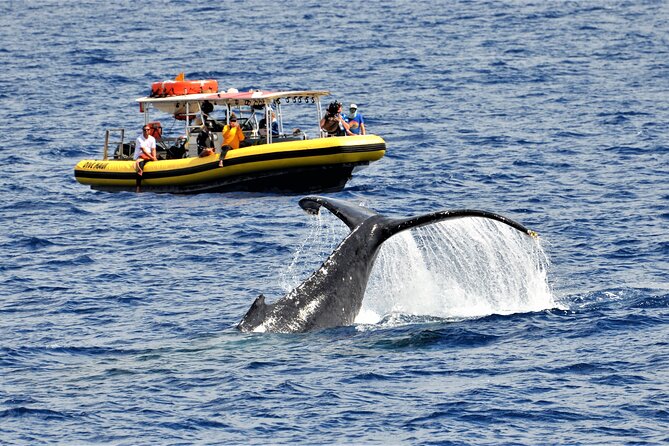
- Small group max 20: more searching time and less feeling packed in.
- Hydrophone + speakers: whale songs are audible right from the raft.
- Whale guarantee: if you don’t see whales, you can take another trip for free.
- Rain ponchos and sunscreen: they plan for Maui weather and sun.
- Most seats are front-row: the raft design helps with views in almost every direction.
Why Maui Nui turns whale season into a real mission
Maui humpbacks don’t wander randomly. In winter, they move into warm Maui waters to mate and give birth, and that’s exactly why Maui Nui is on most whale-watch radars. On this tour, you head out to those waters with the goal of spotting humpbacks doing their “business” and showing off the ways they communicate and compete.
The smart part is not just where you go, it’s how the crew watches. The captain and naturalist spend the time scanning for the signs that matter—tail movement, water spray, and the way groups shift when whales start to surface more often. That’s why people keep highlighting the crew’s ability to reposition quickly once they find active whales.
Also, a smaller raft doesn’t mean magic distance. In Hawaii, all whale operators must follow the same safety and protection rules, which means you’ll be as close as regulations allow, but you’re still at the mercy of whale behavior. The good news: when whales are active, you’ll often feel like you’re watching from the best seat in the house.
You can also read our reviews of more whale watching tours in Maui


Your 2-hour raft timeline from Lahaina
This is a simple trip by design. You meet at the operator’s shop on Front Street in Lahaina (1223 Front St), then you’re out on the water for about 2 hours. The tour returns to the same meeting point.
Here’s what the ride feels like in practice:
Getting set for the ocean
When you arrive, check in is straightforward, and you’re given what you need for the conditions—most notably rain ponchos on rainy days. Maui can switch gears fast, so having that sorted before you’re out past the harbor matters.
You’ll also get brief guidance on how the crew runs the watch: where they look first, what to watch for (spray, tails, flukes), and how they handle moving the raft when whales surface in different areas.
Head out to the Maui Nui whale sanctuary area
Once you’re offshore, the focus shifts from sightseeing to whale spotting. The captain searches and then commits to active groups, and the naturalist fills in the context so you’re not just staring at water hoping for a breach.
In the best moments, you’re watching more than one kind of behavior at once—mothers with calves, escort males nearby, and the little drama that comes from competition around mates. Multiple guide-and-captain combinations showed up in the feedback (like Will, Joe, Brian, and Renee), and the common thread is that they stay engaged and answer questions as you go.
Listening with the hydrophone (yes, it’s a big deal)
A standout on this tour is that they give you a hydrophone with speakers. That means you’re not relying on luck and eyesight alone. You can hear whale song patterns through the system as the raft is positioned for whales that are nearby.
A few people specifically called out moments where the sounds came through clearly in a way they hadn’t experienced on other trips. Even if you don’t catch every surface event, the audio layer adds depth—and it also gives you something to listen for when the water is calm.
You can also read our reviews of more tours and experiences in Maui

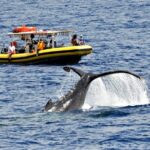




Watching, repositioning, and then heading back
When whales pop up more often, the captain may move the raft to keep you near the action while still following the rules. You can feel the crew working hard during the ride—search mode, then focus mode—until the 2 hours are done and it’s time to head back to the dock.
The trip doesn’t feel like a long lecture, but it also doesn’t feel like a rushed sprint. It’s more like a guided watch where the adults do the heavy lifting and you do the whale staring.
Small-group views: why the raft matters more than you think
This is where the tour has earned its high rating. The vessel is small enough that people report being able to see in most directions, not just forward. On a larger, crowded setup, you can lose sightlines the second you settle into one position.
Here, the raft’s layout supports what you actually need on whale watch: horizon scanning and quick re-angles. Multiple comments mention the boat being small enough that they could watch across the full spread of ocean rather than craning around other passengers.
It’s also a “feel” thing. With fewer people, your attention isn’t pulled into background noise and bottlenecks. You can hear the naturalist better, ask questions faster, and you’re not stuck waiting for the group to shuffle.
That said, the raft isn’t a luxury lounge. It’s a whale-watching tool. If you expect a smooth, cushy ride with lots of shade and quiet, you might not love the experience. If you’re there to work your eyes and be part of the hunt, it’s a great fit.
The crew style: naturalist talk that actually helps
People keep returning to one thing: the staff doesn’t just name whales. They explain what you’re seeing and why it matters.
You’ll hear details about humpbacks as a species—how behaviors show up in the water, what you might be spotting when you see repeated activity in one area, and why the interactions between mother, calf, and escort males can look different from one surfacing sequence to the next.
Names that came up in the feedback include naturalists like Brian and Renee, and captains including Will and Joe. You can treat those names as clues about the tour’s overall standard: expect a captain who navigates to active whales and a naturalist who translates whale behavior into plain language.
If you’re the type who likes to understand the “why” while you watch, this makes the tour more than a photo stop.
What’s included (and how that affects your packing list)
This tour is priced like an all-in whale watch, and the included items help reduce friction.
Included:
- Filtered water and paper cups to cut down plastic waste
- Hydrophone and speakers for whale song
- A marine naturalist
- Reef safe sunscreen
- Weather support: rain ponchos when it’s rainy
Not included:
- Alcohol is BYO, but no glass is allowed.
In real terms, the best value is the hydrophone + naturalist combo. Bottled water is nice, and reef-safe sunscreen is a thoughtful add, but audio plus interpretation is what keeps you engaged even during slower periods.
Packing tip that’s safe and practical: bring your phone or camera with a strap, keep a light layer for wind, and if you’re prone to seasickness, bring your usual remedy. The tour doesn’t advertise special comfort features beyond the raft design and included rain gear.
Price and value: $80.60 for 2 hours, but what are you really paying for?
At $80.60 per person for about 2 hours, this isn’t the cheapest whale watch you’ll find in Maui. The value comes from three main places:
- Small group size (max 20)
Less crowding usually means better sightlines and a more personal experience.
- Better “information per minute”
The marine naturalist plus the hydrophone changes the experience from watching to learning while you watch.
- Whale guarantee
The tour’s promise is that if you don’t see whales, you can take another trip for free. That’s a big deal in a place where weather and whale behavior can swing the odds.
If you’re comparing price, don’t only compare the boat. Compare what you get when whales are quiet. This tour is designed to keep you connected—through audio and expert guidance—rather than just hoping for a breach.
Weather reality: what to do when Maui won’t cooperate
This experience requires good weather. If conditions are poor, you may be offered a different date or a full refund, and rescheduling can happen. Many tours in the winter season face this issue, but the practical question for you is: will the operator handle it well?
The feedback shows professionalism when weather forces changes, including timely communication and options to reschedule or cancel. That matters because whale watching is a timing game—waiting around all day with no clear plan is what ruins vacation energy.
My advice: choose the tour with some buffer in your schedule. If you only have one open day in Maui, you can still book it, but build in flexibility.
Who this whale watch is perfect for
This tour is a strong match if:
- You want a smaller group rather than a big commercial pack
- You care about learning what you’re seeing, not just ticking off a wildlife item
- You like the idea of hearing whale songs through a hydrophone
- Your group includes kids old enough to qualify and adults who can handle the raft ride
It may be less ideal if:
- You’re expecting a guaranteed breaching show
No operator can control wild animal behavior, and the tour is built around regulated, respectful viewing.
- You need accommodations for people outside the stated limits (no children under 3, and no pregnant persons)
Should you book this Lahaina whale raft tour?
Book it if you want a whale watch that feels focused: small group, strong guiding, and the hydrophone making the ocean feel alive even when sightings are spaced out. The whale guarantee adds comfort, and the included items mean you won’t scramble for basic supplies.
Skip it if you mainly want the cheapest option and you’re okay with more crowds and less interpretive value. Also skip if you’re the kind of person who gets annoyed by weather-driven changes—because this is an ocean activity, and Maui won’t always play nice.
Bottom line: for most people visiting Maui in whale season, this tour looks like a solid bet because the experience is designed to be enjoyable either way—you’ll learn, listen, and watch with a crew that clearly understands humpbacks.
FAQ
How long is the whale watching tour?
It runs about 2 hours.
What’s the price per person?
The listed price is $80.60 per person.
How many people are on the tour?
The maximum group size is 20 travelers.
Is there a whale sighting guarantee?
Yes. If you don’t see whales, you can take another trip for free.
What’s included with the tour?
You get filtered water and paper cups, a hydrophone and speakers, a whale-loving marine naturalist, and reef safe sunscreen. Rain ponchos are provided on rainy days.
Where is the meeting point in Lahaina?
The meeting point is at 1223 Front St, Lahaina, HI 96761.
Is the tour suitable for kids or pregnant travelers?
No children under age 3, and no pregnant persons.
What happens if the tour is canceled for poor weather?
If canceled due to poor weather, you’ll be offered a different date or a full refund.