REVIEW · MAUI
Self-Guided Audio Driving Tour in Maui
Book on Viator →Operated by GuideAlong (GyPSy Guide) · Bookable on Viator
One Maui drive hack beats the group-tour grind. This GPS-triggered audio tour plays stories, tips, and directions as you’re driving, so the island feels guided without a headcount crowd. I also like that it’s built for offline use after you download it, which matters on Maui’s long stretches where service can be spotty.
Here’s the big upside for your time and budget: you can build your own pace with suggested one-day and multi-day plans, and you can stop and start without penalty. The one thing to keep in mind is that some of the best stops require fees, timed entry, or reservations (especially around Haleakalā sunrise and Wai’anapanapa), so you’ll want to plan those ahead.
In This Review
- Key highlights at a glance
- Why this Maui audio drive feels like having a guide in your cupholder
- Price that’s actually about value (not just “cheap”)
- Offline GPS audio: the tech that keeps your day moving
- How to plan your route: Haleakalā and Hana without the panic
- Haleakalā and Upcountry: Ohe’o Gulch, Iao Valley, Makawao
- Stop 2: Ohe’o Gulch (Kipahulu) and the Oheo Pools
- Stop 4: Haleakala Crater
- The Iao Valley area (the Iao Needle)
- Stop 5: Makawao
- Stop 6: Kepaniwai Park & Heritage Gardens
- Stop 7: Iao Valley State Monument
- Road to Hana lineup: Wai’anapanapa, waterfalls, tunnels, and arboretum
- Stop 3: Wai’anapanapa State Park (black sand beach)
- Stop 8: Hana Lava Tube
- Stop 11: Twin Falls
- Stop 14: Upper Waikani Falls
- Stop 15: Ke’anae Arboretum
- Stop 16: Pipiwai Trail
- Stop 18: Hamoa Beach
- Stop 19: Wailua Falls
- Stop 12: Koki Beach
- Stop 17: Ho’okipa
- Kipahulu trails to whale watching: Papawai, Ho’okipa, Kihei
- Stop 10: Papawai Scenic Lookout (Whale Lookout Point)
- Stop 20: Kihei
- Culture stops and South Maui beaches: Kahanu Garden, Kam 1, and Makena
- Stop 21: Kahanu Garden
- Stop 22: Pi‘lanihale Heiau
- Stop 23: Kamaole Beach Park I
- Stop 24: La Perouse Bay
- Stop 25: D.T. Fleming Beach Park
- Stop 26: Makena Beach
- West Maui coast hits: Honolua, Lahaina, Ka’anapali, and Nakalele Blowhole
- Stop 28: Honolua Bay
- Stop 29: Lahaina
- Stop 30: Ka’anapali Beach
- Stop 31: Nakalele Blowhole
- Practical tips that make this tour smoother (and safer)
- Should you book this Maui self-guided audio driving tour?
- FAQ
- What is the cost and group size?
- How long does the tour take?
- Is the audio tour available in English?
- Do I need cell service to use the tour?
- Does the tour require National Park passes or paid entry?
- Are reservations required for any stops?
- Can I start and end the tour anywhere on Maui?
- Does the tour expire?
- How do I access the tour after booking?
- Can I get a refund if my plans change?
Key highlights at a glance

- GPS location-based narration so cues play as you get near each stop
- Offline audio after you download the tour in the app
- Buy once, use forever with no expiry and free updates
- Flexible routes and trip planners (half-day, full-day, and multi-day options)
- Road-tested stop list covering Haleakalā, the Road to Hana, and West Maui highlights
Why this Maui audio drive feels like having a guide in your cupholder
A self-guided driving tour sounds simple until you try one without good timing. This one is different: the commentary plays automatically based on your phone’s GPS location. That means you don’t have to keep checking maps or tapping screens every time you pass a sign.
It’s also practical. You’re paying for narration and guidance, not for a packed van or a strict hourly script. The tour is available in English, and it runs all day (12:00 AM to 11:59 PM), so you can match it to sunrise plans, dinner reservations, or just your own energy.
The narrator’s style is made for driving—short, clear prompts when you’re approaching key spots—and that’s the kind of pacing that keeps you safe on curvy roads. It also helps you hit the right pullouts, not just whatever you happen to spot first.
You can also read our reviews of more guided tours in Maui


Price that’s actually about value (not just “cheap”)
The cost is $29.99 per group (up to 8 people). For a rental car, that can be a big win over per-person guided excursions—especially if you’re traveling with family or friends. One purchase covers everyone in your vehicle, and since the tour has no expiry (buy once, use forever), you’re not gambling on “using it once.”
Duration is listed as 8 to 16 hours (approx.), which is useful because it’s not pretending you’ll do everything at once. Maui works better when you treat the route like a menu. You can go big in one long day, or you can split it into a couple drives and take your time.
My rule of thumb: if you’re trying to cover Haleakalā + Hana + West Maui in one go, you’ll probably skip something. That’s not a failure—just a signal to use the app’s trip planners and build a route that fits real driving time and walking comfort.
Offline GPS audio: the tech that keeps your day moving
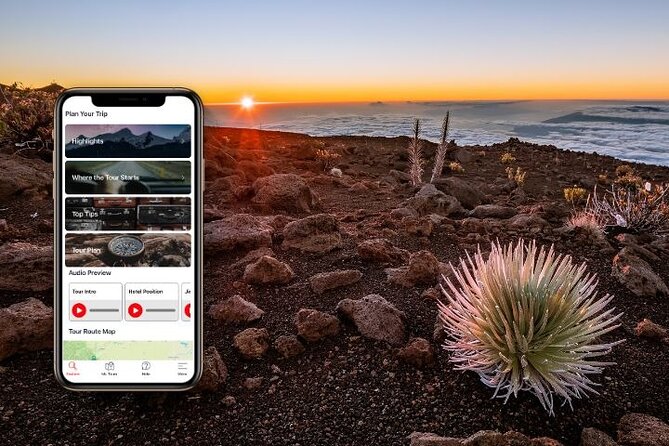
After booking, you get instructions by email and text to download the audio tour voucher. You’ll sign into the GuideAlong app using your Apple or Google account, redeem your voucher code, then download the tour under My Tours.
Two practical details matter a lot:
- No internet/cell service needed once downloaded. That’s a lifesaver for long rural stretches.
- Bring a USB/C car charger. Your phone will be working hard with GPS while you drive, and a charged device keeps you from missing prompts.
There’s also an important note for device compatibility: if you run into access trouble, make sure your phone meets the minimum system needs (iOS 14+ or Android 9+). This isn’t just tech trivia—on a road trip, setup delays can eat half your day.
How to plan your route: Haleakalā and Hana without the panic

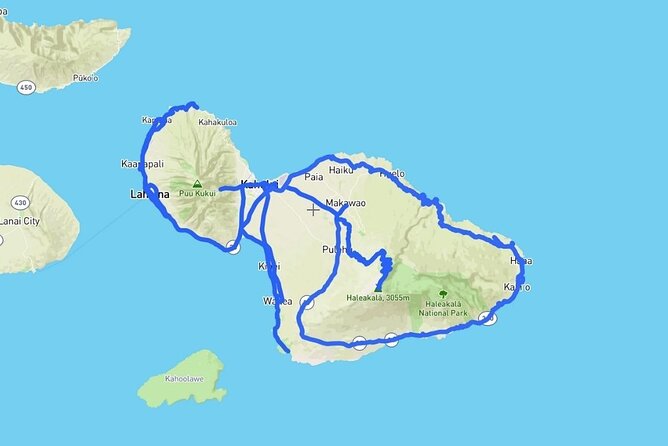
This tour is built around flexible routing. The audio cues can play as you drive whichever direction you choose, and you can create your own order of stops along the included routes. If you’d rather not think too hard, the in-app (and web/PDF) trip planners suggest half-day, full-day, or multi-day options.
A smart strategy is to pick your “anchors” first:
- Haleakalā summit (moon-like crater views; sunrise reservations required)
- Road to Hana highlights (Wai’anapanapa, Hana Lava Tube, falls, rainforest trails)
- West Maui coast (Lahaina heritage walk, Ka’anapali sunset, blowhole views)
Then fill in the smaller stops around those anchors, so you’re not rushing between every parking lot.
Haleakalā and Upcountry: Ohe’o Gulch, Iao Valley, Makawao
You can think of this section as Maui’s high-and-wet intro—gorgeous, cultural, and very different from beach driving.
You can also read our reviews of more tours and experiences in Maui


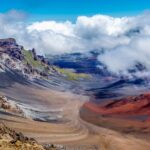



Stop 2: Ohe’o Gulch (Kipahulu) and the Oheo Pools
At the end of the Road to Hana drive, you’ll reach Ohe’o Gulch, which is the ocean-level extension of Haleakalā National Park. The famous feature is the Ohe’o Pools (also called the Seven Sacred Pools). Swimming and wading access can change based on conditions, so it’s worth checking ahead once you arrive.
Two more reasons to linger: short walks with ocean views, and this is also where the Pipiwai Trail begins.
Consideration: National Park entry is required here. If you don’t have a pass, expect to pay.
Stop 4: Haleakala Crater
At the summit Visitor Center, you’re at about 9,700 feet, with viewpoints into the huge crater and cinder cone area. There are also hiking trails if you want to stretch your legs.
For sunrise visits, reservations are required, but you can visit at other times without a reservation. You’ll still need to pay the park entrance fee if you don’t already have a pass.
Consideration: It’s high up—plan for chilly air and sudden cloud changes. Also, budget time for parking and viewpoint shuttles.
The Iao Valley area (the Iao Needle)
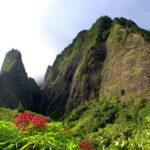
Iao Valley sits west of Wailuku and Kahului, and it’s known for the Iao Needle, a granite spire from active volcano days. It’s one of the wettest places, with tradewinds helping turn the valley into a rain system—often with afternoon downpours that start and stop fast.
Consideration: Bring something light for rain, and don’t assume the weather will stay put for long.
Stop 5: Makawao
Makawao is one of the last Paniolo towns in Hawaii. Paniolos are the Hawaiian cowboys who learned horsemanship and cattle ranching from Mexican cowboys who arrived to help manage livestock.
This is a good “breather stop” after Hana driving or high-elevation time. It’s also a nice place to grab food or browse galleries before heading back out.
Stop 6: Kepaniwai Park & Heritage Gardens
This stop focuses on Maui’s ethnic diversity through buildings and gardens celebrating the cultures that shaped modern Maui. If you like your “Maui story” to include people and place, this is a great short stop.
Stop 7: Iao Valley State Monument
This one pairs naturally with Iao Needle time. It’s a compact stop, so you can fit it even if you’re trying to keep your schedule flexible.
Road to Hana lineup: Wai’anapanapa, waterfalls, tunnels, and arboretum
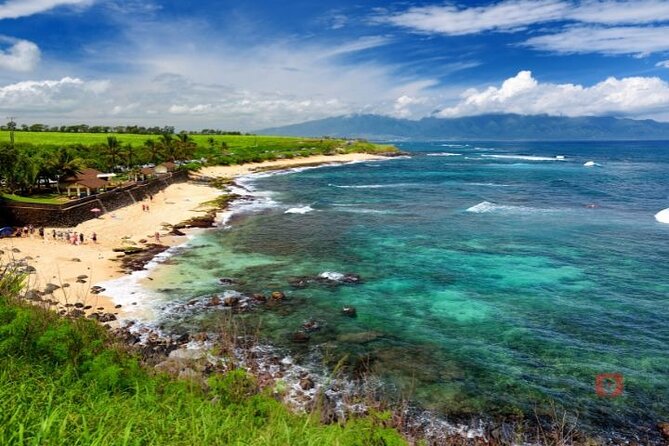
If you only do one thing on this tour, it should be this stretch. It’s the part with the rainforest feel, the legend-rich stops, and the most memorable walking.
Stop 3: Wai’anapanapa State Park (black sand beach)
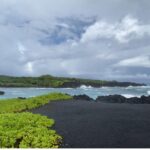
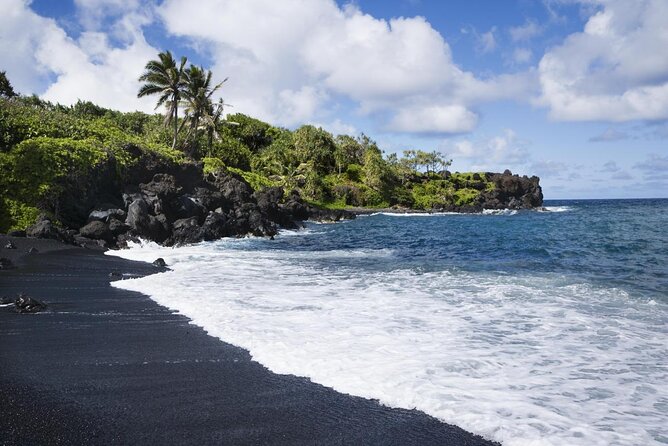
Wai’anapanapa is famous for its black sand beach and volcanic coastline. Walk around to spot a sea arch and a blowhole, and expect Hawaiian legends to be part of the story here.
Consideration: Reservations are required for entry.
Stop 8: Hana Lava Tube
This is an accessible lava tube where you can go inside. If you don’t love tight, enclosed spaces, you can still experience it by going only partway in.
Stop 11: Twin Falls
Twin Falls is a popular Hana stop with a fun “3 Bears Falls” style interpretive feel. There’s a short hike (listed as about 1.5 miles) with stream crossings and a bamboo forest section. Trails are frequently muddy, so shoes matter.
There’s also a farmstand nearby for smoothies—useful if you’re keeping your day moving.
Stop 14: Upper Waikani Falls
This is another Road to Hana waterfall where water volume changes the look. After heavy rain it becomes one thick cascade; with less water it splits into multiple falls.
Stop 15: Ke’anae Arboretum
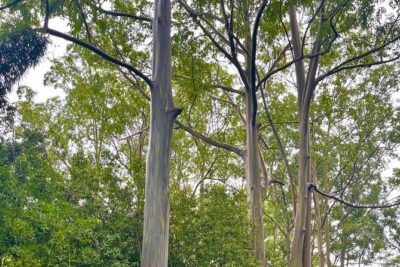
Ke’anae Arboretum is an easy, no-cost stop for tropical plants and trees. If you enjoy photos, it’s hard to beat up-close views of the Rainbow Eucalyptus trees with brightly colored bark.
This area also links into terraces created by ancient Hawaiians for taro cultivation, so you’ll get both “plants” and “culture” in a short time.
Stop 16: Pipiwai Trail
This is the Road to Hana walking event most people talk about. It’s a 4-mile loop with about 650 feet of elevation gain. The highlight is Makihiku Falls, and if you continue, Waimoku Falls is the farthest and most dramatic point.
It’s labeled moderate, but heat can make it feel more work than expected. Bamboo forest sections can be calm and quiet. Expect around 2+ hours depending on your pace.
Consideration: This is inside Haleakalā National Park, so you need your NPS pass. Also, consider turning back if you’re not feeling it—there’s a decision point.
Stop 18: Hamoa Beach
A crescent-shaped sandy beach perfect for stretching legs and cooling off mid-drive. Public bathrooms and showers are available, but there are no lifeguards, so keep an eye on kids and anyone who tends to wander toward waves.
Stop 19: Wailua Falls
This is often called the most picturesque of the many falls along the route. If you want a classic “photo stop” that’s worth the quick pullout, Wailua Falls fits the bill.
Stop 12: Koki Beach
A viewpoints-and-legends stop. It includes views toward the ex-cindercone that formed the quirky-looking Alau Island and it connects to stories about Pele and Maui.
This is more “look and learn” than “hang out for hours.”
Stop 17: Ho’okipa
Ho’okipa is great for watching windsurfers (world-class level action) and for spotting turtles snoozing along the shore. You’re warned not to swim here due to constant winds and currents.
Practical note: There are washrooms, showers, and picnic areas, so you can wait out the moment you want—without feeling stuck.
Kipahulu trails to whale watching: Papawai, Ho’okipa, Kihei
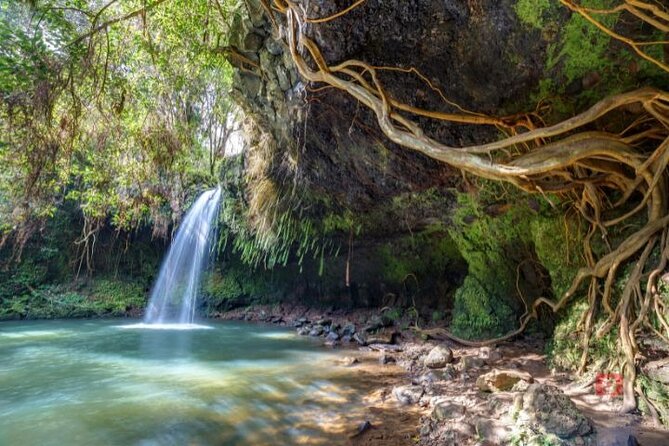
After Hana’s rainforests, the tour shifts toward coastlines, ocean views, and season-based wildlife.
Stop 10: Papawai Scenic Lookout (Whale Lookout Point)
Whale season runs from November to April, when humpback whales migrate and winter in Hawaii. At Papawai, you can watch for blowholes, fin activity, and even breaching from an elevated vantage point.
Stop 20: Kihei
Kihei is South Maui’s original resort area and runs along long stretches of sandy beach. The big idea here is calm water on the protected side of the island, with beach parks and easy access to shopping and dining.
If you’re spending a full afternoon down South, this is a great place to base yourself, grab dinner, and enjoy sunsets with views toward Molokini and Kaho’olawe.
Culture stops and South Maui beaches: Kahanu Garden, Kam 1, and Makena
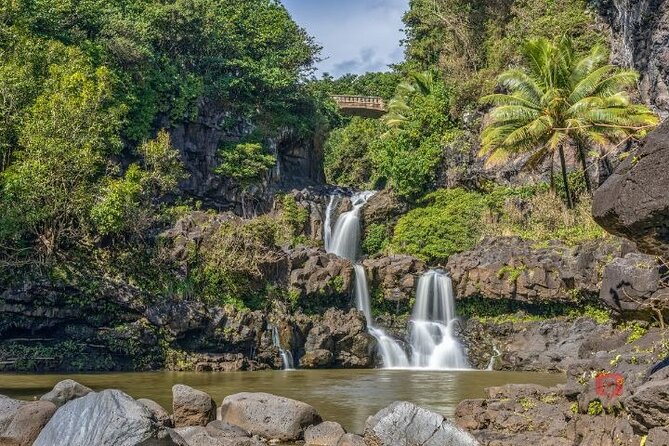
This part of the tour is where you trade peak-road energy for slow wandering, plant stories, and beach time.
Stop 21: Kahanu Garden
Kahanu Garden is a botanical garden in a major hala (pandanus) forest. It focuses on how Pacific voyaging spread plant connections between cultures, plus the heiau site Pi’ilanihale.
The visit supports either a guided tour (listed as recommended time) or a shorter self-tour option.
Stop 22: Pi‘lanihale Heiau
This is the Ancient Hawaiian temple at Kahanu Garden, listed as a registered National Historic Landmark. It’s a shorter add-on but meaningful if you like history tied to place.
Stop 23: Kamaole Beach Park I
This is one of three family-friendly beaches along Kihei. It’s set up for comfort: restrooms, showers, grassy picnic space, and lifeguards on duty.
Stop 24: La Perouse Bay
This is “all the way down the road” energy. You’ll find rocky coves and snorkel spots. The coastline is more isolated, so if you snorkel, choose spots where other snorkelers are already getting in and out.
If you go to the very end and follow the Kings Trail through lava fields, plan for strong sun and good footwear.
Stop 25: D.T. Fleming Beach Park
This beach has ironwood trees for shade and amenities like restrooms, showers, and BBQ grills. Waves can be fun for bodysurfing and boogie boards, but the shore break can be rough—lifeguards are present, so pay attention to conditions.
Stop 26: Makena Beach
Makena is where the locals vibe shows up more. Big Beach has a sandy strip for easy enjoyment, plus lifeguards. Just be careful with shore break when getting in and out.
Little Beach is described as clothing-optional, and it notes that Sunday drum circles and fire-dancing can happen through dusk.
Consideration: If you’re uncomfortable with clothing-optional settings, pick Big Beach instead.
West Maui coast hits: Honolua, Lahaina, Ka’anapali, and Nakalele Blowhole
This is Maui’s “watch the ocean and walk it off” section—boats, cliffs, old towns, and that blowhole moment.
Stop 28: Honolua Bay
Honolua Bay is known for snorkeling and diving with lots of fish and coral formations. The shoreline can be rocky on the north and west sides, so you might find entry points are limited to certain spots.
It’s also near a surfing area associated with the Billabong Pro contest held in December—watchable from rocky cliffs.
Stop 29: Lahaina
Lahaina was the first capital of unified Hawaii under King Kamehameha the Great, and it also served as a historic port for whaling and trading ships. Today, walking around the waterfront gives you a mix of heritage buildings, sites, shops, and restaurants, plus market stalls under the banyan tree.
Consideration: It’s busy, so plan for pedestrian time and parking reality.
Stop 30: Ka’anapali Beach
Ka’anapali is family-friendly with golden sand, snorkel opportunities, and boardwalk walks. Amenities include washrooms, showers, picnic areas, and lifeguards.
The nightly diving ceremony is noted here as a unique evening experience.
Stop 31: Nakalele Blowhole
Nakalele is on West Maui’s upper road loop. You can see the blowhole from the elevated parking area, or walk down a short trail for a close view (listed as about 10 minutes down). Safety matters: keep distance from the hole and chamber, and never turn your back to the ocean and waves.
Even if you skip the down-walk, the sea-cliff views can still be a win.
Practical tips that make this tour smoother (and safer)
A tour like this lives or dies on small choices. Here are the ones Maui tends to punish if you ignore them.
Charge up before you start. GPS use and screen time add up fast. A car charger helps a lot.
Check rules at the park entrances. Ohe’o Gulch, Haleakalā, and the Pipiwai Trail sit within areas that require a National Park pass. For Wai’anapanapa, reservations are required for entry. Haleakalā sunrise requires reservations too.
Bring the right footwear. Twin Falls can mean mud. Pipiwai is a real hiking loop with elevation. A water-friendly grip shoe is often smarter than fancy sneakers.
Expect weather swings. Iao Valley is known for wet conditions, often with afternoon bursts. And at higher elevations like Haleakalā, temps can shift.
Respect ocean conditions. Ho’okipa isn’t recommended for swimming due to winds and currents. Hamoa Beach has no lifeguards. Makena shore break can be rough—especially when you’re getting in and out.
Watch the calendar for whales. If you’re in the Nov–Apr window, Papawai Scenic Lookout can turn into a real show.
Keep safety info handy. The tour info also flags that tsunami warnings can occur in Hawaii when there’s a Pacific earthquake. If anything like that is issued during your trip, follow real-time updates at tsunami.gov.
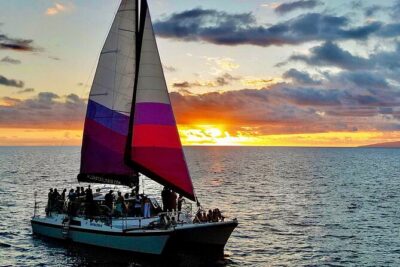
Should you book this Maui self-guided audio driving tour?
Book it if you want:
- A budget-friendly way to cover big Maui highlights without paying per-person for a full guided day
- A tour that’s flexible, with no expiry and no time limit
- Hands-free storytelling that follows your location and works offline
- The ability to pick the stops that match your interests, like crater viewpoints, Hana waterfalls, or West Maui ocean cliffs
Skip it (or plan extra carefully) if:
- You need guaranteed tickets to timed-entry stops and you’re not ready to handle reservations for places like Wai’anapanapa and Haleakalā sunrise
- You hate the idea of doing your own logistics while you drive and park
If you’re the kind of traveler who likes control—when to start, where to linger, and how to pace hikes—this tour is a strong value. You’re buying time back, not just information.
FAQ
What is the cost and group size?
The price is $29.99 per group, up to 8 people.
How long does the tour take?
The duration is listed as 8 to 16 hours (approx.), depending on how many stops you choose and how long you spend at each.
Is the audio tour available in English?
Yes, it’s offered in English.
Do I need cell service to use the tour?
No. After you download the tour in the app, it works offline, and you don’t need internet or cell service to keep using it.
Does the tour require National Park passes or paid entry?
Some stops require payment or a valid pass, including Haleakalā National Park areas like Ohe’o Gulch and the Pipiwai Trail. The tour info also notes Haleakalā entrance fees if you don’t already have a pass.
Are reservations required for any stops?
Yes. The tour notes that reservations are required for Wai’anapanapa State Park entry, and Haleakalā sunrise visits require reservations. Other times at Haleakalā do not require a reservation, but park entry fees still apply if you lack a pass.
Can I start and end the tour anywhere on Maui?
Yes. Commentary plays automatically based on your location, so you have flexibility on where you start and end.
Does the tour expire?
No. It’s described as a buy once, use forever option with no expiry.
How do I access the tour after booking?
You’ll receive an email and text with instructions to download the Audio Tour. You then use the GuideAlong app, sign in with your preferred Apple or Google account, and redeem your voucher code to download the tour under My Tours.
Can I get a refund if my plans change?
Yes. Free cancellation is available up to 24 hours in advance of the experience start time for a full refund. Within 24 hours, refunds are not available.