REVIEW · MAUI
Semi-Private Surf Lesson at Kalama Park in Kihei
Book on Viator →Operated by Maui Waveriders · Bookable on Viator
Surfing Maui gets a lot easier fast. A semi-private setup at Kalama Park (through Maui Waveriders) gives you structured ocean safety time on land, then real coaching in the water with fewer people in the mix. You’ll also get the gear you need, so you’re not wasting vacation time figuring out what to pack.
I especially like the 10–15 minute land basics that cover how to read waves and stay safe, because it helps you feel grounded before you paddle out. I also love the semi-private attention, with instructors who work hard to get you standing and riding—names like Wave Daddy, Andrew, Ben, Jade, Keppa, and Chez show up in the teaching lineup, and the vibe from their coaching is consistent: patient, watchful, and focused on quick progress.
One thing to consider: you’ll want moderate physical fitness, and waterwear depends on conditions (wet-suits are listed as pending availability). If you’re hoping for a totally hands-off experience, this one still asks you to participate in learning basics and moving in the surf.
In This Review
- Key Things to Know Before You Go
- Why Kalama Park Makes Sense for Beginners
- Your 2-Hour Flow: From Safety Basics to Riding
- Meet at Maui Waveriders (Then Gear Up)
- The Land Lesson (10–15 Minutes) That Actually Prepares You
- Into the Water: The Real Lesson
- Semi-Private Coaching: Small Group, Bigger Progress
- Equipment: What You Get and What It Means
- What to Watch For in the Water (So You Catch More)
- Families, Fitness Level, and Who This Works For
- Photos and the Fun Stuff After the Lesson
- Practical Tips to Make Your Maui Surf Day Smoother
- Quick Reality Check on Value
- Should You Book This Semi-Private Surf Lesson?
- FAQ
- How long is the Semi-Private Surf Lesson?
- Where do we meet for the lesson?
- What’s included in the lesson?
- Is hotel pickup or drop-off included?
- Do I need a moderate fitness level to participate?
- What if I need to cancel or the weather is bad?
Key Things to Know Before You Go
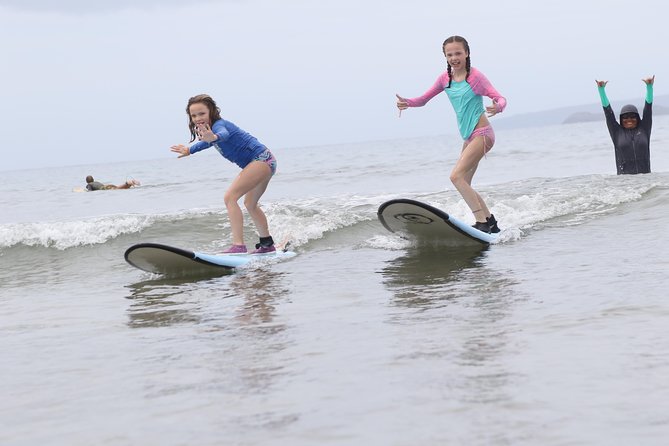
- Semi-private format keeps the focus on your group, not a crowded class.
- Plan for 2 hours total with a short land lesson and the rest in the water.
- Gear is included: surf shoes and shirts, with wet-suits if available.
- Ocean safety is part of the lesson, not an afterthought.
- Kalama Park is set up for beginners, so early wave sessions feel realistic.
- Photos may be available for purchase at the end of the lesson.
Why Kalama Park Makes Sense for Beginners
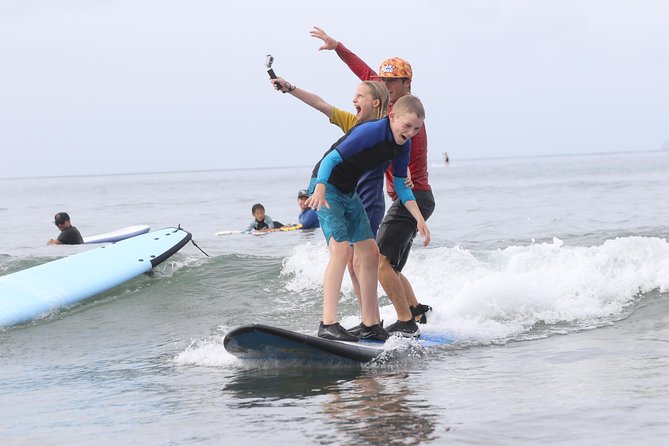
Kalama Park sits in a part of Maui that’s set up for first-timers to learn without feeling like they’ve shown up to the biggest surf contest in the world. The location and water setup tend to match what beginners need: smaller, more manageable learning conditions where you can practice paddling, timing, and standing without constant panic.
This is also the kind of lesson where the format matters. You start with instruction on land, then you immediately use that knowledge in the water. I like this approach because it shortens the gap between theory and action. The ocean doesn’t wait while you figure things out later.
You can also read our reviews of more private tours in Maui



Your 2-Hour Flow: From Safety Basics to Riding
At Maui Waveriders, the experience runs about two hours and returns you to the meeting point afterward. The main teaching arc is simple: get your bearings, learn the basics, then put them to use.
Meet at Maui Waveriders (Then Gear Up)
You’ll meet at 2021 S Kihei Rd, Kihei, HI 96753. From there, you’ll get geared up. Included items are surf shoes and surf shirts. Wet-suits are listed as pending availability, so if you’re sensitive to cooler water, it’s smart to bring a light plan for temperature and expect that conditions may decide what you get.
Even before you hit the water, this is where you’ll learn what style of day you’re in. The gear check and fit matters because surf is physical. The shoes help with footing, and the shirt helps with comfort and sun protection.
The Land Lesson (10–15 Minutes) That Actually Prepares You
You get a short land session on the basics of surfing and ocean safety, typically 10–15 minutes. For a first-timer, this is the part you should pay attention to, because it sets expectations for how you’ll move on the board and what to watch for in the water.
From the way instructors teach, the land portion isn’t a lecture. It’s focused coaching: how to position yourself on the board, what your body should do, and the safety rules that keep the whole group moving smoothly. One detail that comes through in instructor feedback from past sessions: they stay alert to what’s happening around you, especially when the water is busy.
Into the Water: The Real Lesson
After land basics, the rest of the lesson is spent in the water with your instructor. This is where semi-private coaching feels valuable. When the group is smaller, your instructor can watch your timing and adjust faster. That kind of feedback is what turns a frustrating first attempt into a second attempt that finally clicks.
Many learners are eager to stand up immediately, but the best sessions work like this: you practice paddling and board control, then you get coached on how to pop up more consistently when the wave is in the right window. Even older learners report feeling more capable once the instructor breaks things down into doable steps.
And yes, you’ll likely start catching waves during the lesson if you follow the guidance and stay patient. In past sessions, instructors have been credited with making it their mission to get students up—so expect encouragement tied to real technique, not generic hype.
You can also read our reviews of more tours and experiences in Maui



Semi-Private Coaching: Small Group, Bigger Progress
“Semi-private” is worth understanding. This is not a huge group lesson where you’re a spectator between turns. Your booking is described as private for your group, with a minimum of 2 people per booking for semi-private lessons. That usually means more attention per student and less time waiting your turn.
Why does that matter? Because surfing is a timing sport. Small corrections about paddle rhythm, where you’re looking, and when you commit to standing are what make waves turn from almost to actually.
Instructors at Maui Waveriders also appear to emphasize safety and positioning in crowded conditions. One theme across instructor stories is active supervision: they’re not just cheering. They’re watching so you’re placed where your skills have a chance, and where the water flow stays manageable.
If you’re surfing as a couple, a family unit, or a small group of friends, this setup tends to feel like a guided class, not an assembly line.
Equipment: What You Get and What It Means
You get the surf basics covered: surf shoes and surf shirts. Wet-suits are listed as pending availability, which means you should be ready for either scenario.
Here’s how I think about that as a practical traveler:
- Surf shoes matter because you’ll be handling your board and stepping around in a marine setting where you want stable footing.
- Surf shirts help you stay comfortable in sun and salt.
- Wet-suits pending availability means you might feel the water differently depending on the day. If you tend to get cold, it’s smart to plan for that possibility.
Also, some lessons include the chance to keep using equipment after your instruction. In one case, staff shared that you can return later and pick up gear when the tradewinds pick up. That’s not stated as a guaranteed add-on in the core overview, so treat it as a helpful option to ask about during your visit.
What to Watch For in the Water (So You Catch More)
The best beginner days share one trait: you listen closely and you repeat the right movement, not just the frantic version of it.
Here are the things that tend to separate an okay surf lesson from a great one:
- Your stance setup: how you place feet on the board and how you distribute weight.
- Wave reading: knowing when to commit, and when to let a wave pass.
- Ocean safety awareness: recognizing when conditions change and where other surfers are.
Past learners also highlight that instructors actively coach standing and keep attention on each student’s progress. That’s exactly what you want from a lesson. If you feel like you’re being watched and corrected, you’re in the right format.
And if you’re learning with kids, the same idea applies. One of the advantages of smaller groups is that parents can often stay close—watching from nearby—while the instructor works directly with the child. That combination helps families relax and focus on learning rather than managing chaos.
Families, Fitness Level, and Who This Works For
This is a good match if you want a fun Maui activity that still respects safety and skill-building. The requirement calls for moderate physical fitness. That doesn’t mean you need to be an athlete. It does mean you should be comfortable doing basic physical tasks: paddling, standing, and getting back on the board.
It’s also helpful if you’re okay with being in the ocean for a sustained stretch. The lesson is mostly water time, so plan for that mentally. If you’re nervous about ocean conditions, the early land coaching plus continuous in-water instruction can help a lot.
Kids are welcome, but children must be accompanied by an adult for check-in. So if you’re bringing a family, plan to have an adult present at the start. That’s part of how the session stays orderly.
Couples and small groups do well here too, especially if you want the experience to feel personal. Many people choose semi-private specifically to avoid that crowded feeling of big classes.
Photos and the Fun Stuff After the Lesson
One small payoff: in some sessions, photos of you surfing are available for purchase at the end. Even if you’re not planning to buy, it’s a nice way to capture the moment you finally stand up and ride.
If you end the lesson feeling fired up, you might also ask about returning for additional time on the water. One review experience notes going back later and continuing when conditions improve with tradewinds. Again, confirm details on-site, but it’s a useful question if you want more value out of your surf day.
Practical Tips to Make Your Maui Surf Day Smoother
A few habits make the lesson go better for almost everyone:
- Arrive on time and be ready to check in. The meeting point is fixed at 2021 S Kihei Rd, and the session runs about two hours.
- Expect wet-suit availability to vary. If it’s cooler, you may want to dress with that in mind. If it’s warmer, you may still be glad to have the fit gear.
- Take the land lesson seriously. The 10–15 minutes is short, but it’s designed to speed up your progress once you’re paddling.
- Listen for safety cues repeatedly. Surf lessons work because you apply safety rules while you practice movements.
- If conditions look busy, trust the instructor’s positioning. Several teaching stories emphasize safety when the water is crowded.
If you’re planning your day around this, give yourself a little buffer before and after. Surf mornings and afternoons can be physical in a way that surprises people, even if you’re not an athlete.
Quick Reality Check on Value
There are cheaper ways to try surfing, and there are more expensive ways too. This experience sits in a sweet spot because it combines three things that matter for learning: structured coaching, included gear, and semi-private attention.
Instead of spending time figuring out what to wear and what to do, you get a guided session designed to move you from basics to actual wave attempts within a single outing. That’s real vacation value, especially if you only have one Maui day for surfing.
Should You Book This Semi-Private Surf Lesson?
Book it if you want a Maui surfing experience that feels guided, safe, and built for progress—without the crowded lesson vibe. It’s a strong choice for beginners, families, and couples who want real coaching time in the water and appreciate an instructor who watches closely and pushes you toward standing.
Skip it or rethink your expectations if you’re looking for a purely passive experience, or if you’re uncomfortable with moderate physical activity in the ocean. Also, if you’re extremely sensitive to cold water, ask ahead about wet-suit availability since it’s listed as pending.
If your goal is to come away feeling like you actually learned something—and likely caught waves—this is the kind of surf lesson that can turn into a standout memory fast.
FAQ
How long is the Semi-Private Surf Lesson?
It runs for about 2 hours.
Where do we meet for the lesson?
You meet at 2021 S Kihei Rd, Kihei, HI 96753, USA, and the activity ends back at the same meeting point.
What’s included in the lesson?
Surf shoes and surf shirts are included. Wet-suits may be provided depending on availability.
Is hotel pickup or drop-off included?
No. Hotel pickup and drop-off are not included.
Do I need a moderate fitness level to participate?
Yes. The activity notes a moderate physical fitness level is required.
What if I need to cancel or the weather is bad?
Cancellation is free up to 24 hours in advance for a full refund. If the experience is canceled due to poor weather, you’ll be offered a different date or a full refund.