REVIEW · MAUI
Semi-Private Surf Lesson at Ka’anapali Beach
Book on Viator →Operated by Island Style Adventures - Maui Surf School Kaanapali · Bookable on Viator
Ka’anapali Beach is a classic place to learn to surf, and this semi-private lesson is built for progress. I love the 30-minute land and safety block because it helps you understand what you’re about to do before you’re in the ocean. You also get the chance to ride at your own pace with a small-group setup led by an experienced ocean instructor and support from their ISA team.
One thing to think about: Ka’anapali’s shoreline can be rocky and shallow in spots, so falls happen and your comfort level matters. In one recent lesson, the coral/shallow conditions led to more injuries than expected, and kids felt they wanted more technique coaching during the water time. Still, the vast majority of sessions end with lots of standing and plenty of laughs.
In This Review
- What I’d focus on before you book
- Key highlights you’ll feel right away
- Why Ka’anapali Beach works for first-time surfers
- Semi-private coaching: what smaller groups change
- Check-in at Kaanapali Alii Resort: timing is everything
- The 30-minute land and safety lesson (what you should pay attention to)
- In the water: what your “about 1.5 hours total” lesson really feels like
- Rash guard, water shoes, surfboard: great inclusions, plus a coral reality check
- Photo service: optional pictures taken during the whole lesson
- Value check: what makes this worth it (and where it can miss)
- Who this Maui surf lesson fits best
- Potential downsides and how to prevent them
- Should you book this Ka’anapali semi-private surf lesson?
- FAQ
- How long is the semi-private surf lesson?
- What should I bring or wear?
- Do I need to know how to surf before I go?
- What’s the meeting point and how early should I arrive?
- Is the group truly semi-private?
- Is the lesson offered in English?
- Are photos included?
- What happens if the weather is bad?
- What if I need to cancel?
What I’d focus on before you book
This lesson runs about 1.5 hours total, with check-in 30 minutes before start. The flow is simple: land safety first, then time in the water, plus a staff photographer capturing the whole session (photos are optional to buy afterward).
Here’s how the experience really works in practice.
Key highlights you’ll feel right away
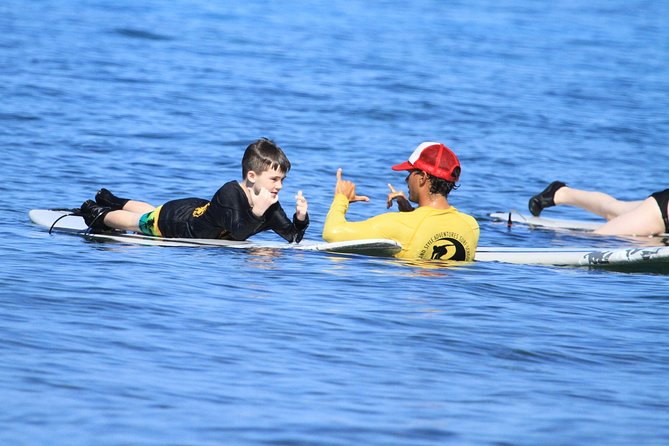
- Semi-private coaching with small groups (maximum 15 travelers), so you’re not lost in a crowd
- 30 minutes on land covering safety and basic skills before you hit the water
- In-water time at Ka’anapali Beach where you can work toward standing and riding
- Rash guard, water shoes, and surfboard included so you can focus on learning, not shopping
- Optional staff photos taken throughout the lesson if you want a Maui souvenir
You can also read our reviews of more private tours in Maui



Why Ka’anapali Beach works for first-time surfers
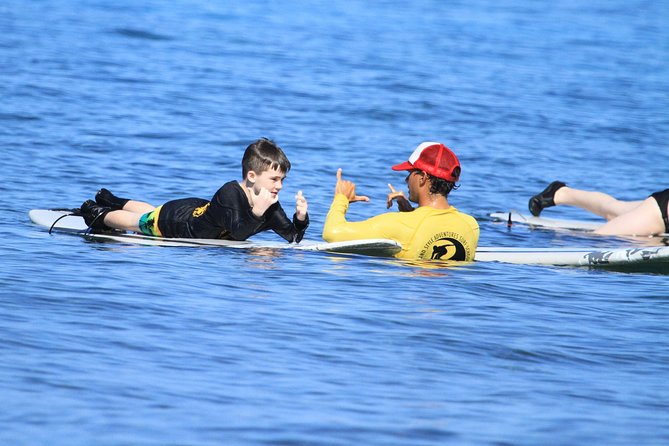
Ka’anapali is one of Maui’s most familiar surf-learning areas because it’s set up for visitors all day long. That matters when you’re nervous: you’re not trying to figure everything out while holding a board in ocean wind. The beach is close to major resorts too, which makes the whole day feel easier to manage.
Also, the lessons are built around repeating the basics. You get instruction on how to handle the board, how to move with the waves, and when to go for the next attempt. That repetition is what turns a scary first stand into a real “I get it now” moment.
Semi-private coaching: what smaller groups change
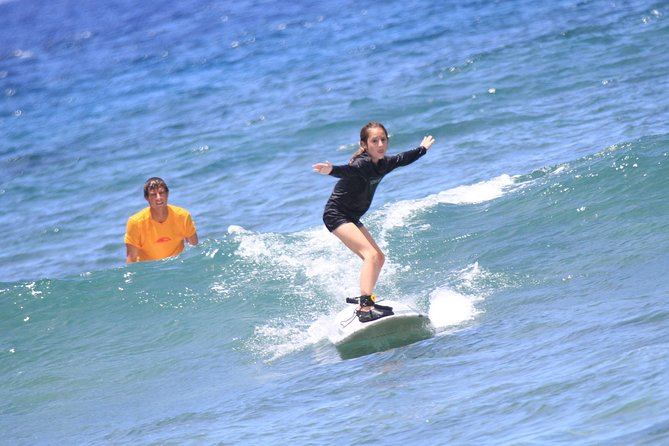
The tour is capped at a maximum of 15 travelers, and in real life that often feels more like a coached clinic than a big group scramble. Several lessons described getting multiple instructors for smaller groups, which helps when you need quick feedback like: paddle earlier, sit deeper on the board, or focus on what your body is doing between waves.
You’ll also notice the difference in teaching style from instructor names that have led past sessions—Nick, Carlos, Nic, Andy, Christian, Peter, and others associated with the ISA team. The consistent theme in the praise: they keep people calm, safe, and motivated, especially kids and first-timers.
If you’re traveling with teens or mixed ages, this setup can be a win because the instructor can nudge stronger surfers toward more challenging attempts while still keeping new learners from getting overwhelmed.
Check-in at Kaanapali Alii Resort: timing is everything
Your start is tied to the Kaanapali Alii Resort (50 Nohea Kai Dr, Lahaina, HI 96761), and check-in happens 30 minutes before the lesson start time. I’m a fan of this kind of schedule because it gives you time to park, find the group, and get your gear on without rushing.
Parking validation is included for up to 3 hours, which is helpful if you’re also doing beach time nearby. But give yourself extra buffer. One common practical issue: it can be tricky to find the exact check-in spot if you arrive right at the start.
Pro tip: go in dressed for water. Even with gear included, you’ll move faster if you’re already in swimwear and ready to go.
The 30-minute land and safety lesson (what you should pay attention to)
This lesson starts on land with about 30 minutes of safety and fundamentals. That portion matters more than people expect, because ocean learning isn’t just about balance—it’s about understanding risk, spacing, and wave behavior.
Even if you’re the confident type, listen closely. Past lessons highlight that instructors prioritize safety and that they’ll walk you through what to do before you try paddling and popping up. For nervous beginners, this land time often becomes the moment where you stop thinking, panic less, and start moving with purpose.
Also, watch for the practical cues instructors use. The biggest difference between someone who keeps falling and someone who stands is usually one or two small technique adjustments. Land time is where those adjustments get explained.
You can also read our reviews of more tours and experiences in Maui



In the water: what your “about 1.5 hours total” lesson really feels like
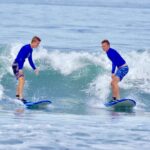
After land safety, you’ll head into the water for roughly the rest of the session—about an hour (give or take, based on conditions and pacing). The goal isn’t to turn you into a shredder by noon. It’s to help you learn the cycle: paddle, catch or time the wave, stand, and come in safely.
The best sessions emphasize a simple payoff: lots of attempts and enough coaching to keep you from repeating the same mistake. Many lessons described multiple long rides and several people getting up for their first real wave rides.
One practical note from the mixed feedback: if the waves get bigger than expected, beginners sometimes need reassurance and more technique coaching during the water time. If you know you’ll feel frustrated when things don’t go instantly, this is exactly where a good instructor team makes the difference—calm guidance beats shouting panic.
Rash guard, water shoes, surfboard: great inclusions, plus a coral reality check
Good news: the lesson includes a rash guard and water shoes, plus a surfboard. That’s real value on Maui, because you don’t want to rent gear and you don’t want to risk being under-dressed for a day in the ocean.
But here’s the honest tradeoff. Even with a rash guard, you can still get abrasions from the board—especially thighs and legs from sitting and shifting while waiting for a set. In one case, a family noted quite serious rashes from contact with the board that healed in a few days.
And yes: there can be coral or shallow rocky areas near the learning zone. That means falls can come with extra sting, not just the usual wipeout soreness. Your water shoes help, but they don’t make you invincible. If you bruise easily or want a low-risk beach plan, keep that in mind.
Bottom line: this is a hands-on surf lesson. Expect contact. Pack a little patience with your sunscreen and your skin.
Photo service: optional pictures taken during the whole lesson
You’ll have a staff photographer taking photos for the entire lesson. That’s a nice touch because surfing is the kind of activity where your phone often ends up useless—either it’s wet, it’s out of position, or you’re busy surviving the wave.
Photos are optional to purchase at the end. I like this approach because you’re not forced into buying anything. If you’re the kind of person who wants proof of your first stand in Maui, it’s worth it. If you don’t care, you can just enjoy the experience and skip the souvenir.
One detail that came up positively: the photo pricing was described as reasonable in at least one lesson, and people liked having images they actually wanted to keep.
Value check: what makes this worth it (and where it can miss)
Since there’s no single price shown here, I’ll judge value by what you get.
You’re paying for:
- Instruction and supervision (the big ticket item)
- Equipment (rash guard, water shoes, board)
- Time broken into land safety + water attempts
- Parking validation up to 3 hours
- Optional photography if you want a Maui memory
That combo can be a strong deal compared with piecing together rentals and figuring out surf logistics on your own.
Where the value can dip is when you expect a longer, more instruction-heavy water session. One low-rated experience complained that kids wanted more technique tips while in the water and felt the coaching wasn’t specific enough. Another concern was the beach conditions being more shallow/coral than other Maui surf areas, creating more injury risk.
So the lesson is usually a great value. But if you have kids who need constant, detailed feedback—or you’re risk-averse—go in with realistic expectations about how much coaching you’ll get during the busiest wave moments.
Who this Maui surf lesson fits best
This is a great fit if:
- You’re a beginner or returning surfer who wants structured help
- You’re traveling with kids or teens and want safety-first coaching
- You care about learning at a pace that isn’t rushed
The best reviews highlight instructors who are patient and effective for kids, including a 10-year-old who started nervous and ended ready to try again. That’s the kind of outcome you want from a semi-private class.
If you’re an experienced surfer looking for lots of high-performance surfing, this likely won’t match your goals. The focus is learning basics and getting up on waves, not chasing advanced maneuvers.
Potential downsides and how to prevent them
Here are the most realistic “heads up” issues, based on past experiences:
- Bigger waves vs first-timers
Some groups reported waves that felt a bit large for true beginners. If you’re unsure, choose a time when you think the ocean will be calmer, and tell the instructor you’d like the safest progression.
- More coral/shallow sting than you expect
Water shoes help, but shallow rocky sections can still mean painful falls. If you’re traveling with very young kids or someone with a low pain tolerance, consider this a factor.
- Technique coaching intensity can vary
One family said the instructor was late in one instance and didn’t offer much technique breakdown once in the water. That’s not the norm in the strong reviews, but it’s a reason to ask your instructor for clear cues early, on land, so you’re ready to use them when you’re out there.
Should you book this Ka’anapali semi-private surf lesson?
I’d book it if you want a Maui surf experience that feels approachable, safety-first, and coached with enough staff attention that you can keep improving. The most praised theme is simple: patient instructors who help people—especially kids—gain confidence fast. Add the included gear, the convenient resort-area meeting point, and the optional photographer, and the overall value tends to be strong.
I’d think twice if your top priority is zero injury risk or if your group needs nonstop, highly granular technique coaching during the water time. In that case, you might want to ask questions upfront about expected conditions and what “semi-private” coaching looks like for your specific group size.
If you’re okay with a real learning curve, some bruised pride, and a few wipeouts, this is one of the better ways to get onto Maui waves at Ka’anapali Beach.
FAQ
How long is the semi-private surf lesson?
The experience runs about 1 hour 30 minutes. The structure starts with 30 minutes of land and safety, followed by the rest of the session in the water.
What should I bring or wear?
You’ll be provided a rash guard, water shoes, and a surfboard, so you mainly need to come ready to get into swim conditions. Wear clothing appropriate for the ocean and expect you’ll be in the water for the lesson.
Do I need to know how to surf before I go?
No. This is a beginner-friendly lesson focused on learning and safety, starting with a land-based safety and fundamentals session.
What’s the meeting point and how early should I arrive?
Meet at Kaanapali Alii Resort, 50 Nohea Kai Dr, Lahaina, HI 96761. Plan to check in 30 minutes prior to your lesson start time.
Is the group truly semi-private?
It’s semi-private with a stated maximum of 15 travelers. In smaller setups, you may have more staff support so the instruction feels closer to coaching than a large group lesson.
Is the lesson offered in English?
Yes, the experience is offered in English.
Are photos included?
A staff photographer takes photos during the lesson, but the photos are optional to purchase at the end.
What happens if the weather is bad?
The experience requires good weather. If it’s canceled due to poor weather, you’ll be offered another date or a full refund.
What if I need to cancel?
You can cancel for a full refund up to 24 hours before the experience starts. Cancellations made less than 24 hours before start time are not refunded.