REVIEW · MAUI
2.5-Hour Private Kiteboarding Lessons at Kanaha Beach in Kahului
Book on Viator →Operated by Action Sports Maui · Bookable on Viator
Learning kite skills starts with the right beach. This private lesson at Kanaha Beach Park in Kahului is interesting because it takes you from kit selection and beach orientation straight into coached practice, all within about 2.5 hours.
I love the personal, on-the-spot feedback from your instructor. I also like the lesson’s progression: ground school on the sand, training exercises in the water, and then time to try the moves on your own.
One consideration: this class requires good weather and you must be able to swim and sign a liability waiver before you start. If that sounds like a hassle, plan around it and don’t schedule anything tight right after your lesson.
In This Review
- Key takeaways before you go
- Kanaha Beach Park kickoff: gear choice, kite beach orientation, and ground school
- All kiteboarding, safety, and control gear is included (and that’s a big deal)
- The lesson in the water: training exercises with instructor support
- Going solo for real practice: applying control without constant prompting
- 2.5 hours and a private group: why the structure feels focused
- Price and value: what $394.96 per person includes on Maui
- Timing, weather, and the day-before call you should plan for
- Who this lesson suits best (and who should think twice)
- Should you book this Kanaha Beach kiteboarding lesson?
- FAQ
- How long is the private kiteboarding lesson at Kanaha Beach Park?
- What is the price per person?
- Where is the meeting point?
- Is this a private lesson or shared?
- What are the age and swim requirements?
- What’s included in the lesson?
- Are food and drinks included?
- What happens with weather, and what’s the cancellation refund rule?
Key takeaways before you go
- Private coaching for all levels so you don’t get stuck waiting your turn
- Gear included means you can focus on learning instead of renting or figuring stuff out
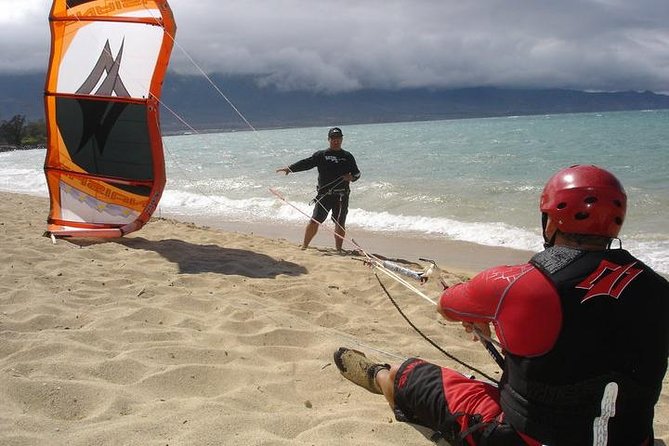
- Ground school on the beach first to build control before you hit the water
- Training exercises with the instructor to reduce guesswork and speed up your learning
- Practice time going solo so the lesson turns into real muscle memory
- Bottled water included to help you stay comfortable during the session
Kanaha Beach Park kickoff: gear choice, kite beach orientation, and ground school
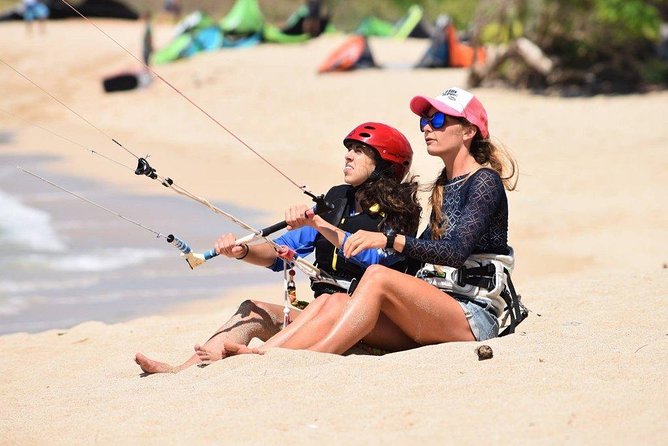
The session starts with you getting set up, not tossed into the deep end. You’ll begin with gear selection, then get oriented to the Kite Beach area at Kanaha Beach Park, so you know where you are and what the session is aiming to teach.
Next comes ground school training on the beach. This part matters more than people think. Kiteboarding has a lot going on at once—lines, kite control, body position—so learning the basics on land helps you avoid panic when you transition into the water.
You can also expect the instructor to tailor the plan to your experience level. If you’re brand new, the session will focus on control fundamentals first. If you already know a bit, you should still get useful corrections, because learning in Maui is one thing; learning with real feedback is another.
And if you want a real-life example of the vibe, the feedback I saw includes an instructor named Miki taking her time and making the lesson easy to follow at the pace of the student. That’s the kind of calm, step-by-step teaching that makes a difference here.
You can also read our reviews of more private tours in Maui

All kiteboarding, safety, and control gear is included (and that’s a big deal)
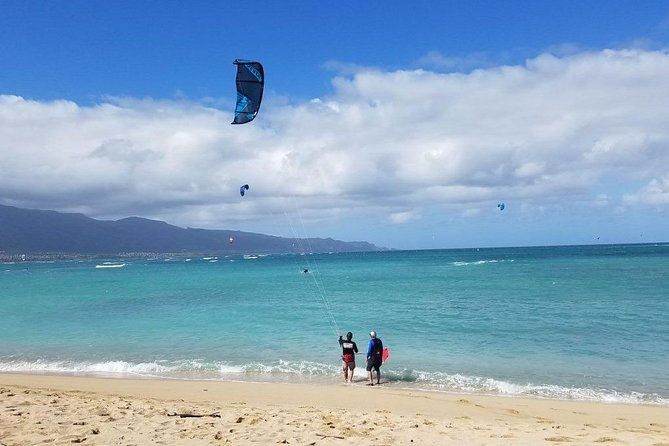
One of the best value points is that your class includes all kiteboarding gear, plus safety and control equipment. That removes a common headache with adventure sports: you’re not spending extra time or money on rentals, or trying to get comfortable with unfamiliar equipment right before learning a new skill.
The included setup is also practical for beginners. You get the gear, you learn how it works with your instructor’s guidance, and you’re not left guessing whether the fit and safety basics are right. For intermediate riders, it still helps because you can focus on technique instead of gear logistics.
You’ll also handle paperwork before class. A liability waiver must be signed before you start, so give yourself time to do that without rushing.
Two more requirements come up in the rules. All participants must be able to swim, and you should have a moderate physical fitness level. If either of those is a question mark for you, you’ll have a more comfortable experience by being honest before you book.
The lesson in the water: training exercises with instructor support
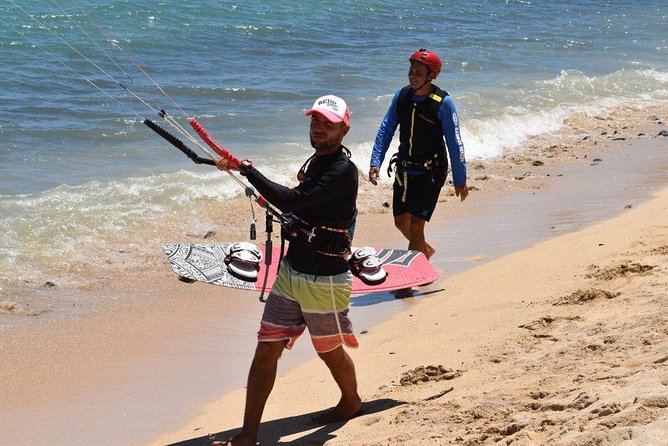
Once the beach portion is done, you move into the water with the instructor accompanying you. This is the phase where you’ll do training exercises—the goal is not just to go out, it’s to practice specific steps while you still have a safety net.
The instructor’s job here is to help you link what you learned on land to what your body is doing in real conditions. That means correcting technique before bad habits take over, and adjusting the pace so the session stays useful instead of chaotic.
The lesson is built for all experience levels, but that doesn’t mean it’s generic. The structure is the same—water practice comes after ground work—but the actual tasks you work on should change depending on where you are right now.
You should expect that this is not a one-shot performance lesson. You’re learning control and decision-making. That often takes repetition, which is why the 2.5-hour window is helpful: you get enough time to actually practice, not just watch and hope it clicks.
Going solo for real practice: applying control without constant prompting
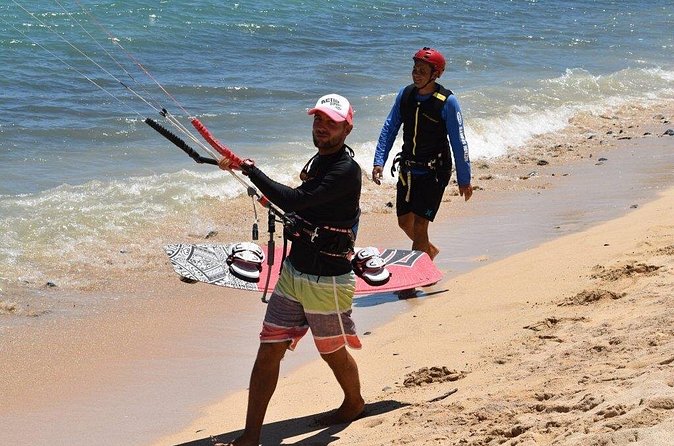
After the instructor-led training exercises, the lesson shifts to going solo to practice what you’ve learned. This is where the session turns from instruction into execution.
Think of this phase as your chance to test the fundamentals you picked up earlier. You’re not expected to be perfect, but you should be ready to apply the core control ideas from ground school while the instructor sets you up to succeed.
This is also where you’ll benefit most from asking clear questions in the earlier stages. If you’re unsure about a specific step—kite handling, body position, or how to approach the next attempt—get that sorted before you move into solo practice.
If you learn best when someone watches you closely and then gives you space, this structure is a strong fit. If you learn best with lots of verbal coaching, tell your instructor during the earlier phases so the teaching style matches how you absorb information.
2.5 hours and a private group: why the structure feels focused
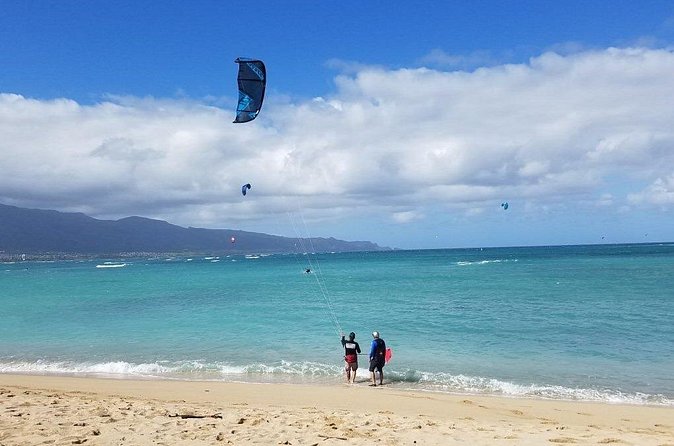
This is a private tour/activity, meaning only your group participates. For kiteboarding, that matters. A shared class can turn into a waiting game, where your learning momentum depends on other people’s timing. Here, your session is designed around you.
The duration is listed at about 2 hours 30 minutes, so you have enough time to move through the whole teaching arc—gear and orientation, ground school, water training, and then solo practice. It’s long enough to learn something real, but short enough that you’re not spending your entire day tied to the beach.
Also, it’s offered in English, so you can expect clear instruction and feedback without language friction. That sounds minor until you realize how much kiteboarding depends on quick understanding.
You can also read our reviews of more tours and experiences in Maui



Price and value: what $394.96 per person includes on Maui
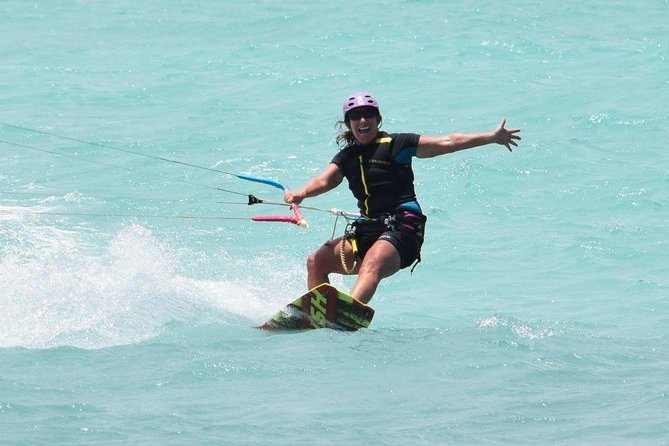
The price is $394.96 per person for a private session. Yes, that’s not cheap. But it’s the kind of pricing that makes sense when you look at what’s included.
Here’s what you’re actually paying for:
- Instructor time for the full session
- A professional guide
- A private format (only your group)
- All taxes, fees, and handling charges
- Bottled water
- All kiteboarding, safety, and control gear
What you’re not paying for is also clear: food and drinks, and transportation to and from the activity.
When gear and instruction are bundled together, it tends to make your budget simpler. You’re not juggling extra costs for equipment, and you’re not arriving with uncertainty about whether you’ll get the right safety setup.
If you’re the type who learns fastest with coaching and hands-on corrections, the private format can feel like a bargain. If you’re trying to do this purely on your own after a quick overview, the lesson is built to be much more than that—so skipping the coaching part usually costs you more time in the long run.
Timing, weather, and the day-before call you should plan for
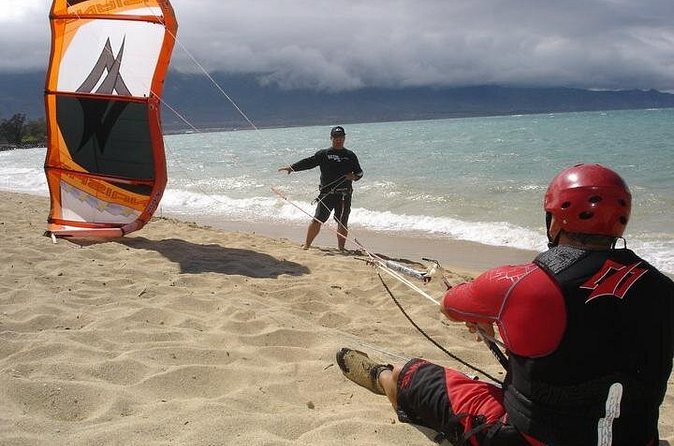
Kiteboarding is weather dependent, and this activity requires good weather. The exact lesson start time can also shift because you’re expected to confirm details closer to the day.
You’ll get confirmation at the time of booking, and you can advise a preferred departure time for special requirements when booking. Then, the important part: you’re required to call the day before to reconfirm the weather and the lesson start time.
This is worth treating seriously. If your Maui schedule is tight, build in buffer time. If the lesson is canceled due to poor weather, you’ll be offered another date or a full refund.
On the cancellation side, there’s free cancellation, and you can cancel up to 24 hours in advance for a full refund. If you cancel later than that, you’re not refunded. So plan like the forecast might change—because it can.
Who this lesson suits best (and who should think twice)
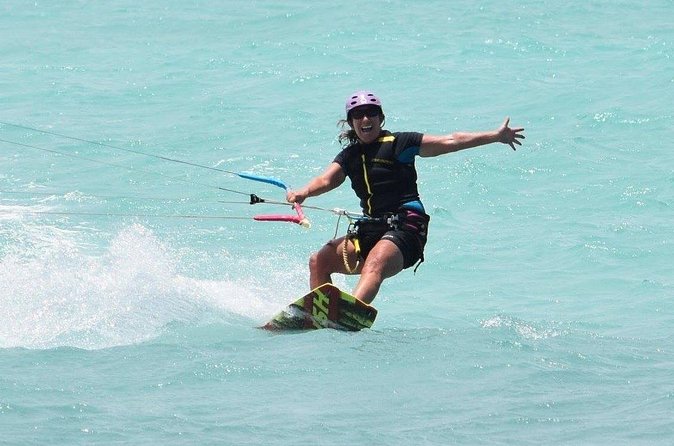
This experience works well if you:
- Want a private lesson with personalized attention and feedback
- Are looking for a structured progression from ground school to water practice
- Need all the gear handled for you, since kiteboarding gear and safety equipment are included
- Are comfortable meeting the swim requirement and signing the waiver
It’s also set up for all experience levels, so you don’t have to feel like you’re signing up to be the “beginner kid” of the group. The lesson is tailored based on where you’re starting from.
It might be a mismatch if you:
- Don’t meet the swim requirement or you’re uncomfortable with water-based instruction
- Are dealing with physical limitations that don’t match a moderate fitness level
- Have a schedule that can’t flex if weather changes the lesson time
Should you book this Kanaha Beach kiteboarding lesson?
I’d book it if you want a lesson that actually teaches, not just an outing with a kite nearby. The combination of gear included, a private format, and a progression from beach training to coached water exercises to solo practice is exactly what you need if you want to make progress during a short Maui window.
Skip it if you’re hoping for a casual, low-effort introduction and you don’t feel confident meeting the swim requirement. Kiteboarding rewards preparation, and this course is clearly built around that idea.
If you like learning step-by-step and you appreciate calm, patient coaching, this one has the right signals. A real example from a past participant highlights an instructor named Miki taking time to explain and going at the student’s pace, which is the kind of approach that tends to lead to better outcomes.
FAQ
How long is the private kiteboarding lesson at Kanaha Beach Park?
The lesson runs about 2 hours 30 minutes.
What is the price per person?
The price is $394.96 per person.
Where is the meeting point?
The start meeting point is 1200 Amala Pl, Kahului, HI 96732, USA. The activity ends back at the meeting point.
Is this a private lesson or shared?
This is a private tour/activity, so only your group participates.
What are the age and swim requirements?
The minimum age is 9 years, and all participants must be able to swim.
What’s included in the lesson?
Included items are all taxes, fees, and handling charges, bottled water, the instructor, a professional guide, and all kiteboarding, safety, and control gear.
Are food and drinks included?
No. Food and drinks are not included.
What happens with weather, and what’s the cancellation refund rule?
Good weather is required. If the experience is canceled due to poor weather, you’ll be offered a different date or a full refund. You can cancel for a full refund if you cancel at least 24 hours before the experience’s start time. You should also call the day before to reconfirm weather and the lesson start time.