REVIEW · MAUI
First Class Waterfalls of West Maui and Molokai Helicopter Tour
Book on Viator →Operated by Blue Hawaiian Helicopters - Maui · Bookable on Viator
Maui from the sky is a different planet. This tour is built around first-class floor-to-ceiling windows and Bose aviation-grade noise-cancelling headsets, so you get crisp views and clear narration even with the rotor noise. You fly through deep valleys and knife-edge ridges over rainforest, waterfalls, and misty peaks, with a pilot who also works as a State of Hawai‘i Certified Tour Guide.
The main thing to plan around is weather and wind, since the flight route and timing can change and the tour can be rescheduled or refunded if conditions aren’t right.
In This Review
- Quick hits: what makes this helicopter route special
- First-class windows and why this matters more than you think
- The flight experience: comfort, timing, and what’s included
- Kahului and the West Maui shoreline: your warm-up views
- The ‘Iao Valley gateway: history and why the scenery looks the way it does
- Wai‘hee and Kahakuloa Bay: ridge lines and remote coastline
- Mauna Kahālāwai: the high point effect
- Crossing the Pailolo Channel to Moloka‘i
- Moloka‘i and Kalaupapa: sea cliffs you feel in your gut
- Ka‘anapali and Kapalua: resort coastline from the air
- Pelekunu Bay and the Pelekunu Valley stream: the quieter finale
- Value check: does $667.15 buy enough?
- Logistics that can make or break your day
- Who this tour suits best
- Should you book this West Maui and Molokai first-class helicopter tour?
- FAQ
- How long is the helicopter tour?
- What’s the first-class seating upgrade?
- What communication and hearing equipment is included?
- Does the tour include video or photos?
- Is the pilot also a guide?
- Where is the meeting point?
- Are there extra costs besides the tour price?
- What’s the check-in time?
- Is there a weight limit?
- Can the tour operate in any weather?
Quick hits: what makes this helicopter route special
- Front-row, first-class windows for wide, uninterrupted viewing on the flight.
- Bose aviation-grade electronic noise-cancelling headsets for comfortable hearing.
- Two-way microphones with your pilot so commentary stays clear.
- A certified guide pilot who explains what you’re seeing over Maui and Moloka‘i.
- A true cross-island route via the Pailolo Channel to Moloka‘i and Kalaupapa.
- Small-group feel, with a maximum of 2 travelers on this tour/activity.
First-class windows and why this matters more than you think
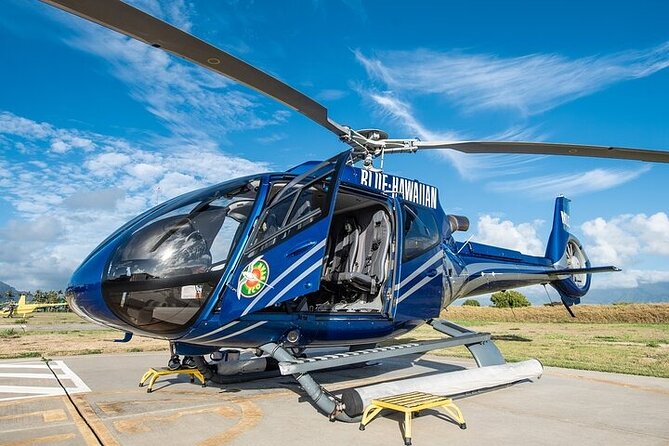
A helicopter tour lives or dies on what you can see. With this one, the key upgrade is first-class seating with floor-to-ceiling windows in the front of the helicopter. That means fewer “edge of the frame” moments and less craning to catch the good angles, especially when waterfalls and ridge lines show up fast.
The other thing I appreciate is how sound is handled. You get Bose aviation-grade electronic noise-cancelling headsets plus microphones for two-way communication with your pilot. That combination makes it easier to follow the story your pilot is telling, instead of nodding along while you guess what island feature you’re looking at.
There’s also a practical photography tip baked in: wear dark colored clothing so you don’t reflect inside the cabin. If you care about getting clean shots through glass, that’s worth listening to.
You can also read our reviews of more tours and experiences in Maui

The flight experience: comfort, timing, and what’s included
This is a fast, focused outing: the flight time is about 50 minutes, and the tour runs around 50 minutes total. You’ll check in 45 minutes before departure, which is normal for weight checks, safety briefing, and getting you seated quickly.
Included on the tour is a lot of what normally adds up when you’re sky-high. Besides the first-class seating, you also get all fees and taxes, the headsets and comms, and an after-tour video preview at the heliport. You may still want to buy optional USB video and photo packages afterward, and for that you’re advised to bring a credit card.
One more detail: this tour/activity has a maximum of 2 travelers. That matters because it often makes the experience feel less like a conveyor belt and more like you and your pilot are sharing the sky for a short stretch.
Kahului and the West Maui shoreline: your warm-up views
You start at Blue Hawaiian Helicopters in Kahului (Lelepio Pl). Right away, the route puts you over areas tied to Maui’s main economic center, with shoreline views and big sightlines to Haleakalā and the West Maui Mountains.
Why this first segment is valuable: it gives you context. From the ground, it’s easy to think of Maui as beaches and resorts. From the air, you start seeing how the island is organized—where the mountains sit relative to the ocean, and how quickly rainforest terrain takes over once you move inland.
This is also where you’ll get your bearings for the rest of the flight. As your pilot starts pointing out landmarks, you’ll notice how the valleys and ridges create natural “channels” for waterfalls to drop—so later, when you spot cascades, you’ll understand what you’re seeing.
The ‘Iao Valley gateway: history and why the scenery looks the way it does
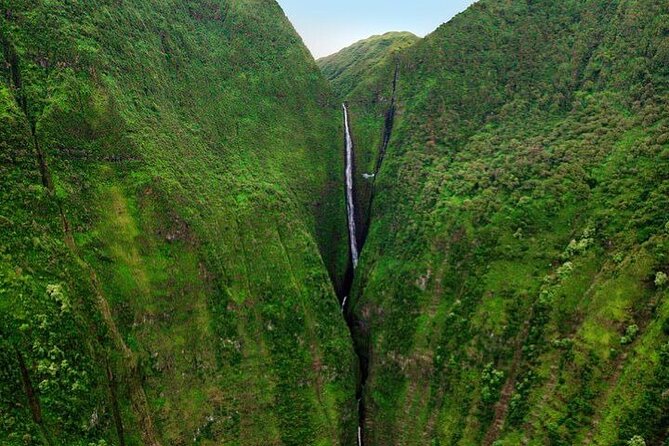
Next, you swing toward an ancient population center that serves as a gateway to the ‘Iao Valley and the West Maui Mountains. If you’ve ever stood near ‘Iao Valley on Maui and wondered how so much water and greenery fit into steep terrain, the aerial angle answers that.
You’ll likely appreciate the pilot guide narration here because it turns the visuals into something you can follow. When you’re flying, scale is weird. A valley that looks modest from a roadside pull-off can look enormous from above, and a ridge line that looks like a small bump suddenly becomes a major divider of weather, mist, and water flow.
Even if you’re not chasing “must-see history” every day, this part helps you read the island like a map. That’s one of the quiet benefits of having a pilot who’s also a State of Hawai‘i Certified Tour Guide.
Wai‘hee and Kahakuloa Bay: ridge lines and remote coastline
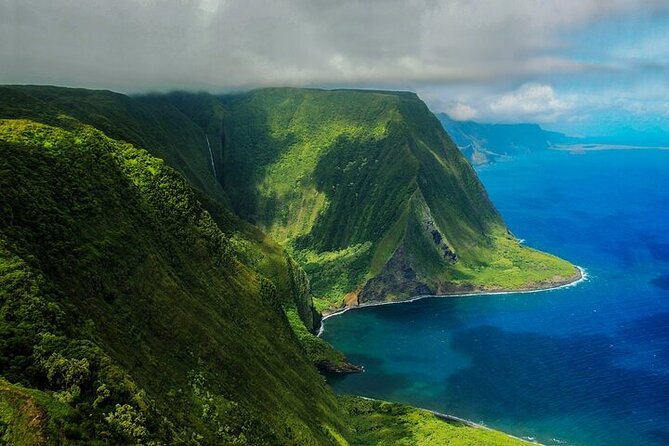
After ‘Iao, the route shifts to Wai‘hee, a former political and population center of Maui. From the air, what you’ll notice is the lush ridge lines and the dramatic shapes of the land as it stacks up toward higher ground.
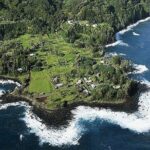
Then you head toward Kahakuloa Bay, described as home to one of Hawai‘i’s most remote former fishing villages. The aerial view here tends to do something that ground viewpoints can’t: it shows the coastline as part of a bigger system—the way cliffs, coves, and mountain roads connect.
A quick reality check for expectations: remote areas can look “quiet” even when they’re impressive. From the helicopter, Kahakuloa Bay reads more like a dramatic, isolated shoreline than a bustling destination. That’s not a drawback—it’s the point. You’re buying access to places that don’t feel easy to reach by car.
You can also read our reviews of more tours and experiences in Maui





Mauna Kahālāwai: the high point effect
The next stop is the highest peak of Mauna Kahālāwai in the West Maui Mountains. This segment is mostly about altitude and perspective.
From up here, the whole island layout starts snapping into place. Valleys look like carved pathways, and you see why certain areas get the moisture that feeds waterfalls and rainforest. It also helps with something I always find important in aerial travel: recognizing the “divider lines” where ridges and peaks separate weather patterns.
This part is also a reminder that Maui’s beauty isn’t only about ocean color. A lot of the island’s drama lives in the vertical layers—where water gathers, then drops, then gathers again in streams along the rainforest floor.
Crossing the Pailolo Channel to Moloka‘i
One of the big thrills of this tour is simply that it moves beyond one island. You connect Maui and Moloka‘i by crossing the Pailolo Channel. That short channel hop changes the geography fast, and the ocean becomes more than a background—it turns into a boundary between worlds.
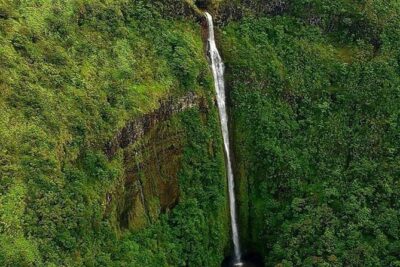
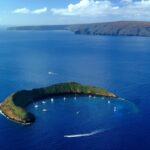
Moloka‘i isn’t just “another island.” It’s described here as the place with the world’s highest sea cliffs and Hawai‘i’s tallest waterfall, plus remote valleys and the famous Kalaupapa peninsula.
For many people, seeing Moloka‘i by air is where the tour justifies itself. You can’t easily get the same scale and cliff-line perspective from the ground. In a few minutes, the flight gives you the kind of overview you’d otherwise only see in photos.
Moloka‘i and Kalaupapa: sea cliffs you feel in your gut
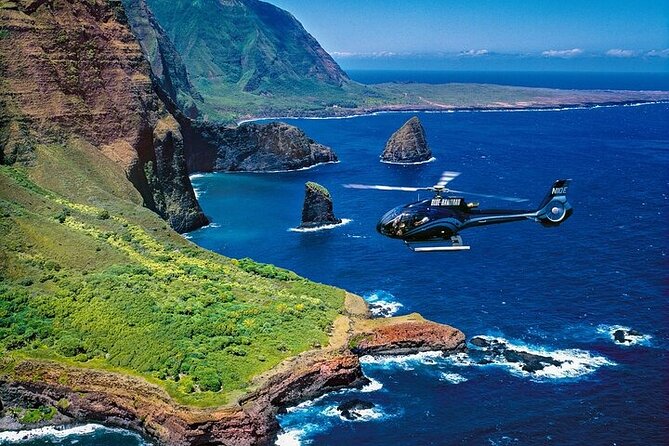
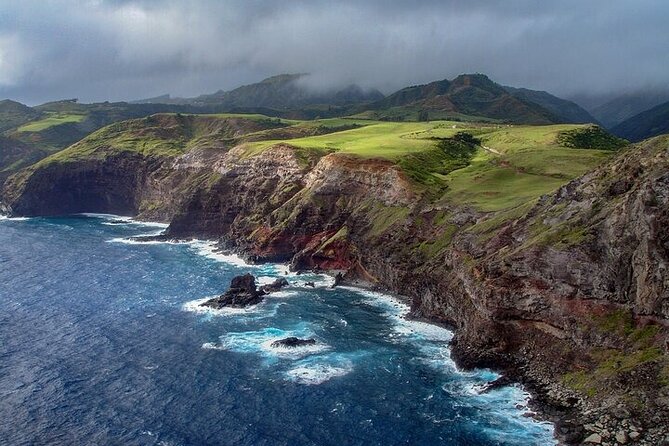
When the route reaches Moloka‘i, you’re over terrain built for dramatic drop-offs and long, exposed coastlines. The big headline feature is the world’s highest sea cliffs, and the famous Kalaupapa community in the Kalaupapa peninsula area.
Even with limited time, this segment can hit hard because cliffs are one of the few natural features that always look extreme from above—no matter how many times you’ve seen cliff photos online. You see the vertical geometry. You also get a better sense of why certain coastal areas stayed so remote and why communities like Kalaupapa have such a distinct place in Hawai‘i’s story.
The pilot guidance matters here too. When you understand what you’re looking at—cliff height, peninsula shape, and how the land curves toward the ocean—it stops being just scenery and becomes meaningful context.
Ka‘anapali and Kapalua: resort coastline from the air
After Moloka‘i, the flight route brings you back along Maui’s Ka‘anapali coastline, described as home to some of Maui’s premier resorts. Then you continue to Kapalua, where you get views of beaches, crystal-clear waters, and perfectly manicured golf courses.
This is a change of tone. Earlier you were surrounded by rainforest valleys, ridges, and remote places. Here, the island reads as curated and coastal, with human development clearly visible in the spacing of roads, hotels, and greens.
If you’re choosing this tour because you want a mix—some wild country plus the signature West Maui beachfront look—this section helps. It shows both Maui’s natural power and the way people built around the ocean-view geography.
A small consideration: if you’re after only rugged backcountry sights, the resort-coast segments can feel more “familiar.” But I’d argue that’s part of the value. You get a wider Maui picture in a short time.
Pelekunu Bay and the Pelekunu Valley stream: the quieter finale
The last part of the route focuses on Pelekunu Bay, which marks the entrance to Pelekunu Valley. From the air, you’ll see what the description promises: one of Hawai‘i’s last remaining free-flowing streams and uniquely preserved ancient Hawaiian fauna.
This is the kind of ending that makes a helicopter tour feel more than a sightseeing loop. The scenery shifts back toward the rainforest side of West Maui, with a natural feature that reads as alive and ongoing—water moving through the valley rather than just a waterfall moment.
If you’re the type who wants your trip to end on something specific and meaningful, this segment tends to land well. You’re not just seeing cliffs and coastline; you’re seeing how water systems still work.
Value check: does $667.15 buy enough?
At $667.15 per person, this isn’t a casual add-on. The value is in what you get built into the price.
Here’s what the package includes that usually costs extra elsewhere:
- First-class front windows for better sightlines
- Bose aviation-grade headsets and two-way communication
- Pilot who is a State of Hawai‘i Certified Tour Guide
- After-tour video preview at the heliport
- All fees and taxes
Then there are costs you should plan for outside the base price:
- Parking fees at the heliport (USD 7.00)
- Transportation to and from the heliport
- Optional USB video and photo packages you can purchase afterward
For me, the most convincing value factor is the combination of route + comfort + narration. A 50-minute flight is short enough that you won’t feel rushed, but long enough to cover West Maui, cross the Pailolo Channel, and reach Moloka‘i and the Kalaupapa area. If you’re visiting Maui and you only have a limited time window for a “big wow” activity, this price starts to make more sense.
Logistics that can make or break your day
Helicopters are weather people. Your tour time and route can vary based on wind and weather conditions. If the tour gets canceled for poor weather, you’ll be offered another date or a full refund, but either way you need flexibility.
Plan your day around the 45-minute check-in. Late arrivals may not be accepted, and check-in time includes weight check, safety briefing, and escorting you to your seat.
Weight policy matters too. The total weight per passenger is 240 lbs. If you weigh over that, you’ll need an adjacent empty seat to safely balance the aircraft, and the second seat is half off the regular tour price. If you’re near that limit, it’s worth handling the extra-seat requirement early so you don’t get stuck at the last minute.
Also note the rule: no scuba diving within 24 hours of departure. And for photos, remember the dark clothing guidance to reduce glare.
Who this tour suits best
This is a strong choice if you want:
- Big scenic variety without hiking
- A premium viewing setup with front windows
- Clear pilot commentary through a proper comm system
- A short trip that still covers Maui and Moloka‘i key sights
It may be less ideal if you don’t like schedule uncertainty, since weather and wind can shift plans. It’s also pricier than typical tours, so I’d book it when you know you really want the “from the sky” perspective.
If you’re traveling with someone who wants comfort and good audio more than “touch the ground” experiences, the Bose headsets and two-way comm make a difference.
Should you book this West Maui and Molokai first-class helicopter tour?
Yes, if you’re ready to pay for front-row access to Maui’s rainforest valleys, waterfalls, and ridge lines—and you also want Moloka‘i’s sea cliffs and Kalaupapa without complicated travel logistics. The first-class window setup, Bose headsets, and pilot guide narration are the kind of inclusions that turn this into a real experience, not just a quick flight around the island.
I’d say skip it or wait if your schedule is rigid or if you know you’ll be stressed by weather-based changes. Also, if you’re not a fan of spending money on optional add-ons, you should plan on sticking to the included video preview only.
If you can give it the time it needs and you’re aiming for maximum wow per minute, this is a very solid pick.
FAQ
How long is the helicopter tour?
The tour is approximately 50 minutes, with about 50 minutes of flight time.
What’s the first-class seating upgrade?
First-class seating includes front-of-helicopter seating with floor-to-ceiling windows for uninterrupted views.
What communication and hearing equipment is included?
You’ll use Bose aviation-grade electronic noise-cancelling headsets with microphones for 2-way communication with the pilot.
Does the tour include video or photos?
There’s an after-tour video preview at the heliport, and additional USB in-flight video and photo packages may be available for purchase.
Is the pilot also a guide?
Yes. The pilot is also a State of Hawai‘i Certified Tour Guide.
Where is the meeting point?
The tour starts at Blue Hawaiian Helicopters, Lelepio Pl, Kahului, HI 96732 and ends back at the same meeting point.
Are there extra costs besides the tour price?
Yes. Parking fees at the heliport are not included (USD 7.00), and transportation to and from the heliport is not included. Gratuity is also not included.
What’s the check-in time?
Check-in is 45 minutes prior to tour time.
Is there a weight limit?
Yes. Total weight per passenger is 240 lbs. For guests over 240 lbs, an adjacent empty seat is required, and the second seat charge is half off the regular tour price.
Can the tour operate in any weather?
The tour depends on good weather. If it’s canceled due to poor weather, you’ll be offered a different date or a full refund.